
Household and tabletop goods
Storage, home articles, kitchen goods, coffee and tea-service briefs.
Enquire about this range ↗Build a clear brief across product categories Coordinate household, outdoor and project purchases
Prepare item-specific purchase enquiries covering storage, apparel, drawing tools, tents, coffee and tea sets, kitchen goods and wider project categories. Match the product, intended use, specification, sample and documentation before agreeing an order.
Manufacturing, product documents and order conditions depend on the model and supply route selected for your project.
Start with a product reference, intended use and estimated quantity. We bring product selection, sample questions and quotation details into one conversation.
Email your reference image ↗Choose a focused product or discuss a coordinated assortment. Each direction can be developed into a more specific model and packaging brief.
Storage, home articles, kitchen goods, coffee and tea-service briefs.
Enquire about this range ↗Hunting-style garments, tents and specified sports or leisure articles.
Enquire about this range ↗Exact tool or toy concepts need separate user and performance requirements.
Enquire about this range ↗Building-material schedules and clearly defined equipment, textile or craft requests.
Enquire about this range ↗Use these options to describe what you are buying. The public references identify your enquiry; the final model and specification are confirmed before an order.

Specify intended contents, internal and external dimensions, material, closure, handles and stacking needs. Confirm load, care, labels and the actual packaging for the proposed article.
Provide garment drawings, size chart, fabric composition, construction, colours, pockets and intended use. Define any visibility, weather or protective requirements explicitly; ordinary apparel does not establish protective performance.
Identify the exact tool, working dimensions, material, accuracy needs, intended user and included accessories. Request a current article specification and sample rather than selecting from a broad category name.
Define intended use, size, capacity, structure, fabric, frame, assembly and packing. State weather, fire, ventilation and anchoring requirements for article-specific confirmation.
List the vessels and accessories, piece counts, capacities, materials, decoration and presentation. Confirm fit, hot-drink use, care and destination food-contact evidence for the actual set.
Specify the piece list, capacities, pouring and lid fit, materials and decoration. Approve the complete assortment and relevant intended-use documentation.
Provide the actual product concept, intended age and user, material, operation, parts and destination. Current feasibility, design rights and applicable article-specific evidence must be reviewed before selection.
Build an item-by-item brief with function, material, dimensions, colour and quantity. Define accessories, care, presentation and approval separately for each article.
Identify the required utensil, vessel or accessory, material, size and intended conditions of use. Confirm food-contact, heat and cleaning requirements for the actual proposed product.
Define the activity, article, intended user, dimensions, materials and operating conditions. Confirm performance, safety, assembly and packing requirements against the selected configuration.
Supply the actual material schedule, drawings, grade, finish, dimensions, quantity and destination. Identify installation interfaces and required evidence; product procurement is scoped separately from engineering design or construction.
Provide function, duty, interfaces, electrical requirements, drawings and acceptance criteria. Current producer and equipment specification require confirmation.
Provide composition, construction, dimensions or size chart, finish, quantity and end use for current selection.
Define the article, original artwork, material, dimensions, finish and presentation. Confirm current feasibility and rights.
Identify the exact substance or product, composition or grade, intended use, quantity and destination. Acceptance depends on current supplier scope and required documents; no regulated-product authorization is claimed.
Product categories define enquiry directions. Current articles, dimensions, grades, capacities, configurations, availability and commercial terms require a written item-specific offer; no numerical specifications are inferred from a category heading.
Focus the sourcing conversation on the features, materials and production details that make a difference to your product range.
Use a common project schedule while keeping each article’s material, size, function, quantity and approval status separate. This makes a mixed assortment easier to compare and quote.
A storage box, garment, tent, toy and hot-drink vessel each need different fit and validation requirements. Identify the end use and destination before approving a proposed product.
Confirm the actual proposed supplier, product and evidence for every article. Separate merchandise procurement from engineering, installation, licensed operations or other services requiring their own scope.
Bring artwork, reference samples and a target cost. The available process, minimum quantity, sample charges and development scope are reviewed for the chosen option.
Provide drawings, original artwork, rights confirmation, dimensions, material, colours and quantities. Current development or private-label feasibility must be confirmed for the actual product.
Specify garment sizes, set contents, equipment interfaces or accessory lists as applicable. Obtain an approved sample or configuration rather than transferring conditions between categories.
Supply labels, instructions, retail presentation, barcode and carton needs. Agree protective packing, quantities and transport acceptance for each article in the purchase schedule.
Agree which product characteristics need testing and how the approved sample relates to the bulk order.
Define critical dimensions, material, fit, finish, components, operation and packing for each selected product. Confirm sample revision and inspection requirements before the order.
Specify food contact, hot-liquid use, toy age, protective apparel, tent exposure, equipment operation or building-material requirements where relevant. No universal suitability is claimed.
Documents must identify the actual proposed producer, article, configuration, test or approval scope and destination. Group history, unrelated subsidiaries and broad qualifications do not establish a product’s current compliance.
Test capability is a starting point for the inspection plan. Request the method, applicable model and results needed for your order.
Request evidence for the actual selected product and supplier. Engineering, installation, regulated goods and other specialist services require a separately defined scope.
State the sales market, intended users and required files in your first enquiry. Current validity and scope are checked for the selected supplier and product; a category description does not certify every item.
Share your document requirements ↗Your sales channel changes the assortment, packaging and quality priorities. Tell us the intended use as well as the product name.
Coordinate storage, tabletop, kitchen and home articles through an itemized quantity and presentation schedule.
Specify garment construction, tent configuration and the actual sporting or leisure activity, with destination and intended-user requirements.
Submit product or material schedules, drawings, interfaces, acceptance requirements and delivery needs for current supplier and scope confirmation.
Samples, commercial terms and responsibilities are agreed for the project. Use the same product and packing specification when comparing quotations.
Product, reference image, quantity, sales market and timing.
Review configuration, materials, sample scope and relevant documents.
Agree artwork, packaging, sample, testing and inspection criteria.
Set price, payment, production, delivery and defect remedies in writing.
Practical answers about this sourcing direction, customization and the reference options. Your agreed specification and written quotation determine the actual order.
We coordinate independent sourcing and trade enquiries. Send the item list, quantities, destination and key requirements so the proposed products, samples, packing and quotation can be reviewed together.
Yes. Provide an itemized schedule with separate descriptions, drawings, materials, dimensions, quantities, intended uses and destinations. Supplier and commercial scope are confirmed per article.
Send the product list, drawings or references, quantities, destination and priority requirements. Request a current specification, sample plan, packing schedule and item-specific offer.
Specify contents, internal and external dimensions, material, closure, handling, stacking, care and packing. Load and durability requirements need confirmation for the selected article.
It is a garment enquiry direction. Provide fabric, construction, sizing and intended use. Camouflage, weather resistance, visibility or protective performance must be specified and supported separately where required.
No. Define the setting, exposure, structure, fabric, ventilation, anchoring and relevant performance requirements. Obtain current evidence for the actual configuration.
List each piece, capacity, material, decoration, lid or pouring fit, care, presentation and hot-drink conditions. Request relevant food-contact and use evidence for the proposed set.
Provide the exact concept, age, materials, operation, destination and rights confirmation. Current feasibility and required article-specific evidence must be reviewed.
Those activities require a separately agreed service scope and appropriate provider. A product enquiry does not establish engineering, construction, labour-supply or installation capability.
Supply the actual drawings, grade or duty, dimensions, interfaces, quantity, acceptance criteria and destination. The proposed product and supporting documents are confirmed before order.
No. Identify the exact product, grade or composition, intended use and destination. Current supplier scope, permissions where required and appropriate documentation must be confirmed before an offer.
Request a current written offer for each article and quantity. Different materials, development steps, configurations and destinations may require separate commercial terms.
Factory Sourcing Hub handles this enquiry as an independent sourcing and trading service. The product route, supplier suitability, sample scope and order responsibilities are agreed for the actual project.
Send the product reference, quantities per variation, customization and packaging. Prices, minimums, sample charges and delivery dates are confirmed in a current quotation; the page is not a live inventory or price feed.
Yes. State whether you need a reference sample, a customized sample or development work. Agree the sample cost and shipping, approval specification, inspection plan and remedy for non-conforming goods before the bulk order.
Reference images, drawings, logo artwork and a product list are useful. Include quantities, the intended users and sales market, packaging, required documents and timing. After submitting the form, email attachments to kunhuow@gmail.com with your enquiry reference.
A reference picture or a short description is enough to begin. Add the details you already know; the optional fields help make the follow-up more useful.
Download the enquiry checklist ↓
Independent sourcing and trading service. Supplier choice, service costs and order conditions are discussed for your project.
Product selection, customization, samples and quotation enquiries.
Compare separate product ranges and prepare a brief that fits your assortment.

Coordinate broad merchandise enquiries across kitchenware, camping, furniture, bags, apparel, stationery, hardware, plumbing, lighting, textiles and special product projects with an independent trading contact.
Explore this service ↗
Coordinate apparel, textiles, toys, tools, electromechanical goods and technical-material enquiries with separate specifications, samples and documentation review.
Explore this service ↗
Coordinate selected apparel, socks, hats, scarves, slippers, bags, cork articles, household organisers, writing boards and recreational gift products with product-specific specification and sampling support.
Explore this service ↗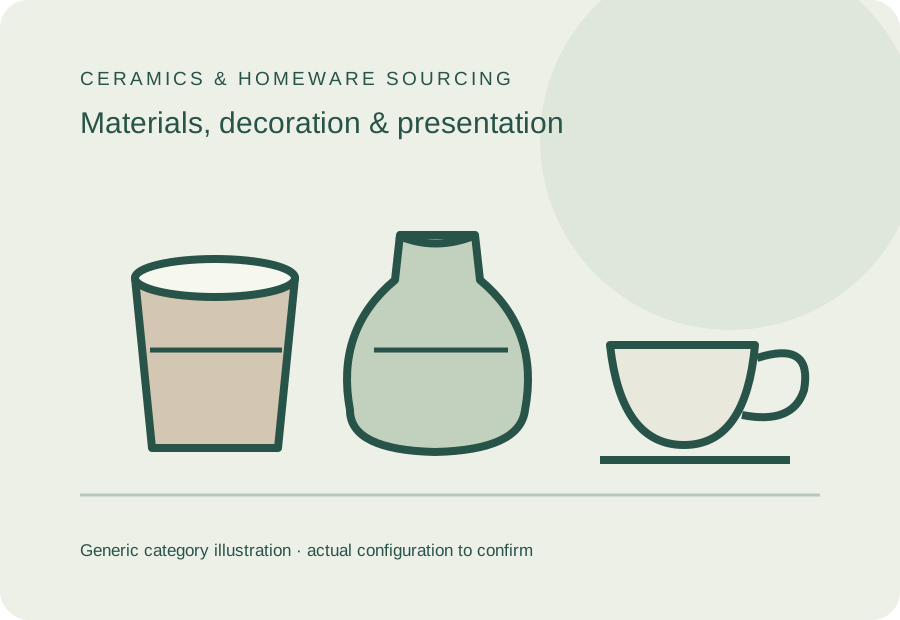
Prepare household ceramic, tableware, tea-service and decorative-object enquiries with clear material, form, finish, function and presentation requirements. Confirm current article feasibility, samples, documentation and commercial terms before ordering.
Explore this service ↗Information basis: published product information reviewed . Reference details support a sourcing discussion. Current supply, samples and product-specific documents are confirmed for the selected item.