Independent B2B sourcing · One trading contactkunhuow@gmail.com ↗
FACTORY SOURCING HUBProduct sourcing for business buyers
Get a quote ↗
Home/Test & Measurement/Test & Measurement Instruments, Field Meters & Thermal Imaging
Electrical meters · environmental tools · layout and ranging · solar and HVAC testing · laboratory instruments · thermal imaging

Specify the measurement first. Field meters, lab instruments and thermal imaging.

Test & Measurement Instruments, Field Meters & Thermal Imaging

Source field measurement meters, electrical and environmental test tools, laser measuring equipment, thermal imagers and laboratory instruments. Compare individual reference specifications, channel and accessory configurations, documentation and application requirements before quotation.

  • Cover field maintenance, electronics benches, environmental checks and thermal inspection.
  • Compare individual configurations, ranges, channels and connection requirements.
  • Define manuals, calibration needs, accessories and order-specific documentation together.

Manufacturing, product documents and order conditions depend on the model and supply route selected for your project.

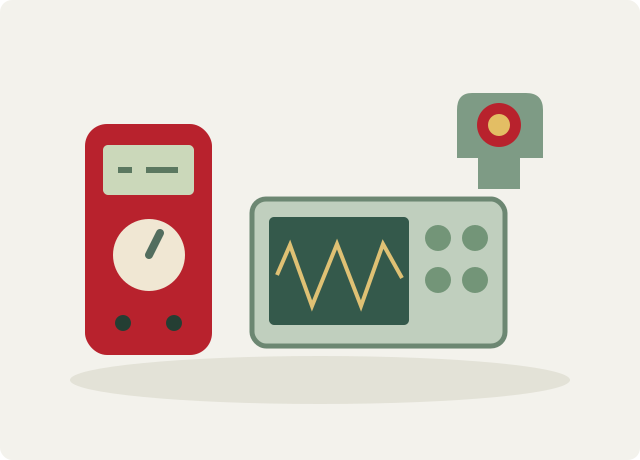
Illustration of a handheld meter, bench instrument and thermal camera
Category illustration. The selected article, ratings, dimensions, configuration and documentation are confirmed in the current quotation.

Start with a product reference, intended use and estimated quantity. We bring product selection, sample questions and quotation details into one conversation.

Email your reference image ↗
Field toolsMultimeters · clamps · electrical and environmental testers
Lab instrumentsOscilloscopes · signal generation · power and component testing
InspectionThermal imaging · ranging · locating · optical and cable tools
Procurement detailExact configuration · accessories · software · documents · availability
Explore the product range

Build the range
your buyers need.

Choose a focused product or discuss a coordinated assortment. Each direction can be developed into a more specific model and packaging brief.

Digital multimeters and clamp meters

Compare handheld electrical measurement formats by the task, input functions, resolution and usable ranges. Specify AC or DC measurement, true-RMS needs, jaw opening, display behavior and required accessories. The selected instrument, leads and operating conditions must fit the measurement environment.

Enquire about this range ↗

Electrical installation and power tools

Voltage and continuity testers, socket testers, circuit-breaker finders and power-quality directions serve different installation and maintenance tasks. Describe the supply system, measurement point and required test function before selecting an instrument. Confirm the applicable measurement category and voltage rating for the complete setup.

Enquire about this range ↗

Insulation, earth and RCD testing

Insulation resistance, earth resistance, clamp-earth and residual-current testing require their own methods and instrument choices. Provide the test object, expected range and applicable procedure. Request the current manual and selected accessory configuration rather than assuming one tester performs every installation check.

Enquire about this range ↗

Photovoltaic and renewable-energy tools

Solar maximum-power-point and related renewable-energy tools can be selected for the actual panel or circuit under test. Define expected open-circuit voltage, current and power, connector requirements and the measurement procedure. Panel-test limits and instrument safety category are specific to the selected article.

Enquire about this range ↗

Temperature and HVAC/R measurement

Infrared, contact-temperature and combined instruments offer different measurement approaches. HVAC/R directions include manifold and pressure tools with temperature accessories. State the refrigerant, pressure and temperature requirements, and check material and fluid compatibility before selecting a kit.

Enquire about this range ↗

Environmental and workplace measurement

Temperature/humidity, wind speed, sound, light, air quality, gas and pressure tools provide several environmental enquiry routes. Define the parameter, range, sensor arrangement and recording needs. Medical-use infrared thermometers require a separate intended-use and regulatory review from industrial surface-temperature instruments. Laser-power and radiation-dose instruments are separate specialist enquiries requiring the exact sensor, measurement scope and intended-use documentation.

Enquire about this range ↗

Material and machine-condition tools

Coating thickness, vibration, tachometer, moisture, hardness and magnetic-field measurements address different maintenance or material tasks. Specify the substrate, sensor contact or viewing conditions, expected range and test method so the selected tool can be assessed for the job.

Enquire about this range ↗

Distance, layout and locating tools

Laser distance meters, levels, rangefinders, angle tools and wall-scanning directions can support layout and inspection work. Related locating tools include borescopes, pipeline blockage and water-leak detection. State the target, working distance, surface and environment; accessories and detection limits depend on the instrument.

Enquire about this range ↗

Cable, optical and component field tools

Cable testers, wire trackers, fiber-optic tools, USB testers, LED testers and handheld component instruments have different interfaces and test functions. Describe the connector, signal or component under test, required report and accessory needs. Process calibrators and transformer testing are separate specialist enquiries.

Enquire about this range ↗

High-resolution and digital oscilloscopes

Choose an oscilloscope around analog bandwidth, active channels, sampling behavior, memory and required triggering or analysis. Define probes, logic channels, protocol options and automation needs explicitly. A series-level maximum does not establish the performance available with every model or simultaneous-channel configuration.

Enquire about this range ↗

Waveform and RF signal generation

Function/arbitrary waveform and RF generators provide distinct signal-development routes. Specify waveform type, frequency, amplitude, load impedance, channel synchronization and modulation needs. Confirm which features, software tools and options belong to the selected configuration.

Enquire about this range ↗

Spectrum and signal analysis

Select spectrum or signal-analysis instruments around the frequency span, sensitivity, resolution bandwidth, analysis functions and required interfaces. Include antenna, probe or other connection requirements in the brief. Licensed options and measurement setup should be identified before comparing quoted configurations.

Enquire about this range ↗

Power supplies, AC sources and electronic loads

DC power supplies, AC power sources and DC electronic loads serve different sides of a power-electronics test setup. State voltage, current, power and channel requirements together, including simultaneous operation, sense connections, dynamic behavior and remote-control needs.

Enquire about this range ↗

Bench multimeters and component measurement

Bench multimeters, LCR meters, micro-ohm meters and power meters are separate precision-measurement directions. Provide the measurement range, test frequency where relevant, fixture and connection method, throughput and data-transfer requirements. Assess accuracy with the actual conditions and calibration basis.

Enquire about this range ↗

Battery testing and production sorting

Battery resistance and voltage testing can be selected around the cell or pack, fixture arrangement, test speed and sorting workflow. Confirm voltage limits, measurement method and handler or automation interfaces. A resistance/voltage tester is distinct from a capacity cycler or a battery safety certification system.

Enquire about this range ↗

Data acquisition and temperature logging

Multi-channel data and temperature logging requires a defined sensor and module configuration. State channel count, signal types, scan rate, storage duration, alarms and communications. Temperature limits depend on the input module and sensor; optional voltage/current inputs are separate configuration choices.

Enquire about this range ↗

Electrical safety test systems

Hipot, insulation resistance, ground-bond and electrical-safety analysis instruments can be considered for a defined manufacturing or validation procedure. Provide the product under test, applicable standard, test sequence and fixture requirements. The instrument itself does not confer certification on the tested product.

Enquire about this range ↗

Thermal imaging and acoustic inspection

Thermal directions include handheld and smartphone-connected cameras and observation formats; acoustic imaging is another inspection route. Define the target, working distance, detector needs, temperature range, lens and reporting workflow. Industrial inspection specifications do not establish a medical diagnostic use.

Enquire about this range ↗

Accessories, software and support documents

Probes, leads, fixtures, sensors, cases, communication tools, software and licensed functions can materially change the supplied setup. List the exact accessories and required operating system, interfaces and documents. Confirm language, license conditions, calibration services and support arrangements in the quotation.

Enquire about this range ↗
Reference product directions

Start with a product.
Define the details.

Use these options to describe what you are buying. The public references identify your enquiry; the final model and specification are confirmed before an order.

High-count handheld multimeter reference sourcing illustration
REFERENCE 0206-01

High-count handheld multimeter reference

A true-RMS handheld reference for electrical and electronics measurement. Confirm input limits, leads, measurement category and the applicable manual for the supplied configuration.

Display
22,000 counts
Listed voltage range
Up to 1000 V AC/DC
Communication
USB
Body dimensions
190 × 90 × 50 mm
Discuss this option ↗
Compact AC/DC clamp reference sourcing illustration
REFERENCE 0206-02

Compact AC/DC clamp reference

A compact-jaw reference for maintenance tasks where access is limited. Match the jaw opening, conductor and measurement environment to the actual task.

AC/DC current range
Up to 100 A
AC/DC voltage range
Up to 600 V
Jaw opening
17 mm
Display
2,000 counts
Discuss this option ↗
Laser distance reference sourcing illustration
REFERENCE 0206-03

Laser distance reference

A distance-measurement reference with stored readings and area/volume functions. Working range depends on the target and conditions; review the selected manual and laser-use requirements.

Reference range
Up to 100 m
Minimum displayed unit
0.001 m
Stored groups
99
Display
2.0-inch LCD
Discuss this option ↗
Solar panel MPPT reference sourcing illustration
REFERENCE 0206-04

Solar panel MPPT reference

A portable panel-test reference for comparing maximum-power and related readings within its rated limits. Confirm the panel and circuit are compatible with the selected instrument and test leads.

Maximum-power test
5–2200 W
Peak-power/open-circuit voltage
10–150 V
Peak-power/short-circuit current
0–20 A
Listed category
CAT 0, 150 V
Discuss this option ↗
Digital manifold kit reference sourcing illustration
REFERENCE 0206-05

Digital manifold kit reference

A refrigeration and heat-pump measurement kit direction with wireless temperature clamps. Confirm the refrigerant and accessories before selection; this reference is not suitable for ammonia refrigerants NH3/R717.

Pressure range
−1.00 to +60.00 bar
Temperature range
−50 to +150 °C
Connections
Three 1/4-inch SAE interfaces
Kit reference
Manifold, two wireless temperature clamps, hoses and case
Discuss this option ↗
Industrial thermal-imager reference sourcing illustration
REFERENCE 0206-06

Industrial thermal-imager reference

A handheld thermal-inspection direction with a high-resolution detector and focusing options. Lens choice, target conditions and current configuration should be reviewed for the actual inspection.

Infrared detector
640 × 512 pixels
Listed measurement range
−20 to +1200 °C
Processing direction
Super-resolution processing
Optics
Optional interchangeable lenses; confirm selection
Discuss this option ↗
Eight-channel high-resolution oscilloscope reference sourcing illustration
REFERENCE 0206-07

Eight-channel high-resolution oscilloscope reference

A model-level reference for a multi-channel electronics bench. Confirm sample-rate allocation, memory and enabled analysis options under the intended operating conditions.

Analog bandwidth
1 GHz
Analog channels
8
Listed real-time sampling
5 GSa/s
Maximum memory
500 Mpts
Discuss this option ↗
Dual-channel arbitrary waveform reference sourcing illustration
REFERENCE 0206-08

Dual-channel arbitrary waveform reference

A generator configuration for electronics validation. Define signal type, load impedance, amplitude and synchronization alongside the maximum frequency requirement.

Maximum output frequency
120 MHz
Channels
2
Sampling reference
625 MSa/s
Resolution and waveform memory
16 bits; 64 Mpts
Discuss this option ↗
Four-channel linear DC supply reference sourcing illustration
REFERENCE 0206-09

Four-channel linear DC supply reference

A bench-supply reference with different voltage/current limits per channel. Evaluate simultaneous output and power limits using the full specification.

Total rated power
297 W
Channels 1 and 2
0–32 V, 0–3 A each
Channel 3
0–15 V, 0–3 A
Channel 4
0–6 V, 0–10 A
Discuss this option ↗
Battery resistance/voltage reference sourcing illustration
REFERENCE 0206-10

Battery resistance/voltage reference

A bench-test direction with a defined voltage range and production interfaces. Select the fixture and connection method for the actual cell or battery pack.

Voltage range
0.01 mV–400 V
Resistance range
0.1 µΩ–3.3000 kΩ
Interfaces
RS-232/485, USB device, LAN, handler
Display
4.3-inch TFT LCD
Discuss this option ↗
Multi-channel acquisition reference sourcing illustration
REFERENCE 0206-11

Multi-channel acquisition reference

A configured logger reference for data collection rather than a universal sensor range. Specify the input modules, sensor types and optional voltage/current measurements needed for the project.

Reference configuration
64 channels
Listed scan rate
64 channels/s
Communication
RS-232, RS-485, LAN, USB
Display
10.1-inch touch TFT LCD
Discuss this option ↗

These are individual catalog references for specification comparison and enquiry. Availability, configuration and supply conditions require confirmation. Do not combine a family maximum with another model’s features. Accuracy, sampling, temperature, power and safety limits depend on the selected configuration, accessories and conditions in the current manual. References do not imply private-label availability or authorization to alter a branded product.

What matters for this category

A better brief.
A clearer comparison.

Focus the sourcing conversation on the features, materials and production details that make a difference to your product range.

01

One structured brief across field and bench tools

Coordinate electrical maintenance, environmental measurement, thermal inspection and laboratory requirements in one enquiry. Keep the instrument, accessories, software and documentation together so a quotation can be assessed as a complete setup.

02

Compare configurations precisely

Work from a model-level reference and the required task rather than a broad series title. Channel count, input ranges, probes, fixtures, communication options and licenses can be identified before selecting the final supply.

03

Plan for usable documentation

Request the current manual, technical specification, accessory list and relevant software information alongside the instrument. Define calibration or verification requirements and the acceptance procedure before order approval.

Branding, configuration & packaging

Make the product
fit your programme.

Bring artwork, reference samples and a target cost. The available process, minimum quantity, sample charges and development scope are reviewed for the chosen option.

01

Configuration and accessory selection

Provide the measurement task and a complete specification for ranges, channels, sensors, probes, leads and communications. We can review a suitable procurement configuration and quote the selected setup. Optional functions and accessories must be confirmed individually.

02

Project-specific supply requests

Submit any OEM, ODM, unbranded or private-label requirement as a separate feasibility enquiry. Branding rights, engineering changes, technical documentation and compliance obligations require explicit agreement; a standard catalog listing does not establish these services for every instrument.

03

Packing, language and delivery planning

Specify manual language, power-plug requirements, batteries, protective cases, item counts and outer packing. Sample supply, calibration, warranty handling, minimum quantities and production or shipment timing are confirmed in the quotation for the selected product.

Quality & product evidence

Turn requirements
into checks.

Agree which product characteristics need testing and how the approved sample relates to the bulk order.

01

Verify the complete measurement setup

Review the instrument configuration, leads, probes, fixtures, sensor ranges and ratings together. Use the current technical documentation to define incoming checks and any required verification. Display resolution is distinct from accuracy and usable measurement range.

02

Define calibration and acceptance

State whether a calibration document or traceable measurement evidence is required, including the parameters and points to cover. Confirm the provider, document scope and availability before ordering. A factory test record is not automatically an accredited calibration certificate.

03

Match use classification and destination

Confirm electrical safety requirements, regional documentation, operating environment and any regulated intended use for the exact article. Product-specific CE, safety-category or other claims need corresponding evidence; corporate management-system claims do not cover every measurement function.

Test capability is a starting point for the inspection plan. Request the method, applicable model and results needed for your order.

Documents matched to the order

Ask for evidence
that fits the product.

Provide the destination, measurement task, required configuration and acceptance criteria. The document request can then identify the current technical, calibration, safety and shipment information needed for the selected supply.

State the sales market, intended users and required files in your first enquiry. Current validity and scope are checked for the selected supplier and product; a category description does not certify every item.

Share your document requirements ↗
Specification and configuration record
Request the exact instrument revision, selected options, input and output limits, included accessories, module or sensor list, packing and manual language. Use this record to compare quotes and approve the delivered setup.
Manuals, software and interfaces
Request the current operating manual, data sheet, programming information where applicable, driver or software availability and relevant license terms. Confirm operating-system and interface compatibility for your own equipment or automation system.
Product-specific evidence and service terms
Identify the required declaration, safety documentation, test report or calibration scope for the destination and use. Confirm the actual service provider, warranty route, document availability and commercial terms for this order.
Built around how you sell

Different buyers.
Different specifications.

Your sales channel changes the assortment, packaging and quality priorities. Tell us the intended use as well as the product name.

01

Maintenance and field service

Build tool sets for electrical, HVAC, photovoltaic and environmental work using task-specific ranges, accessories and documentation. Confirm the field conditions and ratings before selecting each instrument.

02

Electronics laboratories and education

Compare oscilloscopes, generators, supplies, loads and bench meters for a defined teaching or development bench. Include probes, fixtures, software and licenses in the equipment list.

03

Manufacturing and automated validation

Specify production testing around throughput, channels, interfaces, fixtures and acceptance limits. Identify data logging, sorting and safety-test requirements separately so the supplied configuration matches the process.

From first brief to a defined order

One contact.
A practical next step.

Samples, commercial terms and responsibilities are agreed for the project. Use the same product and packing specification when comparing quotations.

01

Share the requirement

Product, reference image, quantity, sales market and timing.

02

Compare suitable options

Review configuration, materials, sample scope and relevant documents.

03

Approve the specification

Agree artwork, packaging, sample, testing and inspection criteria.

04

Confirm the order plan

Set price, payment, production, delivery and defect remedies in writing.

Buyer questions

Before you send
your first enquiry.

Practical answers about this sourcing direction, customization and the reference options. Your agreed specification and written quotation determine the actual order.

Which types of instruments can I enquire about?

Field meters, electrical and environmental testers, ranging and locating tools, thermal imagers and laboratory instruments are covered. Laboratory directions include oscilloscopes, generators, analyzers, power supplies, loads, bench and component meters, battery testers, loggers and electrical safety systems.

Are the specifications shown for every model in the range?

No. Each card describes an individual reference configuration. Other models may have different ranges, channels, options or limits. Provide the complete task and target specification so the selected supply can be confirmed.

How should I compare multimeter or clamp-meter specifications?

Identify the function, AC/DC range, display count, resolution, accuracy conditions, input protection and measurement category. Include the leads or clamp opening and the intended environment. A displayed range alone is not a complete safety or performance specification.

Can a solar-panel tester be used on any photovoltaic circuit?

Select it against the panel voltage, current, power, connector and the required measurement procedure. Observe the specific input limits and category in its manual. A panel-test reference does not establish suitability for every string or energized installation.

Is the manifold reference compatible with ammonia?

The listed manifold reference excludes ammonia refrigerants NH3/R717. Confirm the refrigerant, hoses, fittings and temperature accessories for the exact kit before ordering. Other fluid or pressure requirements need a separate selection review.

Do infrared detector pixels equal temperature accuracy?

No. Detector resolution describes the imaging array. Temperature accuracy and usable results also depend on the instrument specification, lens, focus, target, distance and measurement conditions. Provide the inspection task and request the relevant current documentation.

What should I specify for a laboratory instrument?

Include bandwidth or frequency range, channels, sampling or test speed, memory, voltage/current/power where relevant, fixtures, interfaces, software and licensed features. Describe the test object and intended workflow so the whole setup can be compared.

Can you supply calibration documents?

State the required parameters, measurement points, traceability and accreditation requirements. Availability, provider, scope, timing and charges must be confirmed for the selected order. General product testing and accredited calibration are different services.

Are software, modules and accessories included?

Inclusion depends on the exact configuration. List the needed probes, leads, sensors, input modules, software, communication interfaces and licenses. Confirm the supplied items and compatibility in writing before order approval.

Can the products be private labeled or redesigned?

Submit that as a separate feasibility request. The current standard range does not establish private-label or engineering-change availability for every product. Branding rights, technical support, documentation and compliance responsibilities need explicit agreement.

What are the minimum quantity, lead time and warranty?

These depend on the instrument, availability, configuration, calibration and supply route. Request a written quotation covering quantity, shipment schedule, included documents and the actual warranty or service arrangement. No universal condition applies to the complete portfolio.

Does buying a safety tester certify my product?

The instrument supports a defined test procedure. Certification of the product under test requires the applicable process and evidence for that product. Provide the standard, test sequence and acceptance requirements so a suitable instrument configuration can be reviewed.

Who handles my enquiry?

Factory Sourcing Hub handles this enquiry as an independent sourcing and trading service. The product route, supplier suitability, sample scope and order responsibilities are agreed for the actual project.

How do I get a price and order minimum?

Send the product reference, quantities per variation, customization and packaging. Prices, minimums, sample charges and delivery dates are confirmed in a current quotation; the page is not a live inventory or price feed.

Can I discuss samples and inspection before ordering?

Yes. State whether you need a reference sample, a customized sample or development work. Agree the sample cost and shipping, approval specification, inspection plan and remedy for non-conforming goods before the bulk order.

What should I attach to my email?

Reference images, drawings, logo artwork and a product list are useful. Include quantities, the intended users and sales market, packaging, required documents and timing. After submitting the form, email attachments to kunhuow@gmail.com with your enquiry reference.

Tell us what you are planning

Your next order
starts with a brief.

A reference picture or a short description is enough to begin. Add the details you already know; the optional fields help make the follow-up more useful.

  • Measurement task, test object, ranges, channels, accuracy conditions and environmental or safety requirements.
  • Selected reference, probes, leads, sensors, fixtures, modules, software, licenses and communication interfaces.
  • Quantity, availability needs, language, plug/battery requirements, protective packing and destination.
  • Required calibration or test evidence, acceptance criteria, service terms and target delivery date.
kunhuow@gmail.com

Download the enquiry checklist ↓

Independent sourcing and trading service. Supplier choice, service costs and order conditions are discussed for your project.

Discuss your requirements.

Product selection, customization, samples and quotation enquiries.

Add product, quantity or customization details (optional)

Submit your enquiry directly. We use your details to respond to your sourcing request. For attachments, email kunhuow@gmail.com with your enquiry reference. Enquiry data use.

Information basis: published product information reviewed . Reference details support a sourcing discussion. Current supply, samples and product-specific documents are confirmed for the selected item.

Have a product in mind?
Share your sourcing brief.
Send an enquiry ↗