
Oil-free piston compressor programmes
Compare compact and receiver-mounted oil-free directions for a defined air requirement. Agree actual pressure/flow, duty, thermal and acoustic conditions for the chosen assembly.
Enquire about this range ↗Match Compressed Air to the Actual Duty Coordinate Compressors, Pump Heads & Air-System Components
Source oil-free piston, direct-drive, belt and engine-driven compressor directions, vertical/portable layouts, aluminium receivers, pump heads, electric motors, vacuum/gas-handling components and air-system accessories.
Manufacturing, product documents and order conditions depend on the model and supply route selected for your project.
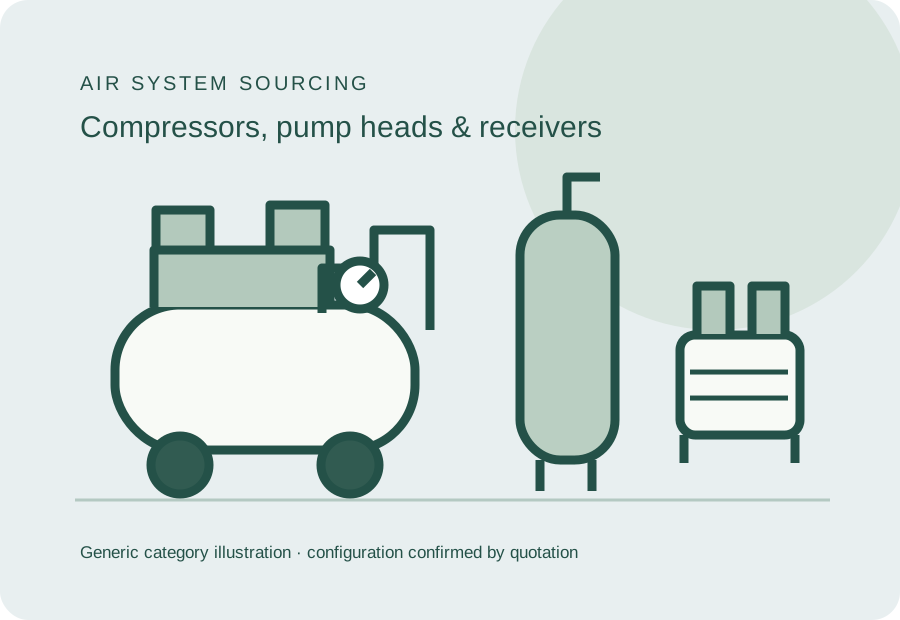
Start with a product reference, intended use and estimated quantity. We bring product selection, sample questions and quotation details into one conversation.
Email your reference image ↗Choose a focused product or discuss a coordinated assortment. Each direction can be developed into a more specific model and packaging brief.
Compare compact and receiver-mounted oil-free directions for a defined air requirement. Agree actual pressure/flow, duty, thermal and acoustic conditions for the chosen assembly.
Enquire about this range ↗Different drive arrangements need their own speed, power, supply or engine and service brief. A motor or catalogue-capacity value alone does not define delivered air at operating pressure.
Enquire about this range ↗Specify the installation and handling arrangement alongside verified vessel capacity, connections, controls and required documentation.
Enquire about this range ↗Replacement or OEM-integration enquiries need mounting, drive, electrical and operating information for the exact pump/motor selection.
Enquire about this range ↗Keep vacuum duty and gas-supply component requirements separate from complete compressed-air assemblies. Specify media, duty point and integration documents.
Enquire about this range ↗Air-treatment vessels, valves/fittings and screw-type enquiries can be reviewed with the current item drawing, function and applicable specifications confirmed.
Enquire about this range ↗Use these options to describe what you are buying. The public references identify your enquiry; the final model and specification are confirmed before an order.

Compare a compact oil-free piston configuration against the required air demand and supply. Approve the current pressure controls, duty, acoustic conditions and actual delivered-air data before selection.
The catalogue distinguishes frequency-specific speed and capacity figures. Match the actual electrical variant and obtain delivered-air data at the required pressure; capacity labels alone do not establish a duty point.
Compare the belt-drive arrangement with air demand, supply and service access. Request the current pressure/flow curve and operating file for the selected build.
An engine-driven direction can be reviewed where the site brief calls for that drive arrangement. Confirm engine, fuel, duty, pressure controls and current accessory inclusion for the selected assembly.
Compare an aluminium receiver with the required storage, portability, connections and pressure documentation. Confirm the actual vessel volume and current nameplate before ordering.
A separate pump-head direction can be reviewed for integration into a defined air system. Compare pressure, delivered-air test conditions, mounting, cooling and controls together.
Review this pump-head configuration as an individual selection rather than transferring a complete compressor’s receiver or controls. Approve the integration drawing, electrical variant and current duty file.
Compare the selected air-demand and duty requirements with this pump-head direction. Confirm the actual flow curve, electrical configuration, mounting and suitable system controls.
Define vacuum duty, flow, media and the integration interface for the actual pump. The vacuum figure needs its reference basis and test method confirmed; it is not a compressed-air pressure rating.
Provide the intended gas-system role, media and pressure/vacuum duty. Review the current component drawing and integration file before approving a pump selection.
Receiver position, handles and wheels affect the installation and handling brief. Compare the actual footprint, pump, pressure controls and connection layout for each complete unit.
Prepare the existing system identification and interface drawing for a pump-head or electric-motor enquiry. Match mounting, shaft/drive, electrical supply and duty before approving interchange.
Air-system accessories can be reviewed by actual function and drawing. Specify media, connection, pressure, filtration/drying or other treatment requirements and the current evidence needed.
A separate screw-type compressor brief can be reviewed with current item availability and specifications confirmed. Provide the pressure, delivered-air requirement, operating schedule and installation conditions.
The examples are catalogue configuration references, with current availability and specifications to approve for each item. Keep the receiver, complete compressor, pump head and accessory roles separate. Where a source names FAD, request its pressure and test conditions; other capacity fields are not presented as verified FAD. Confirm actual delivered air, electrical variant, duty, pressure controls, receiver documentation and relevant operating instructions before order.
Focus the sourcing conversation on the features, materials and production details that make a difference to your product range.
Start with the tool or process demand, pressure at use, operating schedule and supply. Compare actual delivered-air data and duty rather than choosing from receiver volume or nominal power alone.
Review compressor, receiver, controls, treatment, connections and space together. Keep replacement-head and motor interfaces distinct from complete-unit configuration.
Prepare the integration drawing, inspection criteria and spare-part needs alongside the order. Confirm technical support, maintenance responsibilities and the available parts for the actual selection.
Bring artwork, reference samples and a target cost. The available process, minimum quantity, sample charges and development scope are reviewed for the chosen option.
Submit the application, required pressure/flow, electrical or engine drive, layout and interface drawing. OEM feasibility and any receiver, pump, control or component changes are confirmed on the selected design.
Provide lawful labels/artwork, language/manual and identification requirements with unit/outer-packing preferences. Approve the actual marks, accessories and protective/transport arrangement.
Define the sample test and acceptance conditions. Confirm quantities, minimum order, sample/development charges, production timing, packing units and shipping/service terms in the current quotation.
Agree which product characteristics need testing and how the approved sample relates to the bulk order.
Request the actual test method, delivered-air or vacuum curve, leakage/control checks and duty/thermal conditions. Noise figures need their measurement method and distance; no zero-noise claim is made.
Approve the current vessel/nameplate and relevant pressure-control documentation, electrical variant, insulation/protection and mounting. A corporate certificate or catalogue mark does not establish every item’s status.
Agree inspection of connections, fasteners, guards/controls, accessory inclusion and identification. Verify measured packing, mass, unit counts and transport protection for the final assembly.
Test capability is a starting point for the inspection plan. Request the method, applicable model and results needed for your order.
Provide the application, required air or vacuum duty, drive/supply and destination so the relevant performance, vessel, electrical and shipment documents can be requested.
State the sales market, intended users and required files in your first enquiry. Current validity and scope are checked for the selected supplier and product; a category description does not certify every item.
Share your document requirements ↗Your sales channel changes the assortment, packaging and quality priorities. Tell us the intended use as well as the product name.
Define pneumatic-tool or maintenance demand, operating schedule, portability and available power/drive before selecting a complete compressor.
Specify the real process air, pressure, duty and environmental conditions. Treatment and clean-air requirements require separate evidence for the selected system.
Match pump head, motor, receiver or accessory interfaces to the actual assembly. Current drawings and functional/media requirements guide the selection.
Samples, commercial terms and responsibilities are agreed for the project. Use the same product and packing specification when comparing quotations.
Product, reference image, quantity, sales market and timing.
Review configuration, materials, sample scope and relevant documents.
Agree artwork, packaging, sample, testing and inspection criteria.
Set price, payment, production, delivery and defect remedies in writing.
Practical answers about this sourcing direction, customization and the reference options. Your agreed specification and written quotation determine the actual order.
Oil-free/piston, direct-drive, belt and engine-driven compressors, portable/vertical and aluminium-receiver layouts, pump heads, electric motors, vacuum/gas-handling components and air accessories are covered. Additional screw-type enquiries require current item details.
Provide the required pressure and delivered air at use, operating schedule, tool/process demand, supply, installation space and destination. Obtain current performance data at the relevant pressure and conditions.
Only fields expressly identified as FAD are labelled that way here, and their pressure/test conditions still require confirmation. Other capacity labels are selection references rather than a guaranteed delivered-air point.
The intended air-quality or gas application needs its own specification, treatment arrangement and applicable evidence. Confirm particulate, moisture, oil and any specialised requirements for the actual system.
Prepare the existing assembly identification, drawing, mounting/drive, electrical supply, rotation and duty. Confirm the selected component’s current interfaces and operating file before approving interchange.
Submit the actual layout, drive/supply, receiver and control requirements plus lawful presentation and packing needs. Design feasibility, sample, quantities, cost and timing are agreed for the exact programme.
They are item-specific. Request the actual test conditions, operating limits, receiver/electrical documents and instructions for the selected configuration; a range title or corporate mark is insufficient.
Send the application, pressure/delivered-air or vacuum duty, supply/drive, layout/interfaces, quantities and destination. Add sample/test/document, parts/service, lawful artwork and packing requirements so the current commercial terms can be prepared.
Factory Sourcing Hub handles this enquiry as an independent sourcing and trading service. The product route, supplier suitability, sample scope and order responsibilities are agreed for the actual project.
Send the product reference, quantities per variation, customization and packaging. Prices, minimums, sample charges and delivery dates are confirmed in a current quotation; the page is not a live inventory or price feed.
Yes. State whether you need a reference sample, a customized sample or development work. Agree the sample cost and shipping, approval specification, inspection plan and remedy for non-conforming goods before the bulk order.
Reference images, drawings, logo artwork and a product list are useful. Include quantities, the intended users and sales market, packaging, required documents and timing. After submitting the form, email attachments to kunhuow@gmail.com with your enquiry reference.
A reference picture or a short description is enough to begin. Add the details you already know; the optional fields help make the follow-up more useful.
Download the enquiry checklist ↓
Independent sourcing and trading service. Supplier choice, service costs and order conditions are discussed for your project.
Product selection, customization, samples and quotation enquiries.
Compare separate product ranges and prepare a brief that fits your assortment.

Source air compressors, pneumatic fastening and finishing tools, spray guns, electric and airless coating equipment, hoses, regulators, lubrication machines and complete workshop kits through an independent trade service.
Explore this service ↗
Source gasoline, battery and corded garden tools with mowing, pruning, soil working, clearing, multi-head attachments, washing, utility tools, portable power and matched service parts.
Explore this service ↗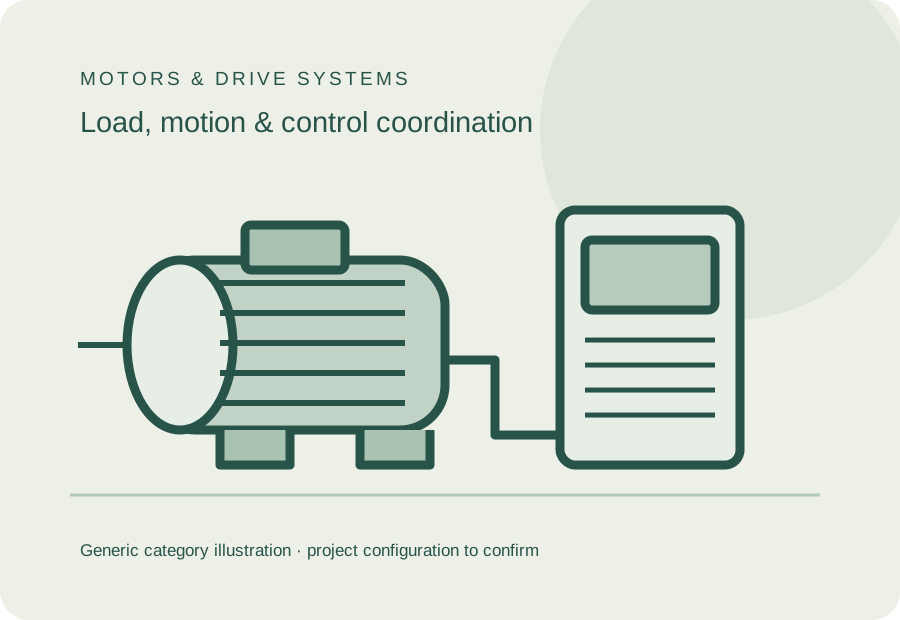
Source aluminium, cast-iron, steel-sheet and stainless motor directions; single/three-phase, variable-speed, brake, specialist/high-voltage, servo, vehicle and compressor-drive programmes with matching inverter and integration requirements.
Explore this service ↗
Source domestic and industrial water pumps, solar and hybrid pumping systems, drainage and sewage equipment, pressure boosters, pool circulation and garden machinery through one trade enquiry.
Explore this service ↗Information basis: published product information reviewed . Reference details support a sourcing discussion. Current supply, samples and product-specific documents are confirmed for the selected item.