
Indoor Wi-Fi sockets
Compare regional plug formats, supply voltages, load categories, phone control, schedules, countdown and household sharing for the selected connected appliance.
Enquire about this range ↗Connected Sockets & Door Chimes With Sensors and Test-Tool Options
Source regional Wi-Fi and radio sockets, outdoor plug controls, wall and motor controllers, wireless door chimes, motion and magnetic sensors, alarm hubs, standalone alarms, voltage indicators and automotive circuit probes.
Manufacturing, product documents and order conditions depend on the model and supply route selected for your project.
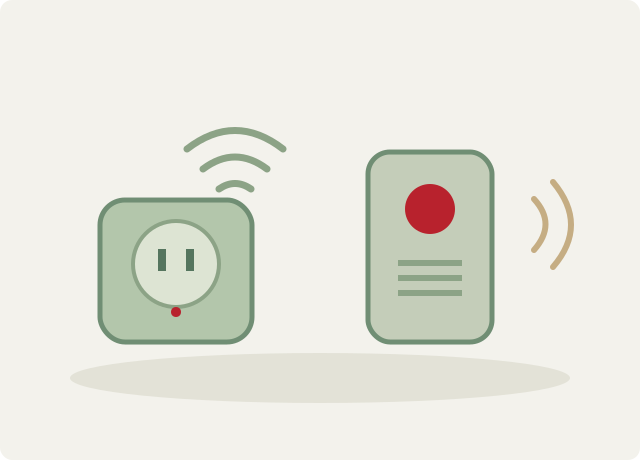
Start with a product reference, intended use and estimated quantity. We bring product selection, sample questions and quotation details into one conversation.
Email your reference image ↗Choose a focused product or discuss a coordinated assortment. Each direction can be developed into a more specific model and packaging brief.
Compare regional plug formats, supply voltages, load categories, phone control, schedules, countdown and household sharing for the selected connected appliance.
Enquire about this range ↗Develop a covered socket specification with a defined connected-plug condition, mounting location and approved environmental duty.
Enquire about this range ↗Build matched transmitter/receiver sets for local appliance control. Pairing behaviour and power-restoration state need to be defined.
Enquire about this range ↗Compare covered regional socket constructions and matching remotes with the exact environmental and electrical requirements.
Enquire about this range ↗Select a module around the circuit diagram, switch function, supply and load duty; confirm the phone and voice ecosystem for the offered version.
Enquire about this range ↗Evaluate Wi-Fi or local-radio reversible-motor control with the required wiring, direction interlock and limit/safety arrangement.
Enquire about this range ↗Prepare opener interfaces, position indication and required safety inputs before selecting a connected controller.
Enquire about this range ↗Coordinate battery wall transmitters, switch receivers and matched control groups. A shared radio frequency does not establish interoperability.
Enquire about this range ↗Compare battery-operated and plug-in receivers, melody selection, volume adjustment and multi-device pairing.
Enquire about this range ↗Choose receiver size and light indication for the room; distinguish open-field radio references from installed coverage.
Enquire about this range ↗Evaluate combined vibration and flashing notification for bedrooms, work spaces or other locations needing an additional alert mode.
Enquire about this range ↗Coordinate door-chime alerts, wireless-audio functions, charging and light effects with the exact app and interface requirements.
Enquire about this range ↗Define opening gap, mounting, pairing, alert routing and battery inclusion for a matched door/window indication set.
Enquire about this range ↗Specify the detection area, mounting height, site conditions and compatible receivers for motion-triggered alerts or control.
Enquire about this range ↗Evaluate indoor hubs combining network and compatible radio devices. Define the actual supported device list and account/network requirements.
Enquire about this range ↗Compare local water-leak and vibration alert directions with the required trigger, reset and audible indication behaviour.
Enquire about this range ↗Prepare the intended electrical task, range, AC/DC function and exact safety-category requirements for technical selection.
Enquire about this range ↗Evaluate contact/non-contact, polarity and continuity-related directions through an exact function table and current safety documentation.
Enquire about this range ↗Compare low-voltage DC ranges, probe reach, lead length and indication construction for the intended vehicle-circuit task.
Enquire about this range ↗Additional catalogue directions can be discussed as separate specifications. Confirm the current offered article, functions and supporting documents before including them in a purchase schedule.
Enquire about this range ↗Use these options to describe what you are buying. The public references identify your enquiry; the final model and specification are confirmed before an order.

Evaluate mobile switching, schedules, countdown and household sharing with a confirmed app and voice ecosystem.
Develop a separate regional plug specification; supply, pin configuration and appliance load need to match the destination.
Compare the published electrical load with the intended appliance and inrush duty before approving the connected device.
Use the listed current and wattage as separate catalogue values; approve the precise plug, load classification and destination documentation.
An outdoor-format option with a protective socket cover. Confirm the specified IP condition with the intended connected plug and installation.
Compare outdoor cover construction, regional socket format and control requirements separately from the indoor range.
Pair a matching transmitter and receiver for local appliance control without assuming Wi-Fi connectivity.
Evaluate one-to-many or multiple-transmitter arrangements and the required power-restoration behaviour for the selected set.
Match the socket and remote as a complete control set. Weather protection depends on the specified use and cover arrangement.
A separate regional socket construction for comparison; contact geometry and destination suitability require approval.
Provide the circuit diagram and load type when evaluating a mobile/voice-controlled wall module.
Evaluate reversible-motor control with a wiring diagram, interlock requirement and exact motor-load suitability.
Develop the opener interface and required position/safety inputs before approving a retrofit control arrangement.
A local radio switching direction; the listed wattage needs the intended load category and wiring to be confirmed.
Specify reversible-motor wiring and the required switching sequence; motor count and permitted load need a confirmed drawing.
Match the transmitter protocol and pairing procedure with the receiver rather than selecting by frequency alone.
Compare adjustable sound and transmitter/receiver pairing for a battery-operated receiver set.
A mains-powered receiver direction with selectable melodies and volume; approve the regional plug and transmitter pairing.
Compare a small receiver with visual indication and a separately qualified open-field radio reference.
Combine a door-chime requirement with speaker and coloured-light functions; confirm charging, battery capacity and wireless audio compatibility.
Compare vibration and visual notification for rooms where audible alerts alone may be insufficient.
Specify detection geometry and compatible receiving devices. Mounting, obstacles and site conditions affect motion and radio performance.
Develop door/window opening indication with the required mounting gap, pairing and receiving system.
Compare timer, sending and receiving functions with specifically compatible radio transmitters; frequency matching alone is insufficient.
An independent water-leak alert direction; confirm sensor placement, alarm behaviour and battery inclusion for the offered set.
Evaluate a local vibration alert with the required mounting, trigger sensitivity and reset behaviour.
Define the intended indication task, contact method and applicable safety requirements before selecting a tool.
Provide the required AC/DC functions and measurement category for technical review; this catalogue range alone does not establish safe isolation capability.
Compare the displayed range with the required indication mode and safety documentation; approve the exact display construction.
A wired probe direction for specified low-voltage vehicle circuits. Confirm polarity indication and the actual light/indicator construction.
Compare body reach and lead length for the intended low-voltage access task.
A shorter-body option for comparison with the exact vehicle-circuit requirement.
These are specification references for enquiry, not an offer of interchangeable devices. Radio distances describe stated open/free-field conditions. Installed reach, load suitability, app support, safety classifications and exact documentation require approval of the offered article.
Focus the sourcing conversation on the features, materials and production details that make a difference to your product range.
Prepare the socket, transmitter, receiver, sensor and control schedule together so the quotation can identify exact pairing and interface requirements.
Compare sound, light and vibration directions alongside receiver power and placement. Specify the required notification behaviour rather than relying on an unqualified loudness claim.
Keep supply voltage, plug format, enclosure conditions, switching duty and tester function explicit in the request, reducing mismatched samples and packaging.
Bring artwork, reference samples and a target cost. The available process, minimum quantity, sample charges and development scope are reviewed for the chosen option.
Send app/voice requirements, account setup expectations, pairing behaviour, return-after-outage state and any required button or indicator layout for feasibility review.
Provide artwork, label languages, destination markings, barcode and pack-set contents. Branding, tooling, packaging and instruction changes require confirmation for the selected article.
Request samples identified by the exact electrical and protocol variant. Agree sample charges, test plan, MOQ, production schedule and mixed-set packing in the quotation.
Agree which product characteristics need testing and how the approved sample relates to the bulk order.
Request drawings, rated-load categories, enclosure test conditions, wiring diagrams and relevant current test reports for the destination. A material description is not a complete-device safety approval.
Approve a tested device matrix, real installation coverage, network setup and firmware/app behaviour. Matching frequency alone does not confirm a compatible communication protocol.
Define voltage type/range, intended indication functions, measurement category, lead construction and required applicable standards. Tool selection and use need the appropriate technical and safety review.
Test capability is a starting point for the inspection plan. Request the method, applicable model and results needed for your order.
Ask for documents that identify the precise supplied variant, its intended market and the agreed sample. Certification and radio approvals require current scope verification.
State the sales market, intended users and required files in your first enquiry. Current validity and scope are checked for the selected supplier and product; a category description does not certify every item.
Share your document requirements ↗Your sales channel changes the assortment, packaging and quality priorities. Tell us the intended use as well as the product name.
Coordinate regional socket and switch assortments with the intended appliance load, app ecosystem and room layout.
Develop doorbell, vibration/light alert and compatible opening/motion sensor sets with a defined receiver and installation plan.
Prepare separate selection briefs for mains indication tasks and low-voltage vehicle-circuit probes, including the necessary safety documentation.
Samples, commercial terms and responsibilities are agreed for the project. Use the same product and packing specification when comparing quotations.
Product, reference image, quantity, sales market and timing.
Review configuration, materials, sample scope and relevant documents.
Agree artwork, packaging, sample, testing and inspection criteria.
Set price, payment, production, delivery and defect remedies in writing.
Practical answers about this sourcing direction, customization and the reference options. Your agreed specification and written quotation determine the actual order.
Only through an explicitly supported device and hub arrangement. Provide the required functions and request a confirmed compatibility list; a common frequency is insufficient.
No. The stated distances are open/free-field catalogue references. Walls, metalwork, installation, interference and device orientation change actual coverage.
The reviewed door-chime descriptions identify the transmitter as the protected part. Receiver placement and each component’s exact environmental rating require confirmation.
Load type, starting current, voltage and duty matter. Approve the exact appliance/load classification and socket variant; a maximum catalogue wattage is not universal load suitability.
Directions include sound, flashing light, vibration and speaker-related functions. Available combinations, power supply, pairing and pack contents depend on the selected set.
Define the required task and applicable safety requirements first. A catalogue voltage range does not by itself establish the functions or safety category needed for verification of isolation.
Send artwork, destination requirements, languages and item quantities for feasibility and pricing review. These changes, MOQ, sample charges and lead time require a specific quotation.
Provide product functions, destination, supply/plug format, load or test duty, radio/app requirements, quantities, documentation and packaging. For linked systems, include the complete device schedule.
Factory Sourcing Hub handles this enquiry as an independent sourcing and trading service. The product route, supplier suitability, sample scope and order responsibilities are agreed for the actual project.
Send the product reference, quantities per variation, customization and packaging. Prices, minimums, sample charges and delivery dates are confirmed in a current quotation; the page is not a live inventory or price feed.
Yes. State whether you need a reference sample, a customized sample or development work. Agree the sample cost and shipping, approval specification, inspection plan and remedy for non-conforming goods before the bulk order.
Reference images, drawings, logo artwork and a product list are useful. Include quantities, the intended users and sales market, packaging, required documents and timing. After submitting the form, email attachments to kunhuow@gmail.com with your enquiry reference.
A reference picture or a short description is enough to begin. Add the details you already know; the optional fields help make the follow-up more useful.
Download the enquiry checklist ↓
Independent sourcing and trading service. Supplier choice, service costs and order conditions are discussed for your project.
Product selection, customization, samples and quotation enquiries.
Compare separate product ranges and prepare a brief that fits your assortment.
Source conventional wall switches and sockets, Wi-Fi switches and USB power accessories, kinetic wireless doorbells and selected smart lighting or building-control project directions.
Explore this service ↗
Source wall switches and sockets, extension outlets, smart-home control directions, floor sockets, wiring accessories, ventilation fans, bathroom heaters, LED lighting and related electrical and bathroom equipment.
Explore this service ↗
Source two-wire and four-wire video intercoms, apartment entry systems, Wi-Fi and wireless doorbells, audio intercoms, alarm kits, door and motion sensors, cameras, smart-lock directions, security lights and selected related entry equipment.
Explore this service ↗
Source low-voltage circuit protection, transfer switches, contactors, starters, distribution boxes, smart gateways and solar electrical products. Match individual ratings, protection functions, mounting, communication and documents to the installation.
Explore this service ↗Information basis: published product information reviewed . Reference details support a sourcing discussion. Current supply, samples and product-specific documents are confirmed for the selected item.