Independent B2B sourcing · One trading contactkunhuow@gmail.com ↗
FACTORY SOURCING HUBProduct sourcing for business buyers
Get a quote ↗
Home/Cables & Electrical Hardware/Cable Ties, Stainless Straps, Clips & Wiring Accessories
PA66 ties · stainless straps · nail clips · terminals · glands · mounting · wrap · heat shrink · tools

Build a complete cable-management range. Match ties, fixing and connection accessories.

Cable Ties, Stainless Straps, Clips & Wiring Accessories

Source nylon and stainless cable ties, clips, crimp terminals, connectors, cable glands, tie mounts, spiral wrap, PVC tape, heat-shrink tubing and wiring tools. Compare individual sizes, fixing details, material requirements, private-label packing and sample acceptance.

  • Coordinate bundling, mounting, cable entry and connection products in one item schedule.
  • Compare actual dimensions, material grades, test conditions and installation compatibility.
  • Develop samples, colours, labels, barcodes and bulk or retail packaging.

Manufacturing, product documents and order conditions depend on the model and supply route selected for your project.

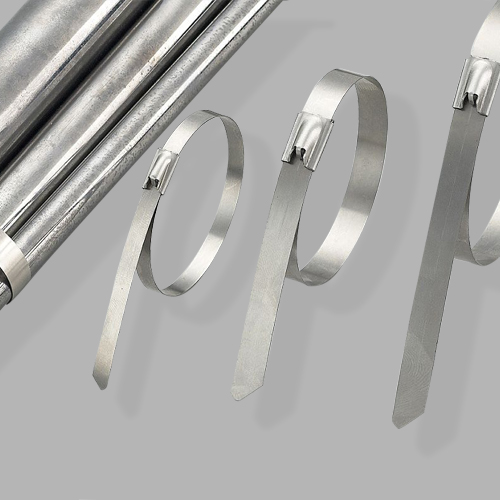
Uncoated stainless ball-lock cable straps
Product-construction reference. Confirm the selected stainless grade, dimensions, locking method, tool and required test evidence.

Start with a product reference, intended use and estimated quantity. We bring product selection, sample questions and quotation details into one conversation.

Email your reference image ↗
BundlingNylon · releasable · identification · stainless · hook-and-loop
Fixing and entryNail clips · tie bases · clamps · PG/metric glands
Connection and protectionTerminals · connectors · wrap · tape · heat shrink
Development scopeSize/material review · sample · artwork · packing
Explore the product range

Build the range
your buyers need.

Choose a focused product or discuss a coordinated assortment. Each direction can be developed into a more specific model and packaging brief.

Standard self-locking PA66 ties

Select standard nylon ties by bundle diameter, strap length, width and required retention. Natural, black and other colour options can be reviewed. Confirm the actual grade and environmental requirements. A loop-tensile test describes a specified test condition; it should not be converted directly into a safe lifting or support load.

Enquire about this range ↗

Enhanced-tensile constructions

Enhanced designs offer another procurement direction where increased loop retention is requested. Compare the same size and test conditions rather than relying on the family label. Include insertion force, head clearance, bundle sensitivity and conditioning in sample acceptance. Development work needs agreed dimensions, material and testing.

Enquire about this range ↗

Releasable, marker and mounting-head ties

Different head forms support release, identification or screw mounting. Specify whether the bundle needs repeated access, a marking area or a fixed attachment point. Confirm the selected drawing and compatible screw or label method. These functions are separate selections rather than features shared by every tie.

Enquire about this range ↗

Push-mount ties and panel fixing

Integral push-fixing designs can route a cable group through a prepared panel hole. Supply hole diameter, tolerance, panel thickness, accessible space and routing direction. Compare tie-loop strength separately from panel pull-out performance. The fixing must be evaluated on the actual panel and chosen construction.

Enquire about this range ↗

Colour-coded cable ties

Colour directions include blue, yellow, brown, green, natural/white, black, silver, grey, orange, gold and red. Provide an approved colour target and material requirement. Colour can support identification and range organization, but black alone does not prove UV stabilization or a particular outdoor life.

Enquire about this range ↗

Weather, UV, heat and cold requirements

Specialty nylon directions include weather/UV, elevated-temperature and low-temperature requirements. Selected outdoor descriptions mention different polyamide grades. Specify the exact grade, exposure, temperature and expected duration, then request matching evidence. A generic operating-range statement is not an outdoor-life or application approval.

Enquire about this range ↗

Detectable and alternative-material projects

Metal-detectable, POM and PE development directions can be submitted with the intended application and test criteria. For detection, include detector type, settings and minimum fragment requirement. Food-processing use does not itself establish food-contact approval. Any degradability claim needs a defined method, conditions and supporting evidence.

Enquire about this range ↗

Hook-and-loop reusable straps

Hook-and-loop directions provide an adjustable option for bundles needing repeated access. Specify length, width, closure, surface compatibility and retention. Colour and packing can be reviewed with the selected sample. Do not transfer one textile closure’s holding performance to a different size or repeated-use condition.

Enquire about this range ↗

Uncoated stainless ball-lock ties

Stainless constructions include selected grades and ball-lock designs for bundling requirements. Supply corrosion exposure, temperature, bundle surface and installation method. Confirm grade, edge finish and tool compatibility. Strength units in some tables need clarification, so final performance requires a consistent approved technical sheet.

Enquire about this range ↗

Coated, ladder-lock and cut-to-length metal bands

Metal directions also include epoxy-coated straps, multi-lock ladder forms and cut-to-length band with matching locks. Define grade, coating coverage, band thickness, edge treatment and closure. Roll-length and width units must be checked against a drawing. Coating or a metal body does not establish unlimited corrosion or electrical performance.

Enquire about this range ↗

Hook, round and flat nail-in clips

Nail-in clips support different cable profiles and fixing surfaces. Match the actual cable diameter or flat section to the clip drawing. Specify clip material, nail and substrate, plus colour and pack presentation. Confirm retention and installation conditions on the intended wall or panel.

Enquire about this range ↗

Ring and fork crimp terminals

Insulated ring and fork directions support defined wire ranges and screw sizes. Compare conductor construction, terminal body, plating, insulation and clearances. Include strip length and the required crimp tool. Current, voltage and temperature suitability must be checked for the actual completed connection and application.

Enquire about this range ↗

Male and female disconnect terminals

Disconnect directions provide removable electrical connection options. Specify tab dimensions, wire range, insulation and required retention. Confirm the compatible mating pair, tool, drawing and sample for the intended connection.

Enquire about this range ↗

Terminal strips, wire nuts and push-in connectors

Connection directions include U-type and V/W-type strips, wire nuts and push-in products. Define wire count, size, conductor type, electrical duty and mounting. Review the actual connection method, material and terminal layout. Catalogue family ratings should not be generalized to every conductor combination or installation.

Enquire about this range ↗

Nylon and brass cable glands

PG-thread and metric nylon directions and brass-bodied options address cable entry and strain-relief requirements. Provide cable outside diameter, thread, panel thickness and environmental conditions. Select seals and installation components together. Ingress performance needs evidence for the actual assembly; hazardous-area suitability requires separate approval.

Enquire about this range ↗

Adhesive, screw and masonry mounting accessories

Tie bases include self-adhesive, saddle and masonry directions, with R-type clamps for separate cable fixing. Supply surface, hole or screw details, available space and expected load. Review adhesive conditions or mechanical retention on the actual substrate. Match slots and clamps to the selected tie or cable.

Enquire about this range ↗

Spiral wrap and PVC tape

PE spiral wrap and PVC tape directions support bundle organization and harness protection. Specify width or diameter, length, colour and application. Tape backing, adhesive and performance need a consistent specification because descriptions differ. Any requested electrical insulation or environmental performance requires the selected product’s supporting information.

Enquire about this range ↗

Heat-shrink tubing

Two-to-one and three-to-one shrink directions support joint protection, harness organization and identification. Compare supplied and recovered diameters, wall thickness, material and recovery conditions. Specify adhesive lining, electrical and flame requirements where needed. Review drawing and sample for the actual construction rather than transferring a family-wide claim.

Enquire about this range ↗

Tensioning, cutting and crimping tools

Tool enquiries can include cable-tie tensioning/cutting and terminal preparation or crimping. Identify the tie, terminal, conductor and required finish. Confirm die or jaw compatibility and adjustment. Automated-line descriptions require a separate development brief and should not be assumed to describe a standard hand tool.

Enquire about this range ↗

Wiring ducts and additional routing requirements

Wiring-duct and supporting cable-management requirements can join a broader accessory schedule. Provide section, slot layout, material, cover, mounting, length and quantity. Confirm the selected current construction and documents before quotation. No duct size or electrical rating is inferred from the general range description.

Enquire about this range ↗

OEM ranges and retail packing

Develop an accessory range by size, colour, material and application, then align bulk or retail presentation. Packing directions include polybags, head cards, blister packs, jars, retail kits and cartons. Logo printing, labels, barcodes and instruction inserts require approved artwork and an agreed item schedule.

Enquire about this range ↗
Reference product directions

Start with a product.
Define the details.

Use these options to describe what you are buying. The public references identify your enquiry; the final model and specification are confirmed before an order.

Small self-locking nylon tie sourcing illustration
REFERENCE 0232-01

Small self-locking nylon tie

A compact PA66 reference for comparing small bundles and assembly space. Select the colour, material grade and test basis for the intended environment. A tensile-test value is not a suspended-load rating.

Length × width
60 × 2.5 mm
Bundle diameter
2–11 mm
Catalogue minimum tensile strength
18 lb; test conditions to confirm
Material direction
Nylon 66
Discuss this option ↗
Enhanced-tensile small tie sourcing illustration
REFERENCE 0232-02

Enhanced-tensile small tie

An enhanced construction in the same nominal size supports comparison where greater retention is requested. Confirm the actual loop test, conditioning and application rather than assuming the value applies to every width or material.

Length × width
60 × 2.5 mm
Bundle diameter
2–11 mm
Catalogue minimum tensile strength
24 lb; test conditions to confirm
Selection basis
Specific enhanced construction
Discuss this option ↗
Releasable cable-tie reference sourcing illustration
REFERENCE 0232-03

Releasable cable-tie reference

A reusable-lock direction for bundles requiring access or adjustment. Evaluate release operation, fit and retention using the intended cables. Confirm the allowable service and re-use requirements with the chosen construction.

Length × width
150 × 7.2 mm
Maximum bundle diameter
35 mm
Catalogue minimum tensile strength
50 lb; test conditions to confirm
Construction
Releasable locking head
Discuss this option ↗
Marker cable-tie reference sourcing illustration
REFERENCE 0232-04

Marker cable-tie reference

A tie with an identification area for organizing circuits or assemblies. Supply the marking method and information layout. Confirm usable label area and the durability of the chosen ink or print process.

Length × width
100 × 2.5 mm
Maximum bundle diameter
22 mm
Catalogue minimum tensile strength
18 lb; test conditions to confirm
Purpose
Bundling with identification
Discuss this option ↗
Push-mount cable-tie reference sourcing illustration
REFERENCE 0232-05

Push-mount cable-tie reference

A tie with an integral fixing feature for a prepared panel hole. Match hole tolerance, panel thickness and cable routing to the drawing. Retention of the mounting feature needs separate verification from loop tensile strength.

Tie length × width
100 × 2.5 mm
Maximum bundle diameter
25 mm
Mounting-hole diameter
4.8 mm
Panel-thickness reference
2.4 mm
Discuss this option ↗
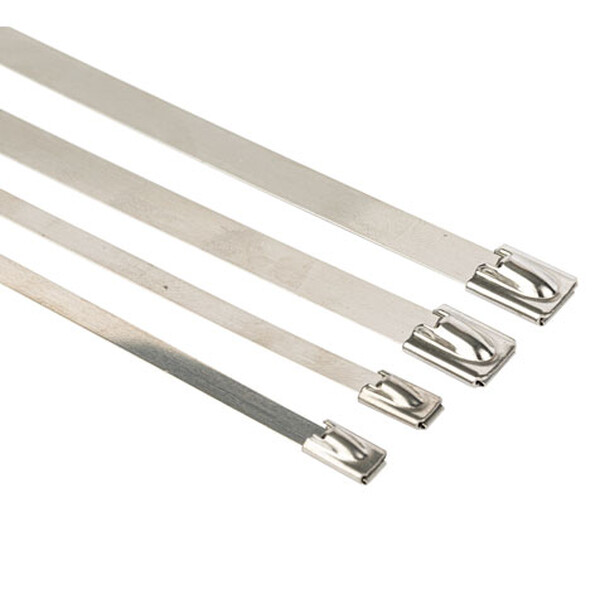
Uncoated stainless ball-lock reference sourcing illustration
REFERENCE 0232-06

Uncoated stainless ball-lock reference

Compare an uncoated metal construction for the intended corrosion, heat and installation conditions. Select stainless grade and confirm the installation tool and edge treatment. Strength figures require clarification before selection.

Length × width
150 × 4.6 mm
Maximum bundle diameter
37 mm
Material directions
304 or 316 stainless steel; selected grade to confirm
Lock direction
Ball lock
Discuss this option ↗
Coated stainless strap reference sourcing illustration
REFERENCE 0232-07

Coated stainless strap reference

A coated metal direction supports a separate surface and environmental review. Agree coating coverage, colour and handling of the cut tail. The coating does not itself establish a certified insulation system or unlimited corrosion resistance.

Length × width
150 × 4.6 mm
Maximum bundle diameter
37 mm
Surface direction
Epoxy-coated stainless construction
Performance review
Confirm coating and selected grade
Discuss this option ↗
Round nail-in cable clip sourcing illustration
REFERENCE 0232-08

Round nail-in cable clip

A small round-profile clip reference for matching the cable and fixing substrate. Confirm actual cable diameter, nail specification and installation surface. Fixing performance needs the selected wall or panel material.

Cable-diameter reference
4 mm
Clip height
5.3 mm
Nail size
1.7 × 15 mm
Construction direction
Round nail-in clip
Discuss this option ↗
Insulated ring-terminal reference sourcing illustration
REFERENCE 0232-09

Insulated ring-terminal reference

A crimp ring direction for a defined conductor range and stud opening. Match wire construction, terminal material, insulation and crimp tool. Review the completed connection against electrical, mechanical and environmental requirements.

Conductor range
0.5–1.5 mm²; AWG 22–16
Stud-hole diameter
3.2 mm
Overall length
17.8 mm
Insulation colour reference
Red
Discuss this option ↗
Insulated fork-terminal reference sourcing illustration
REFERENCE 0232-10

Insulated fork-terminal reference

A fork-style alternative for a compatible screw connection. Confirm stud and clearance, conductor preparation and the selected crimp tooling. The terminal’s catalogue current description is not a complete circuit ampacity assessment.

Conductor range
0.5–1.5 mm²; AWG 22–16
Screw-hole diameter
3.2 mm
Overall length
21.2 mm
Insulation colour reference
Red
Discuss this option ↗
PG-thread nylon gland reference sourcing illustration
REFERENCE 0232-11

PG-thread nylon gland reference

A cable-entry direction for a selected circular cable. Match thread, panel and sealing range to the enclosure drawing. Any requested ingress rating requires the exact gland, seal, cable and installation evidence.

Thread
PG7
Cable range
3–6.5 mm
Thread-length reference
8 mm
Material direction
Nylon 66 body with selected sealing components
Discuss this option ↗
Metric nylon gland reference sourcing illustration
REFERENCE 0232-12

Metric nylon gland reference

A metric-thread direction for comparison with the prepared enclosure entry. Confirm thread form and length, seal material, cable diameter and assembly arrangement. Similar outside dimensions do not make PG and metric threads interchangeable.

Thread
M12 × 1.5
Cable range
3–6.5 mm
Thread-length reference
7.9 mm
Material direction
Nylon 66 body
Discuss this option ↗
Brass gland reference sourcing illustration
REFERENCE 0232-13

Brass gland reference

A metal-bodied direction with nickel-plated brass and selected seals. Define environment, thread and cable before reviewing ingress or corrosion performance. Standard cable glands should not be assumed to have hazardous-area approval.

Thread
PG7
Cable range
3–6.5 mm
Thread-length reference
5 mm
Body direction
Nickel-plated brass
Discuss this option ↗
Self-adhesive tie-mount reference sourcing illustration
REFERENCE 0232-14

Self-adhesive tie-mount reference

A small adhesive-base direction for cable routing where drilling is restricted. Define surface, preparation, temperature and load. Approve adhesion and retention under the actual conditions, alongside the compatible cable tie.

Base length × width
20 × 20 mm
Height
6.1 mm
Catalogue carton quantity
20,000 pieces for this reference
Catalogue carton dimensions
52 × 35 × 36 cm; final packing to confirm
Discuss this option ↗
PE spiral-wrap reference sourcing illustration
REFERENCE 0232-15

PE spiral-wrap reference

A spiral-wrap direction for organizing a cable group while retaining branch access. Confirm wrapping range and the desired protection or identification function. The wrap is not automatically a certified replacement for the cable’s insulation.

Inside / outside diameter
4 / 6 mm
Pitch
7.0 mm
Material
PE
Pack-length direction
10 m; order packing to confirm
Discuss this option ↗
Two-to-one heat-shrink reference sourcing illustration
REFERENCE 0232-16

Two-to-one heat-shrink reference

A heat-shrink reference for checking supplied and recovered diameter around the intended joint. Confirm application temperature, recovery procedure, insulation requirements and any adhesive-lining need before selection.

Nominal family ratio
2:1
Supplied inside diameter
5.4 ± 0.4 mm
Recovered inside diameter
2.3 ± 0.1 mm
Catalogue application range
2.6–4.5 mm
Discuss this option ↗
Three-to-one heat-shrink reference sourcing illustration
REFERENCE 0232-17

Three-to-one heat-shrink reference

A higher-ratio direction for an assembly with differing diameters. The selected drawing and technical sheet should resolve wall-thickness details and any required sealing. Do not transfer another construction’s electrical or flame rating.

Nominal family ratio
3:1
Supplied inside diameter
5.1 ± 0.3 mm
Recovered inside diameter
1.60 mm
Catalogue application range
1.8–4.6 mm
Discuss this option ↗
Nylon cable-tie tensioning and cutting tool sourcing illustration
REFERENCE 0232-18

Nylon cable-tie tensioning and cutting tool

A hand-tool direction for selected nylon ties. Confirm compatible head and strap dimensions, tension adjustment and cut finish with the chosen tool and tie samples.

Tie-width direction
2.5–4.8 mm
Function direction
Tensioning and cutting selected ties
Selection review
Confirm actual tool and tie compatibility
Length and head fit
Confirm against the selected tool sample
Discuss this option ↗

Each reference applies to one catalogue construction. Confirm drawings, material grade, colour, test conditions and final packaging before ordering. Tensile values describe specified tests; application retention, mounting and tool compatibility require their own review.

What matters for this category

A better brief.
A clearer comparison.

Focus the sourcing conversation on the features, materials and production details that make a difference to your product range.

01

Coordinate a complete accessory schedule

Combine ties and mounting with glands, terminals, connectors, protection and tools. Specify compatible components together instead of reviewing dimensions in isolation. A structured schedule helps align colour, material, packing and replenishment across an accessory range.

02

Select the construction for the actual installation

Bring bundle diameter, mounting surface, panel hole, conductor and environmental requirements into the selection. Compare the exact drawing, test conditions and intended tool. Specialty grades, coatings and closures need their own evidence and acceptance criteria.

03

Develop industrial and retail presentation

Plan bulk supply, retail packs, mixed-colour sets and identification around the buyer’s range. Agree label/barcode data, instructions, artwork and quantity per pack. Samples and packing proofs provide a concrete acceptance point before the production order.

Branding, configuration & packaging

Make the product
fit your programme.

Bring artwork, reference samples and a target cost. The available process, minimum quantity, sample charges and development scope are reviewed for the chosen option.

01

Dimensions, material and performance brief

Submit drawings or samples with length, width, bundle range, head/locking form, colour and intended use. Selected OEM directions support grade and performance development. Agree feasibility, tooling, test method and acceptance; a requested UV or flame characteristic requires matching evidence for the actual construction.

02

Private labels and packaging

Provide artwork, barcodes, labels and instructions for polybags, head cards, blisters, jars, retail kits or cartons. Confirm quantities and whether sizes or colours are mixed. Approve the pack sample and proof, including required product markings. A retail-ready format does not imply marketplace approval.

03

Samples and order milestones

Samples and development from customer references can be requested. Agree charges, specification approval, artwork, inspection and production schedule for the chosen items. MOQ, lead time, delivery and warranty are quoted by product and packing; general FAQ figures do not define every order.

Quality & product evidence

Turn requirements
into checks.

Agree which product characteristics need testing and how the approved sample relates to the bulk order.

01

Material, moulding and dimensional checks

The described process includes incoming-material inspection, production checks and pre-shipment sampling. For an order, agree grade evidence, dimensions, head form, surface finish and traceability. Review material changes separately rather than transferring one resin approval to all finished products.

02

Loop, insertion and environmental testing

Available process descriptions include tensile, insertion, moisture and temperature checks. Agree specimen conditioning, test method and acceptance for the selected size/material. Specialty exposure or detection requirements need their own test scope. Application retention and mounting pull-out are separate from loop strength.

03

Pack quantity and finished-order acceptance

The packing process describes weight-based filling with sampled piece counts and label checks. Agree the required pack quantity, tolerance, sample count and carton contents. Check artwork, size mix, product identification and transport protection against the approved order before shipment.

Test capability is a starting point for the inspection plan. Request the method, applicable model and results needed for your order.

Documents matched to the order

Ask for evidence
that fits the product.

Request technical evidence for the actual item, material, construction and destination. A resin mark, historical certificate or application name does not establish approval of the finished product or an entire installation.

State the sales market, intended users and required files in your first enquiry. Current validity and scope are checked for the selected supplier and product; a category description does not certify every item.

Share your document requirements ↗
Product and installation information
Request dimensioned drawings, material/grade information, test conditions and installation or tooling instructions. For connections include conductor and mating details; for glands include thread, cable range and seal arrangement. Confirm drawing revision before approving a sample or substituting an existing component.
Selected test and compliance records
State required standards, destination and configuration. Review the matching reports, declarations or certificates, including applicant, tested construction and current scope. Confirm UV, temperature, flame, ingress or detectable-material claims individually. Processing-area use alone does not establish food-contact or contamination-control compliance.
Sample, artwork and inspection file
Record approved samples, packing artwork, item quantities and agreed acceptance criteria. Include lot identification, inspection and shipment records where required. For developments, agree tooling ownership, changes, commercial schedule and responsibility for destination-specific documentation.
Built around how you sell

Different buyers.
Different specifications.

Your sales channel changes the assortment, packaging and quality priorities. Tell us the intended use as well as the product name.

01

Electrical installation and panel building

Organize cable ties, panel fixing, glands, terminal connections and tubing around the installation drawings. Provide conductor and cable sizes, panel details, environment and required standards. Agree component compatibility and the scope of any completed assembly separately.

02

Machinery, harnesses, telecom and outdoor projects

Supply routing, vibration, exposure, temperature and service-access requirements. Compare standard or specialty nylon, metal and reusable constructions as appropriate. Outdoor, marine or energy-project names are application directions; suitability needs the exact selected material and evidence.

03

Hardware distribution and private-label ranges

Create a size and colour matrix with bulk or retail pack formats. Include complementary mounts, clips, glands, terminals and tools. Confirm barcodes, language, artwork, sampling, carton quantities and replenishment needs for each line.

From first brief to a defined order

One contact.
A practical next step.

Samples, commercial terms and responsibilities are agreed for the project. Use the same product and packing specification when comparing quotations.

01

Share the requirement

Product, reference image, quantity, sales market and timing.

02

Compare suitable options

Review configuration, materials, sample scope and relevant documents.

03

Approve the specification

Agree artwork, packaging, sample, testing and inspection criteria.

04

Confirm the order plan

Set price, payment, production, delivery and defect remedies in writing.

Buyer questions

Before you send
your first enquiry.

Practical answers about this sourcing direction, customization and the reference options. Your agreed specification and written quotation determine the actual order.

Which products can be included in one enquiry?

Nylon and stainless cable ties, reusable straps, clips, tie bases, clamps, terminals, connectors, glands, wrap, tape, heat shrink and tools can be scheduled together. Wiring-duct or specialty-material requests need a detailed brief and confirmation of the selected supply scope.

How should I select a nylon cable tie?

Provide bundle diameter, strap length/width, locking form, retention, colour and environment. Confirm actual material grade and test conditions. Include insertion, surface sensitivity and installation tool where relevant. A matching width alone does not establish equal performance.

Are black ties always suitable outdoors?

No. Specify the UV/weather requirement and actual material grade, exposure and duration. Request matching test information for the chosen construction. Colour alone is insufficient, and a broad operating-temperature description does not establish an outdoor service life.

Does tensile strength equal a safe support load?

No. Catalogue loop-tensile values describe testing under defined conditions. Mounting, load direction, environment and installation change performance. State the actual retention requirement and request suitable evidence; no lifting or structural-support rating is implied.

How do I choose stainless grade and coating?

Provide corrosion environment, temperature, bundle surface and installation method. Confirm grade, thickness, edge treatment, closure and coating coverage. Request a consistent strength specification where catalogue units conflict. A coated strap is not automatically a certified electrical-insulation product.

Can ties be released, labelled or mounted to a panel?

Separate constructions address release, marker areas, screw mounting and push mounting. Provide access and identification needs, screw or hole details, panel thickness and routing. Confirm drawings and samples; mounting pull-out and loop retention need separate assessment.

What is needed for a cable gland quotation?

Specify PG or metric thread, thread length, cable diameter, panel thickness, seal and environment. Request evidence for any ingress rating on the actual assembly. Hazardous-area approval, cable armour termination and special bonding require explicit technical review.

How are terminals and crimp tools matched?

Provide conductor size/type, terminal or mating dimensions, insulation and required electrical duty. Match the die/jaw and preparation instructions to the actual terminal. Review the completed crimp, clearances and retention; a broad current statement does not establish circuit ampacity.

Can adhesive bases be used on any surface?

Surface, preparation, temperature, exposure and load affect adhesion. Provide actual substrate and duty, then agree a sample test. Confirm base dimensions and tie compatibility. Mechanical mounting options can be reviewed where adhesive retention is unsuitable.

What information is required for heat shrink or tape?

Provide the joint or bundle size, supplied/recovered diameter or tape width, material, colour and application. State sealing, electrical, flame and environmental requirements. Confirm the exact construction and test evidence; different ratios, adhesives or materials cannot share one assumed rating.

Can detectable or degradable ties be sourced?

Submit the specific material and application requirement. For detection, include the detector and minimum-fragment test. For degradability, define the required method and conditions. Processing-area use and general marketing terms do not establish food-contact approval or a verified environmental claim.

Which private-label packing options can be requested?

Directions include polybags, head cards, blisters, jars, retail kits and bulk cartons, with logo, barcode, stickers and instruction inserts. Submit the item/colour mix and quantities. Agree feasibility, proof and sample approval before production.

What are MOQ, sample terms and production time?

These depend on item, quantity, material, development and packaging. Samples are available for review, with charges and schedule confirmed in the quotation. Include delivery window, destination and required documents. One catalogue example or general FAQ does not establish all-order terms.

Who handles my enquiry?

Factory Sourcing Hub handles this enquiry as an independent sourcing and trading service. The product route, supplier suitability, sample scope and order responsibilities are agreed for the actual project.

How do I get a price and order minimum?

Send the product reference, quantities per variation, customization and packaging. Prices, minimums, sample charges and delivery dates are confirmed in a current quotation; the page is not a live inventory or price feed.

Can I discuss samples and inspection before ordering?

Yes. State whether you need a reference sample, a customized sample or development work. Agree the sample cost and shipping, approval specification, inspection plan and remedy for non-conforming goods before the bulk order.

What should I attach to my email?

Reference images, drawings, logo artwork and a product list are useful. Include quantities, the intended users and sales market, packaging, required documents and timing. After submitting the form, email attachments to kunhuow@gmail.com with your enquiry reference.

Tell us what you are planning

Your next order
starts with a brief.

A reference picture or a short description is enough to begin. Add the details you already know; the optional fields help make the follow-up more useful.

  • Item schedule, bundle/cable/conductor sizes, fixing drawings and installation environment
  • Material/grade, colours, retention and required model-specific performance evidence
  • Samples, tools/accessories, artwork, barcodes, quantities per pack and carton requirements
  • Order quantities, destination, documentation, inspection scope and delivery window
kunhuow@gmail.com

Download the enquiry checklist ↓

Independent sourcing and trading service. Supplier choice, service costs and order conditions are discussed for your project.

Discuss your requirements.

Product selection, customization, samples and quotation enquiries.

Add product, quantity or customization details (optional)

Submit your enquiry directly. We use your details to respond to your sourcing request. For attachments, email kunhuow@gmail.com with your enquiry reference. Enquiry data use.

Information basis: published product information reviewed . Reference details support a sourcing discussion. Current supply, samples and product-specific documents are confirmed for the selected item.

Have a product in mind?
Share your sourcing brief.
Send an enquiry ↗