Independent B2B sourcing · One trading contactkunhuow@gmail.com ↗
FACTORY SOURCING HUBProduct sourcing for business buyers
Get a quote ↗
Home/Kitchen & Housewares/Moulded Pulp Plates, Bowls, Clamshells & Food-Packaging Sourcing
Bagasse-pulp directions · plates · bowls · compartment trays · clamshells · lids

Choose the portion and the pack. Develop moulded-pulp food service.

Moulded Pulp Plates, Bowls, Clamshells & Food-Packaging Sourcing

Source moulded-pulp plates, bowls, portion cups, compartment trays, clamshells and food boxes around your food-service requirements. Compare bagasse-pulp and unbleached directions, confirm matching lids and packaging, and request evidence for the exact material, intended use and disposal claim.

  • Develop a coordinated food-service range by portion, shape and closure.
  • Compare item-specific listed sizes, weights and carton quantities.
  • Confirm food-contact requirements, use conditions and any environmental claims before approval.

Manufacturing, product documents and order conditions depend on the model and supply route selected for your project.

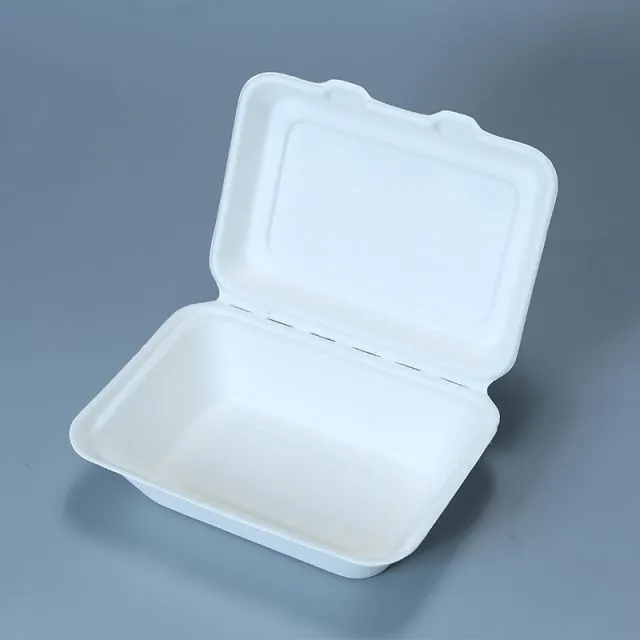
Open white moulded-pulp hinged food box
Hinged-container appearance reference; approve the current size, closure and intended use.

Start with a product reference, intended use and estimated quantity. We bring product selection, sample questions and quotation details into one conversation.

Email your reference image ↗
Hinged-box reference7 × 5 × 2 inch / 600 ml listed lunch box
Bowl references500 ml soup bowl and 950 ml serving bowl
Plate references16 × 16 cm, 20 × 20 cm and 10 × 12 inch oval
Selection basisExact material, portion, lid fit and documented intended use
Explore the product range

Build the range
your buyers need.

Choose a focused product or discuss a coordinated assortment. Each direction can be developed into a more specific model and packaging brief.

Hinged pulp clamshells

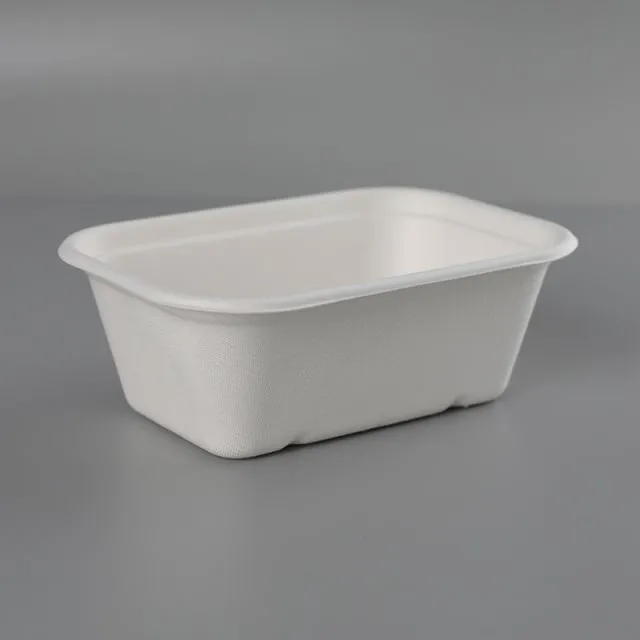
A hinged container joins a base and cover for takeaway presentation. One published reference is described as a 7 × 5 × 2 inch, 600 ml lunch box. Specify the actual open and closed envelope, usable fill, hinge and closure, and how the filled item will be carried or stacked. A hinged shape alone does not establish leak resistance.

Enquire about this range ↗

Separate food boxes and lunch containers

Box directions include individually listed capacities and shapes for food-service packing. Define the portion, rim, depth, cover and any inserts. Confirm the current matching article and complete parameter sheet before applying a capacity or pack quantity; a similar-looking box may use a different mould and lid.

Enquire about this range ↗

Soup bowls and meal bowls

A 500 ml soup-bowl reference and a 950 ml bowl provide two starting points. Specify usable fill, intended food, handling, service duration and whether a lid is required. The actual pulp formulation, coating or other treatment, rim and cover determine which use evidence is needed.

Enquire about this range ↗

Small portion cups

Separate 2 oz and 4 oz cup references support portion planning. Describe the contents, fill line, handling and whether a cover is required. Keep the listed ounce description separate from an assumed millilitre conversion; the offered article needs its own current measured capacity and fit information.

Enquire about this range ↗

Round, square and deep plates

The range includes round plates, square plates and deeper plate forms. Set the food portion, usable centre area, rim, depth and required carrying or cutlery conditions. Explicit 16 × 16 cm and 20 × 20 cm square references are available, with other dimensions requested for the chosen current mould.

Enquire about this range ↗

Oval serving plates

An oval plate reference is listed at 10 × 12 inches. State the food presentation and stacking needs, then confirm the exact measured envelope, usable area and pack. Plate dimensions and shipping-carton dimensions are separate data and must be recorded in different fields.

Enquire about this range ↗

Compartment plates and meal trays

Separate portions can be planned using compartment plates or trays. A five-compartment tray is one specific reference; other catalogue directions include three-compartment plates and six-compartment trays. Specify the actual compartment map, portions, dividers, stiffness and cover arrangement rather than assuming equal compartment volumes.

Enquire about this range ↗

Supermarket and presentation trays

Flat and formed tray directions include food-display and meat-tray routes. Provide the product contents, filled load, display duration, overwrap or cover method and required shelf presentation. Confirm current mould dimensions, stacking and applicable food-contact evidence for the actual article and packing system.

Enquire about this range ↗

Lids and cover matching

Lids are listed for soup bowls, other bowls, cups and food boxes. Identify the exact container and lid combination, rim tolerances, venting and closure operation. A category label does not establish whether every cover is PLA or moulded bagasse; require the actual material and any relevant treatment for the selected lid.

Enquire about this range ↗

Unbleached pulp directions

Unbleached products are a separately identified development direction. Agree the proposed fibre composition, colour range, appearance variation and any coating or additive requirements. An unbleached appearance does not independently establish compostability, recyclability, chemical absence or the conditions under which an environmental claim is valid.

Enquire about this range ↗

Paper straws and wider buffet supplies

The original business scope includes paper straws and other disposable buffet-tableware directions. Treat these as current-assortment enquiries, with their own material, dimensions, food-contact and performance requirements. Do not apply a bagasse-plate composition or a bowl test to a straw or a different utensil.

Enquire about this range ↗

Custom pulp forms and coordinated ranges

Custom appearances and product-development requests can be discussed alongside standard shapes. Supply drawings, intended contents, size constraints, quantities and packing requirements. Confirm offered development, mould ownership, sample stages, cost, minimums and evidence for the actual new article before making a commercial commitment.

Enquire about this range ↗
Reference product directions

Start with a product.
Define the details.

Use these options to describe what you are buying. The public references identify your enquiry; the final model and specification are confirmed before an order.

600 ml hinged lunch-box reference sourcing illustration
REFERENCE 0113-01

600 ml hinged lunch-box reference

A published clamshell entry identifies a nominal 7 × 5 × 2 inch lunch box and a 600 ml description. Its separate listed weight and packing data provide a comparison point. Request the current usable-fill definition, open and closed drawing, hinge and latch sample before selecting it.

Listed size
7 × 5 × 2 inches
Listed capacity
600 ml
Listed unit weight
20 g
Reference packing
8 × 50 = 400 pieces per carton
Reference outer carton
40 × 27.5 × 38 cm
Discuss this option ↗
950 ml bowl reference sourcing illustration
REFERENCE 0113-02

950 ml bowl reference

The separate bowl entry uses a 32 oz / 950 ml description. Preserve those listed labels and request the actual capacity-measurement basis. Confirm the current rim, usable fill and any matching cover as a combined sample.

Listed description
32 oz / 950 ml bowl
Listed unit weight
26 g
Reference packing
4 × 125 = 500 pieces per carton
Reference outer carton
42 × 30.5 × 42.5 cm
Discuss this option ↗
500 ml soup-bowl reference sourcing illustration
REFERENCE 0113-03

500 ml soup-bowl reference

A soup-bowl reference is listed at 500 ml with its own weight and packing. Specify the intended contents and serving conditions. Any temperature, liquid-holding or handling requirement must be established for the selected bowl and complete closure.

Listed capacity
500 ml
Listed unit weight
12 g
Reference packing
20 × 50 = 1,000 pieces per carton
Reference outer carton
65 × 37 × 26.5 cm
Discuss this option ↗
Cover direction for the 500 ml soup bowl sourcing illustration
REFERENCE 0113-04

Cover direction for the 500 ml soup bowl

The corresponding lid entry identifies a cover for a 500 ml soup bowl. Confirm exact bowl compatibility and actual material, as the catalogue category and generic pulp text do not resolve every lid construction. It is a separate component and is not assumed included with the bowl.

Listed component
500 ml soup-bowl lid
Listed unit weight
7 g
Reference packing
20 × 50 = 1,000 pieces per carton
Reference outer carton
67.5 × 28 × 27.5 cm
Discuss this option ↗
Five-compartment meal-tray reference sourcing illustration
REFERENCE 0113-05

Five-compartment meal-tray reference

This entry describes a larger tray divided into five sections. Choose it by the actual compartment layout and food portions. Ask for a dimensioned current drawing and filled-use sample; no product dimensions are inferred from unitless catalogue-menu numbers.

Listed construction
Five compartments
Listed unit weight
35 g
Reference packing
2 × 125 = 250 pieces per carton
Reference outer carton
42 × 32.5 × 21 cm
Discuss this option ↗
16 × 16 cm square-plate reference sourcing illustration
REFERENCE 0113-06

16 × 16 cm square-plate reference

A square plate is explicitly described as 16 × 16 cm. Confirm the depth, rim, usable area and current weight tolerance for your portion. The listed packing count supports a logistics discussion without defining the order minimum.

Listed plate size
16 × 16 cm
Listed unit weight
15 g
Reference packing
4 × 125 = 500 pieces per carton
Discuss this option ↗
20 × 20 cm square-plate reference sourcing illustration
REFERENCE 0113-07

20 × 20 cm square-plate reference

The larger square reference is separately described as 20 × 20 cm. Its distinct listed weight is not borrowed from the smaller plate. Compare both current samples for the required food load, handling, nesting and retail or food-service pack.

Listed plate size
20 × 20 cm
Listed unit weight
18 g
Reference packing
4 × 125 = 500 pieces per carton
Discuss this option ↗
10 × 12 inch oval-plate reference sourcing illustration
REFERENCE 0113-08

10 × 12 inch oval-plate reference

The oval serving direction is listed at 10 × 12 inches with its own unit weight and packing count. Confirm the measured plate envelope and intended serving arrangement; the appearance and nominal size do not establish a particular food load or stiffness.

Listed plate size
10 × 12 inches, oval
Listed unit weight
28 g
Reference packing
4 × 125 = 500 pieces per carton
Discuss this option ↗
2 oz and 4 oz portion-cup references sourcing illustration
REFERENCE 0113-09

2 oz and 4 oz portion-cup references

These are separate cup references with different listed weights and packing. Select by actual contents and serving portion, and confirm the matching lid if required. Their numbers remain separate; no single universal cup material or performance result is established here.

Small reference
2 oz; 3 g; 25 × 100 = 2,500 pieces per carton
Larger reference
4 oz; 5 g; 36 × 50 = 1,800 pieces per carton
To confirm
Current measured capacity, rim, lid and use requirements
Discuss this option ↗
Unbleached forms, display trays and paper-straw brief sourcing illustration
REFERENCE 0113-10

Unbleached forms, display trays and paper-straw brief

A range-confirmation route covering unbleached pulp, supermarket trays, original-scope paper straws and other buffet supplies. Provide the material and use requirements of each article. Current moulds, sizes, finishes, samples and packing need individual confirmation.

Catalogue directions
Unbleached products and food-display trays
Original-scope direction
Paper straws and wider buffet supplies; current assortment to confirm
Discuss this option ↗

Each numeric reference comes from its own published product sheet. Listed weights and carton counts are reference values, not current tolerances or order minimums. Carton dimensions are shipping data. Generic catalogue environmental, heat-use and certification statements are not treated as verified claims for these articles.

What matters for this category

A better brief.
A clearer comparison.

Focus the sourcing conversation on the features, materials and production details that make a difference to your product range.

01

Coordinate food-service portions

Develop one item schedule across clamshells, soup bowls, plates, portion cups and compartment trays. Define each usable portion and complete closure so the proposed assortment supports the actual serving task and the approved sample corresponds to the quotation.

02

Match lids to exact containers

A lid can change filling, stacking, carrying and the materials that need evaluation. Identify the bowl or box and lid as a specific combination, with current fit, venting, closure and packaging requirements. A nominal volume alone is not enough to establish a matching cover.

03

Bring logistics into selection

Reference pack quantities, unit weights and carton dimensions help compare packing directions. Request current values for the exact offered item and retail or bulk packing, then confirm gross weights, pallet or container arrangements and transit protection in the shipping plan.

Branding, configuration & packaging

Make the product
fit your programme.

Bring artwork, reference samples and a target cost. The available process, minimum quantity, sample charges and development scope are reviewed for the chosen option.

01

Shape and mould-development brief

Supply the required envelope, food portion, compartment layout, rim and closure features, along with drawings or permitted references. Confirm development feasibility, sample stages, tooling responsibilities and costs. A custom appearance is quoted for the actual construction and intended volume.

02

Fibre, colour and finish

Specify the proposed fibre, unbleached or other colour direction, coating, additives and appearance requirements. Request the offered formulation and relevant evidence. Do not infer the absence of a substance, or a disposal route, solely from the material name or natural-looking colour.

03

Branding and packaging

Send authorised artwork and define whether the mark belongs on a sleeve, bag, carton or other agreed component. Identify contact areas and legibility needs. Confirm exact unit counts, labels, storage instructions and any approved environmental wording for the product and destination.

04

Order and sample planning

State quantities by shape, size and pack, intended foods, service conditions, destination and requested delivery date. Agree current minimums, sample charges, development time, approval stages, production timing and shipment basis before an order is placed.

Quality & product evidence

Turn requirements
into checks.

Agree which product characteristics need testing and how the approved sample relates to the bulk order.

01

Food-contact evidence for the actual article

Request applicable reports or declarations for the selected fibre formulation, coating, lid and intended food-contact conditions. Check the product scope, holder, dates and destination requirements. A general statement or a system certificate does not establish every item or every use.

02

Filled-use and packing checks

Define the food type, liquid or oil exposure, fill, service duration, carrying and stacking conditions. Agree appropriate checks for leakage, deformation, stiffness, lid fit and closure. Any temperature or appliance claim must be supported for the complete item under stated conditions.

03

Environmental claims with defined conditions

If compostability, biodegradability, recyclability or another disposal claim is required, identify the exact material, applicable standard, conditions and destination collection route. Request current supporting evidence and confirm permitted label wording. No fixed degradation time or universal disposal claim is promised here.

04

Consistent physical and shipping approval

Record dimensions, weights and acceptable variation for each item, then approve nesting, separation, pack quantity, carton, labels and transit protection. Keep the agreed sample and specification revision connected to the inspection plan and treatment of non-conforming goods.

Test capability is a starting point for the inspection plan. Request the method, applicable model and results needed for your order.

Documents matched to the order

Ask for evidence
that fits the product.

Keep the material, intended use, physical specification and pack under one approval record for each pulp article and matching lid.

State the sales market, intended users and required files in your first enquiry. Current validity and scope are checked for the selected supplier and product; a category description does not certify every item.

Share your document requirements ↗
Current item and material sheet
Record the shape, nominal and usable capacity, dimensions, unit-weight tolerance, fibre formulation, treatment, coating, lid and complete pack.
Applicable food-use and environmental evidence
Ask for current documents covering the actual item, conditions and destination. Confirm holder, product scope, dates, relevant test basis and any authorised label wording.
Sample, artwork and logistics approval
Retain the accepted sample, fit checks, authorised artwork, packaging, carton data, storage instructions and agreed inspection requirements.
Built around how you sell

Different buyers.
Different specifications.

Your sales channel changes the assortment, packaging and quality priorities. Tell us the intended use as well as the product name.

01

Takeaway and meal service

Plan clamshells, boxes, bowls and matching covers around the food, portion, carrying and service conditions.

02

Catering and buffet presentation

Combine plates, portion cups and compartment trays with defined contents, handling, portion layout and pack quantities.

03

Retail food display and disposable-tableware ranges

Develop trays, unbleached forms and wider paper-tableware directions with article-specific materials, evidence, presentation and disposal wording.

From first brief to a defined order

One contact.
A practical next step.

Samples, commercial terms and responsibilities are agreed for the project. Use the same product and packing specification when comparing quotations.

01

Share the requirement

Product, reference image, quantity, sales market and timing.

02

Compare suitable options

Review configuration, materials, sample scope and relevant documents.

03

Approve the specification

Agree artwork, packaging, sample, testing and inspection criteria.

04

Confirm the order plan

Set price, payment, production, delivery and defect remedies in writing.

Buyer questions

Before you send
your first enquiry.

Practical answers about this sourcing direction, customization and the reference options. Your agreed specification and written quotation determine the actual order.

Are all products made entirely from bagasse?

Bagasse is a published material direction for the moulded-pulp range. Confirm the exact fibre formulation, additives, coatings and lid material for the selected item; it is not assumed identical across every category.

Are all listed lids PLA?

The category contains different lid and bagasse-related directions. Confirm the actual material and matching container for the selected lid rather than relying on the category name.

Does the soup bowl include its lid?

The 500 ml bowl and corresponding cover are separate references. Confirm the offered combination, fit, inclusion and packing in the quotation.

Do 32 oz and 950 ml describe a measured fill line?

Those are the labels used by the selected bowl reference. Request current measured nominal and usable capacities and the measurement basis; no exact conversion or fill line is inferred.

Are the weights and packing quantities guaranteed?

They are published reference values. Current unit-weight tolerances, inner packs, carton counts, dimensions and gross weights are established for the exact offered article and pack.

Are carton quantities the minimum order?

No. Packing counts describe a reference packing arrangement. Current order minimums, mixed-item rules, development costs and prices are confirmed separately.

Can these products go in a microwave or refrigerator?

No universal appliance-use claim is established here. Request instructions and appropriate evidence for the exact material, coating, lid, food and conditions of use.

Do the products biodegrade within a fixed time?

No fixed-time claim is made. Any environmental claim needs current evidence for the exact material and stated conditions, along with appropriate wording for the sales market and disposal route.

Can you develop an unbleached shape or new compartment layout?

Provide drawings, portions, functional needs, materials, quantities and packing requirements. Offered development, mould work, sampling, cost, minimums and timing are confirmed in a project quotation.

Can paper straws be combined with pulp plates in one enquiry?

Yes, as a separate range-confirmation request. State straw dimensions, materials, beverage and service requirements. Plate composition and performance evidence are not automatically applied to straws.

Who handles my enquiry?

Factory Sourcing Hub handles this enquiry as an independent sourcing and trading service. The product route, supplier suitability, sample scope and order responsibilities are agreed for the actual project.

How do I get a price and order minimum?

Send the product reference, quantities per variation, customization and packaging. Prices, minimums, sample charges and delivery dates are confirmed in a current quotation; the page is not a live inventory or price feed.

Can I discuss samples and inspection before ordering?

Yes. State whether you need a reference sample, a customized sample or development work. Agree the sample cost and shipping, approval specification, inspection plan and remedy for non-conforming goods before the bulk order.

What should I attach to my email?

Reference images, drawings, logo artwork and a product list are useful. Include quantities, the intended users and sales market, packaging, required documents and timing. After submitting the form, email attachments to kunhuow@gmail.com with your enquiry reference.

Tell us what you are planning

Your next order
starts with a brief.

A reference picture or a short description is enough to begin. Add the details you already know; the optional fields help make the follow-up more useful.

  • Item list, shapes, portions, quantities and exact lid combinations.
  • Intended foods, use conditions, fibre or coating requirements and sales market.
  • Dimensions, weight tolerances, pack counts, authorised artwork and labels.
  • Required evidence, sample approval, inspection, delivery date and shipment basis.
kunhuow@gmail.com

Download the enquiry checklist ↓

Independent sourcing and trading service. Supplier choice, service costs and order conditions are discussed for your project.

Discuss your requirements.

Product selection, customization, samples and quotation enquiries.

Add product, quantity or customization details (optional)

Submit your enquiry directly. We use your details to respond to your sourcing request. For attachments, email kunhuow@gmail.com with your enquiry reference. Enquiry data use.

Information basis: published product information reviewed . Reference details support a sourcing discussion. Current supply, samples and product-specific documents are confirmed for the selected item.

Have a product in mind?
Share your sourcing brief.
Send an enquiry ↗