Independent B2B sourcing · One trading contactkunhuow@gmail.com ↗
FACTORY SOURCING HUBProduct sourcing for business buyers
Get a quote ↗
Home/Kitchen & Housewares/Aluminium Cookware, Baking Pans, Kitchen Knives & Cutting Boards
Frying pans · saucepans · woks · casseroles · stock pots · grill, fish and crêpe formats · baking dishes · cake and muffin forms · kitchen knives · cutting boards

Choose the shape for the dish. Build the kitchen range around it.

Aluminium Cookware, Baking Pans, Kitchen Knives & Cutting Boards

Develop an aluminium cookware and baking assortment across frying pans, saucepans, woks, casseroles, stock pots, grill, fish and crêpe formats, roasting dishes and cake or muffin forms. Add knives and cutting boards for a coordinated preparation range. Compare selected reference sizes and heights, then confirm the current construction, materials, coating, permitted use, sample and packing.

  • Compare round, square, shallow, deep and divided shapes by cooking task.
  • Coordinate cookware, bakeware and preparation pieces with an itemised set plan.
  • Match every size, coating, grip and lid to the approved current drawing.

Manufacturing, product documents and order conditions depend on the model and supply route selected for your project.

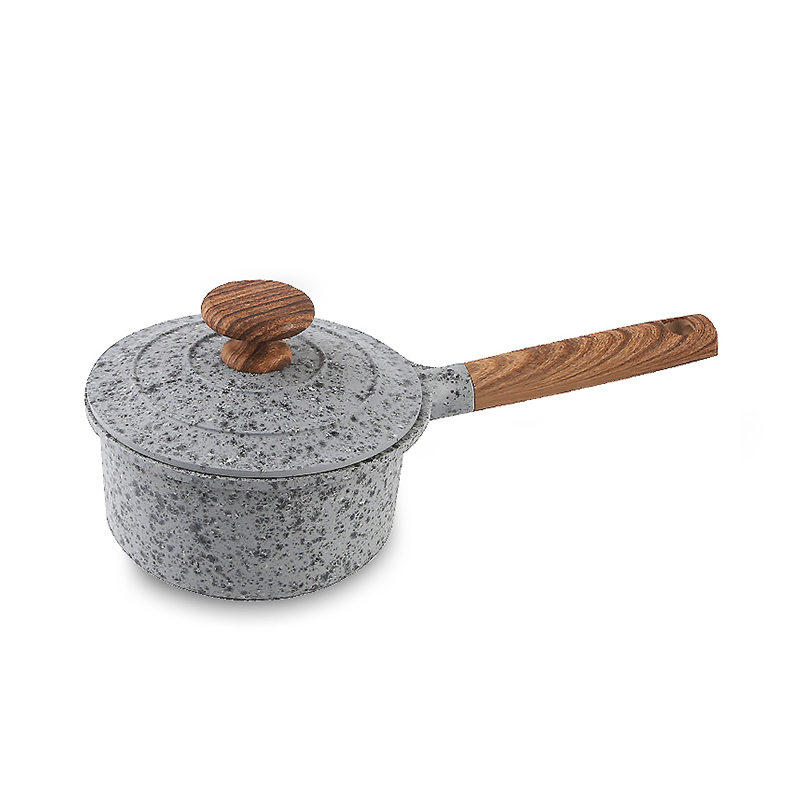
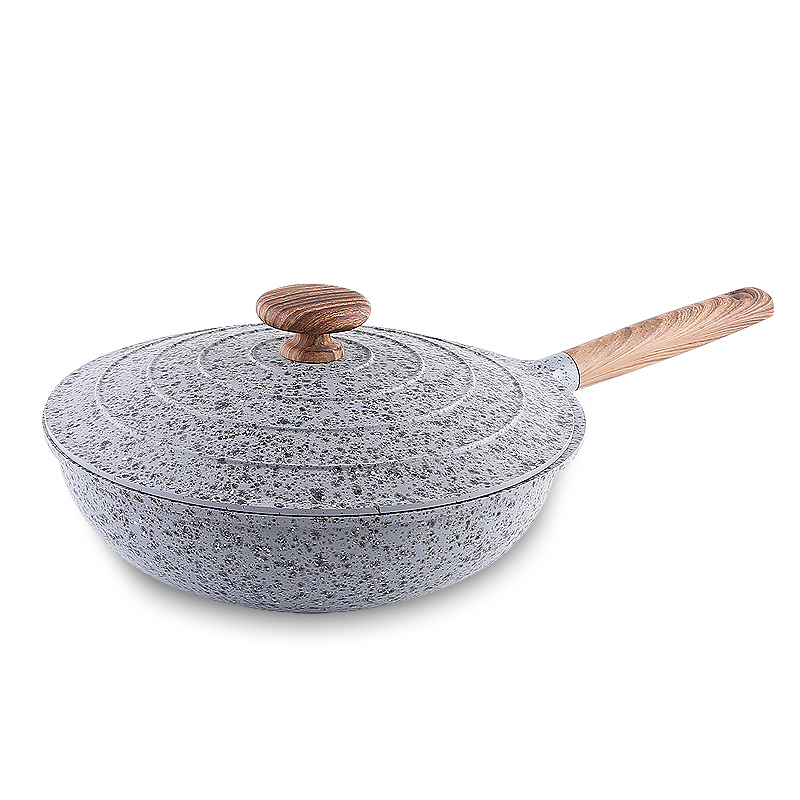
Covered deep-pan reference with a wood-effect grip
Earlier catalogue construction reference. Confirm the current body, size, handle, lid and finish for the selected order.

Start with a product reference, intended use and estimated quantity. We bring product selection, sample questions and quotation details into one conversation.

Email your reference image ↗
Cookware rangeFrying, sauce, wok, sauté, casserole and stock-pot directions
Specialty shapesCrêpe, fish, grill, square and divided formats
Related preparationBaking dishes, cake/muffin forms, knives and cutting boards
Enquiry focusExact drawing, materials, finish, use conditions, samples and packing
Explore the product range

Build the range
your buyers need.

Choose a focused product or discuss a coordinated assortment. Each direction can be developed into a more specific model and packaging brief.

Aluminium frying and deep-frying pans

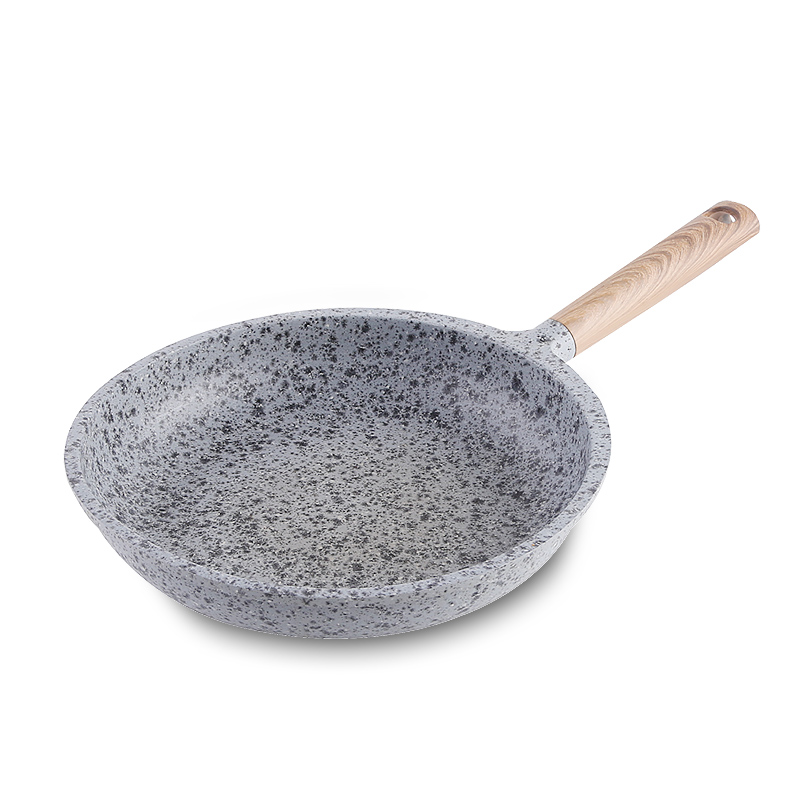
Compare open frying pans and deeper covered bodies in several sizes and surface-finish directions. Define the usable cooking area, wall height, base and handle before choosing a collection.

Enquire about this range ↗

Saucepans, casseroles and stock pots

Small single-handle saucepans, straight-sided pans, two-handle casseroles and taller pots allow different portion and boiling tasks. Match the lid, grip and useful fill volume to the selected body.

Enquire about this range ↗

Woks and sauté formats

Rounded wok bodies, deeper single-handle pans and two-handle sauté formats offer different handling and serving directions. Specify the base contact area and loaded handling requirement.

Enquire about this range ↗

Grill, fish and crêpe pans

Compare square ridged cooking surfaces, oval fish-pan formats and low-sided crêpe pans. Size, surface texture and spatula access are selected for the actual food task.

Enquire about this range ↗

Divided cooking surfaces

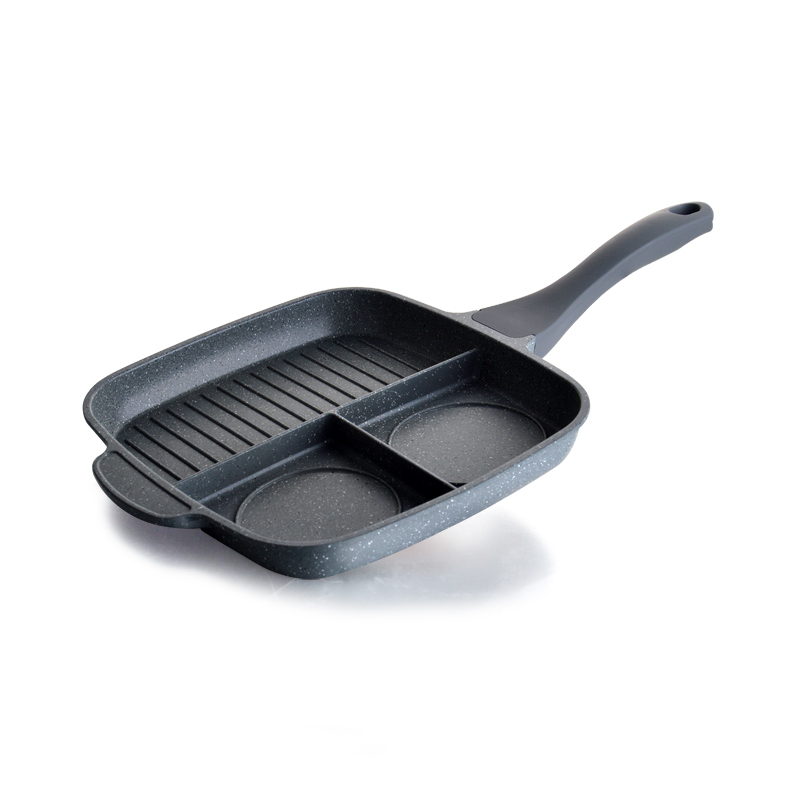
A divided pan direction separates a ridged area from two circular cooking areas. Confirm the divider height, portion fit and heating behaviour for the proposed construction.

Enquire about this range ↗

Square and straight-sided cookware

Square sauce-pot and straight-sided pan directions can complement round cookware. Agree corner access, lid fit, nominal size and final drawing measurements.

Enquire about this range ↗

Coating and finish directions

Plain dark, cream, coloured, speckled and ceramic-coating directions can be compared against the desired appearance and material evidence. Stone-style or diamond-style wording is not proof of a particular ingredient or performance.

Enquire about this range ↗

Handles and lid assemblies

Consider hollow metal handles, polymer grips, wood-effect finishes and different lid styles. Confirm the exact material, attachment, clearance and permitted temperature conditions of the complete item.

Enquire about this range ↗

Coordinated cookware sets

Build a practical set by choosing the required pan bodies and lids rather than counting a staged photo as the delivered pack. Match colours, finishes and packaging across the approved item list.

Enquire about this range ↗

Roasting and oven-dish directions

Rectangular and oval roasting dishes, loaf-style forms and lidded baking dishes support oven-preparation assortments. Confirm body material, rim, size and the actual oven conditions for each item.

Enquire about this range ↗

Cake, tart and muffin forms

Round cake and fluted tart formats, ring-cake moulds and multi-cavity muffin pans appear in the baking assortments. Approve dimensions, release requirements, cavity count and coating or flexible-body material.

Enquire about this range ↗

Kitchen knives and preparation sets

Individual knife forms, cleaver-style blades and knife-and-board sets extend the preparation range. Blade steel, lengths, edge geometry, included tools and authorised decoration must be confirmed by item.

Enquire about this range ↗

Cutting and chopping boards

Round and rectangular boards, grip openings, groove designs and preparation sets provide different work-surface directions. Confirm material species or substrate, finish and cleaning instructions instead of inferring them from appearance.

Enquire about this range ↗

Design and sourcing development

Discuss kitchen-product design, development and a coordinated assortment from a drawing, sample or functional brief. Agree the current manufacturing route, material schedule, trial sample and commercial terms for each item.

Enquire about this range ↗
Reference product directions

Start with a product.
Define the details.

Use these options to describe what you are buying. The public references identify your enquiry; the final model and specification are confirmed before an order.

Round frying-pan size ladder sourcing illustration
REFERENCE 0143-01

Round frying-pan size ladder

Compare a stepped round-pan selection with the required cooking surface and storage space. Listed heights belong to the corresponding size in the same order.

Listed size → height
18→4.0;20→4.2;22→4.5;24→4.6;26→4.8;28→5.0;30→5.2;32→5.8 cm
Discuss this option ↗
Low-sided crêpe pan sourcing illustration
REFERENCE 0143-02

Low-sided crêpe pan

A shallow pan direction provides easier edge access for thin foods. Confirm the usable flat surface and handle configuration on the final drawing.

Listed sizes
24 / 28 / 30 cm
Listed height
2.2 cm for each reference
Discuss this option ↗
Oval fish-pan reference sourcing illustration
REFERENCE 0143-03

Oval fish-pan reference

An elongated body provides a different cooking envelope from a round skillet. Agree the usable bottom area and hob requirements for the selected construction.

Listed envelope
34 × 24 cm
Listed height
4.5 cm
Discuss this option ↗
Square ridged grill pan sourcing illustration
REFERENCE 0143-04

Square ridged grill pan

A ridged cooking surface can be assessed for grill-style preparation. Confirm the final inner area, ridge profile and cleaning access.

Listed sizes
24 / 28 cm
Listed heights
4.5 / 4.5 cm
Discuss this option ↗
Small saucepan range sourcing illustration
REFERENCE 0143-05

Small saucepan range

Four saucepan sizes provide a portion-based direction. Keep the selected lid and grip matched to the final body.

Listed size → height
14→6.8;16→7.5;18→8.0;20→8.5 cm
Handle direction
Hollow stainless-steel reference; exact grade to confirm
Discuss this option ↗
Wok-size selection sourcing illustration
REFERENCE 0143-06

Wok-size selection

Compare rounded wok references by cooking task and handling requirement. Confirm base geometry and intended hob rather than assuming that every shape is interchangeable.

Listed size → height
26→7.8;28→7.8;30→9.0;32→9.5 cm
Discuss this option ↗
Two-handle sauté range sourcing illustration
REFERENCE 0143-07

Two-handle sauté range

A wider two-handle direction supports cooking and serving. Select the required body and approved lid as a defined pair.

Listed size → height
20→6.0;24→6.4;26→7.0;28→7.5;32→7.8 cm
Discuss this option ↗
Single-handle deep-pan range sourcing illustration
REFERENCE 0143-08

Single-handle deep-pan range

A deeper pan direction provides additional wall height compared with a shallow skillet. Compare loaded handling and lid clearance for the intended meal.

Listed size → height
20→6.0;24→6.4;26→7.0;28→7.5;32→7.8 cm
Discuss this option ↗
Round casserole selection sourcing illustration
REFERENCE 0143-09

Round casserole selection

Four body references offer a two-handle casserole direction. Confirm usable capacity independently of the listed body size and height.

Listed size → height
20→8.5;22→9.0;24→10.5;28→12.7 cm
Discuss this option ↗
Taller stock-pot range sourcing illustration
REFERENCE 0143-10

Taller stock-pot range

A taller pot direction can be compared for soups and boiling tasks. Set the desired fill level, carrying requirement and final base specification.

Listed size → height
20→13.0;24→15.4;26→16.0 cm
Discuss this option ↗
Straight-sided sauce-pot and pan references sourcing illustration
REFERENCE 0143-11

Straight-sided sauce-pot and pan references

Straight-sided bodies provide a distinct silhouette and lid arrangement. Confirm the exact measurement convention on the current drawing.

Small pan size → height
16→7.5;18→8.0;20→9.0 cm
Two-handle pot reference
24 cm size;13 cm height
Wider shallow reference
24 /28 cm size;6.5 /7.5 cm height
Discuss this option ↗
Square sauce-pot direction sourcing illustration
REFERENCE 0143-12

Square sauce-pot direction

A square-body direction complements the round assortment. Confirm whether the listed size refers to the rim, body or another measurement datum.

Listed size → height
20→8.5;24→9.5;28→10.5 cm
Discuss this option ↗
Cream-coated straight cookware sourcing illustration
REFERENCE 0143-13

Cream-coated straight cookware

A cream-interior direction combines frying, sauce and wider covered bodies with a contrasting exterior. The wood-effect handle appearance does not establish a solid-wood grip.

Frying references
20 /26 cm size;4.5 /5.0 cm height
Saucepan references
16 /18 /20 cm size;7.5 /9.0 /9.5 cm height
Two-handle pot
24 cm size;11 cm height
Wide shallow references
26 /30 cm size;7.0 /6.5 cm height
Listed grip direction
Bakelite with wood-effect soft-touch finish
Discuss this option ↗
Speckled-finish pan and casserole direction sourcing illustration
REFERENCE 0143-14

Speckled-finish pan and casserole direction

A dark speckled-finish direction offers a different size ladder. Do not transfer its heights to a similarly styled collection.

Frying size → height
20→4.5;22→4.8;24→5.0;26→5.2;28→5.5;30→5.8 cm
Saucepan size → height
16→8.0;18→9.0;20→9.5 cm
Deep-pan sizes and heights
24 /28 cm;7.0 /7.5 cm
Casserole sizes and heights
20 /24 /28 cm;9.5 /11.0 /13.0 cm
Discuss this option ↗
Divided grill-pan reference with separate cooking areas
REFERENCE 0143-15

Divided breakfast-pan direction

A divided shape includes a ridged section and two round cooking areas. Approve portion fit and divider geometry with the actual sample.

Configuration
One ridged area and two round areas visible in reference
Dimensions
Confirm current drawing
Discuss this option ↗
Earlier forged deep-pan construction sourcing illustration
REFERENCE 0143-16

Earlier forged deep-pan construction

An earlier covered forged-aluminium reference illustrates different edge, wall and base thicknesses. Confirm the current construction before using these figures in an order.

Listed edge thickness
4.2 mm
Listed body thickness
2.3 mm
Listed bottom thickness
3.0 mm
Listed fittings
Induction-base direction, stainless-steel handle and glass lid
Discuss this option ↗
Baking dishes and roasting forms sourcing illustration
REFERENCE 0143-17

Baking dishes and roasting forms

Oval and rectangular baking bodies, loaf-style forms and lidded dishes can be reviewed as a defined bakeware programme. Set dimensions and material for every chosen form.

Reference directions
Round, oval, rectangular, loaf and lidded baking forms
Parameters
Current body dimensions, rim, coating and use conditions to confirm
Discuss this option ↗
Muffin, tart and ring-cake formats sourcing illustration
REFERENCE 0143-18

Muffin, tart and ring-cake formats

Multi-cavity and shaped baking forms add a dessert direction. Approve the actual cavity count, size and material rather than treating a mixed illustration as the full order.

Reference directions
Multi-cavity muffin tray, fluted tart form and ring-cake form
Parameters
Cavity and overall dimensions, material and temperature conditions to confirm
Discuss this option ↗
Knives and board preparation set sourcing illustration
REFERENCE 0143-19

Knives and board preparation set

A coordinated preparation direction can combine knives, shears, a peeler or a board. Specify the exact included pieces and authorised decoration.

Reference scope
Individual knife forms, cleaver-style blades and preparation sets
Parameters
Steel, blade length, edge, handle and complete piece list to confirm
Discuss this option ↗
Round and rectangular cutting boards sourcing illustration
REFERENCE 0143-20

Round and rectangular cutting boards

Compare round bodies, rectangular work surfaces and grip-and-groove directions. Confirm material and finish; visible grain is not a verified species declaration.

Reference scope
Round/rectangular; grip openings and groove directions
Parameters
Material, size, thickness and care file to confirm
Discuss this option ↗

The numeric options above are selected catalogue references for the particular constructions described. Similar finishes can have different heights and size ladders. Earlier construction examples are identified as such and require current confirmation. Listed sizes do not establish useful cooking area or liquid capacity; agree the measurement datum and drawing. Coating chemistry, hob compatibility, oven temperature, dishwasher use and performance claims require model-specific evidence and final care instructions.

What matters for this category

A better brief.
A clearer comparison.

Focus the sourcing conversation on the features, materials and production details that make a difference to your product range.

01

Plan a coherent cooking assortment

Start with the required dishes and portions, then select the open, deep, covered and specialty bodies needed. Keep the finished set count and included lids explicit rather than copying a staged scene.

02

Compare construction details before colour

Assess wall height, base, handle attachment, lid fit and cooking-surface geometry alongside the finish. A matching exterior colour does not mean two items have the same substrate, coating or permitted temperature.

03

Develop a complete kitchen brief

Discuss product design and sourcing development for cookware, baking and preparation. Connect the drawing, material schedule, authorised appearance, sample and retail packing in one agreed specification.

Branding, configuration & packaging

Make the product
fit your programme.

Bring artwork, reference samples and a target cost. The available process, minimum quantity, sample charges and development scope are reviewed for the chosen option.

01

Body, handle and lid selection

Send required sizes, heights, cooking tasks, hob type and preferred grip or lid. Agree material allocation, handle attachments, coatings and any new tooling or engineering as an item-specific project.

02

Finish, artwork and sample

Request the desired authorised colour, decoration and retail identity. Define sample stages, fees and approval criteria; a wood-effect polymer grip should be specified by its actual material and finish.

03

Sets and packaging

Provide a complete item list, quantity by size/colour, lid count, inserts, sleeve or box, barcode and carton requirements. Agree separators and surface protection with a packed sample. MOQ and timing follow the final quotation.

Quality & product evidence

Turn requirements
into checks.

Agree which product characteristics need testing and how the approved sample relates to the bulk order.

01

Dimensions and mechanical fit

Agree checks for the selected measurement points, flatness, rim, base, handle security, lid seating and assembly. Set filled handling and transport requirements for the actual configuration.

02

Materials and coating evidence

Request substrate, coating and contact-material records for the exact item and destination. Define non-stick or corrosion tests where required; a historic single-sample report does not approve a complete range or every production batch.

03

Use limits and packed-unit review

Confirm hob compatibility, maximum temperature and care instructions for the body, handle, coating, lid and seal as a complete assembly. Agree batch inspection and carton protection against rubbing, impact and lid damage.

Test capability is a starting point for the inspection plan. Request the method, applicable model and results needed for your order.

Documents matched to the order

Ask for evidence
that fits the product.

Connect the product specification, permitted-use file and approved packed sample before an order is released. Request evidence that identifies the exact construction and market.

State the sales market, intended users and required files in your first enquiry. Current validity and scope are checked for the selected supplier and product; a category description does not certify every item.

Share your document requirements ↗
Drawing and bill of materials
Request the dimensioned drawing, substrate, body/base thickness where specified, coating system, handle and lid materials, attachments and complete set contents.
Use and test records
Request applicable food-contact and functional records, agreed non-stick/corrosion or mechanical tests, and final care instructions. Record the exact tested style and date; no general current certification is implied.
Sample and packing approval
Confirm sample version, authorised colour/artwork, inspection criteria, quantity by option, retail labels, care leaflet, unit/set pack, carton configuration and confirmed production schedule.
Built around how you sell

Different buyers.
Different specifications.

Your sales channel changes the assortment, packaging and quality priorities. Tell us the intended use as well as the product name.

01

Cookware ranges for daily meals

Build frying, sauce, wok, casserole and stock-pot programmes around meal size, stove type and loaded handling.

02

Baking and dessert collections

Select roasting dishes, loaf forms, tart and cake shapes or muffin trays with item-specific dimensions, material and use conditions.

03

Coordinated kitchen preparation

Add knife and board directions to a cookware programme with a confirmed component list, material record, safe pack and care label.

From first brief to a defined order

One contact.
A practical next step.

Samples, commercial terms and responsibilities are agreed for the project. Use the same product and packing specification when comparing quotations.

01

Share the requirement

Product, reference image, quantity, sales market and timing.

02

Compare suitable options

Review configuration, materials, sample scope and relevant documents.

03

Approve the specification

Agree artwork, packaging, sample, testing and inspection criteria.

04

Confirm the order plan

Set price, payment, production, delivery and defect remedies in writing.

Buyer questions

Before you send
your first enquiry.

Practical answers about this sourcing direction, customization and the reference options. Your agreed specification and written quotation determine the actual order.

What product types can I include?

Include frying and deep pans, saucepans, woks, sauté bodies, casseroles, stock pots, crêpe, fish, grill, square and divided formats, baking dishes, cake or muffin forms, knives and cutting boards. State the function, size and current construction required for each item.

Can I mix several cookware shapes into one collection?

Yes, a coordinated assortment can be specified by a complete item list. Confirm the selected pan bodies, lids, grips, sizes, finishes and packed-unit count. Items shown together in a scene are reference directions and do not automatically define the supplied set.

Are similarly coloured pans the same construction?

No. Similar finishes may use different bodies, heights, coatings or grips. Compare each item’s own drawing and material schedule. Stone-style, speckled or diamond-style wording is not proof of stone content, coating chemistry or a quantified durability result.

Do the listed sizes indicate capacity?

No. They are listed catalogue size and height references, with the final measurement datum to confirm. Useful bottom area, rim size, internal volume and safe fill level must be defined separately for the actual item. Do not convert the size directly into litres.

Are wood-effect handles made from solid wood?

Not necessarily. Some illustrated references specify Bakelite with a wood-effect finish, while others use metal handles. Confirm the exact grip, attachment and approved care conditions; appearance alone does not identify the material or establish that it stays cool.

Are all pans suitable for induction, ovens and dishwashers?

No universal suitability is implied. Specify the hob and required use conditions, then request the exact base, coating, handle and lid evidence and care instructions. An induction base on one earlier reference does not establish compatibility for the whole assortment.

Can I request custom designs, coating appearance and packing?

Design and sourcing development can be discussed from a drawing, reference or functional brief. Agree the actual substrate, coating, size, handle, lid, authorised colour/artwork, sample stages and pack. Tooling, sample charges, minimum quantities and schedules are confirmed in the item quotation.

What information should an enquiry contain?

Send the item and set list, quantities, sizes or target portions, hob and heating requirements, preferred materials and finishes, destination market, required tests, authorised artwork, retail packing and target delivery date. Include any reference sample or drawing and clearly state the claims the final item must support.

Who handles my enquiry?

Factory Sourcing Hub handles this enquiry as an independent sourcing and trading service. The product route, supplier suitability, sample scope and order responsibilities are agreed for the actual project.

How do I get a price and order minimum?

Send the product reference, quantities per variation, customization and packaging. Prices, minimums, sample charges and delivery dates are confirmed in a current quotation; the page is not a live inventory or price feed.

Can I discuss samples and inspection before ordering?

Yes. State whether you need a reference sample, a customized sample or development work. Agree the sample cost and shipping, approval specification, inspection plan and remedy for non-conforming goods before the bulk order.

What should I attach to my email?

Reference images, drawings, logo artwork and a product list are useful. Include quantities, the intended users and sales market, packaging, required documents and timing. After submitting the form, email attachments to kunhuow@gmail.com with your enquiry reference.

Tell us what you are planning

Your next order
starts with a brief.

A reference picture or a short description is enough to begin. Add the details you already know; the optional fields help make the follow-up more useful.

  • Required pan and baking shapes, knife/board items, quantities, sizes, heights and set contents.
  • Substrate, coating, grip, lid, colour and authorised decoration requirements.
  • Hob, heating and cleaning conditions, destination market and required evidence or inspection.
  • Samples, tooling if needed, retail pack, barcode, carton configuration and target delivery date.
kunhuow@gmail.com

Download the enquiry checklist ↓

Independent sourcing and trading service. Supplier choice, service costs and order conditions are discussed for your project.

Discuss your requirements.

Product selection, customization, samples and quotation enquiries.

Add product, quantity or customization details (optional)

Submit your enquiry directly. We use your details to respond to your sourcing request. For attachments, email kunhuow@gmail.com with your enquiry reference. Enquiry data use.
Information basis: published product information reviewed . Reference details support a sourcing discussion. Current supply, samples and product-specific documents are confirmed for the selected item.

Have a product in mind?
Share your sourcing brief.
Send an enquiry ↗