Independent B2B sourcing · One trading contactkunhuow@gmail.com ↗
FACTORY SOURCING HUBProduct sourcing for business buyers
Get a quote ↗
Home/Kitchen & Housewares/Nonstick Pans, Woks, Pots, Griddles & Specialty Cookware Sourcing
Frying pans · woks · saucepans · shallow casseroles · soup pots · pizza pans · griddles · fish pans · omelette pans · sets

Build the range around the recipe. Specify the pan from body to handle.

Nonstick Pans, Woks, Pots, Griddles & Specialty Cookware Sourcing

Plan an aluminium nonstick cookware assortment across die-cast-style and drawn-body directions, including woks, frying and deep pans, single-handle pots, shallow dual-handle vessels, soup pots, pizza pans, sets and specialty cooking shapes. Define diameter, depth, useful volume, body construction, coating, base, handles and lids for each selected item, with current samples, packing and market requirements agreed before order approval.

  • Cover everyday frying, deeper cooking, shared pots and specialist preparation.
  • Compare two broad body directions with the same complete specification approach.
  • Coordinate coatings, bases, handles, lids and set contents around the intended market.

Manufacturing, product documents and order conditions depend on the model and supply route selected for your project.

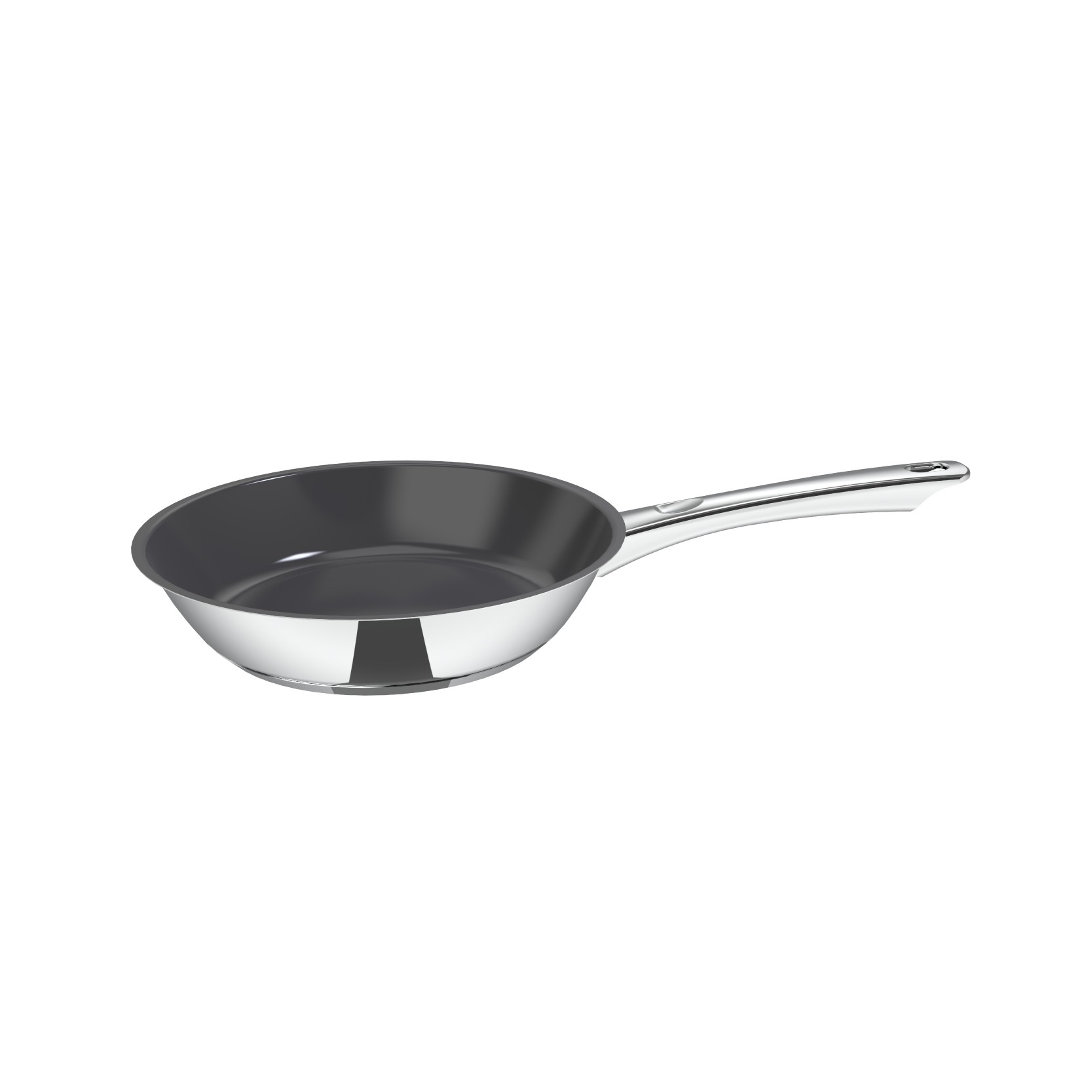
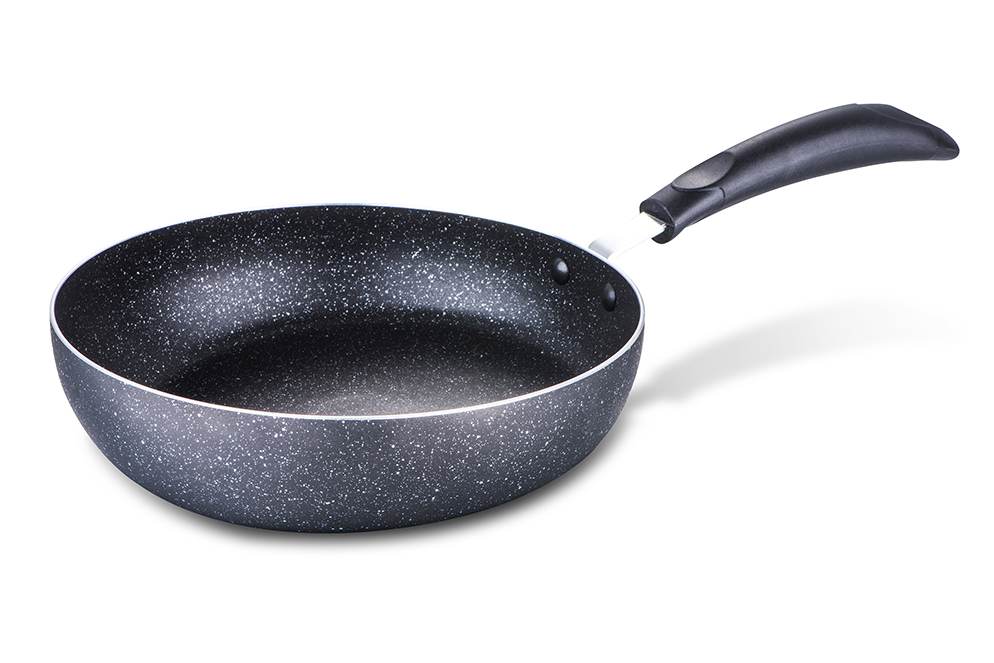
Drawn cookware pan reference
Drawn-body pan appearance reference. Confirm the current geometry, coating, base and complete handle construction for the selected item.

Start with a product reference, intended use and estimated quantity. We bring product selection, sample questions and quotation details into one conversation.

Email your reference image ↗
Main material directionAluminium nonstick cookware
Body familiesDie-cast-style and drawn-body catalogue directions
Specialty shapesSquare, pizza, fish, noodle-pot, rectangular and omelette-pan directions
Order specificationCurrent dimensions, coating, fittings, sample and packing confirmed individually
Explore the product range

Build the range
your buyers need.

Choose a focused product or discuss a coordinated assortment. Each direction can be developed into a more specific model and packaging brief.

Die-cast-style cookware

Explore the catalogue’s die-cast-style aluminium pan and pot directions. Specify the actual forming route, body profile, wall and base requirements before selection. The appearance category does not establish that a proposed body is produced by pressure die casting, nor that every reference has the same thickness.

Enquire about this range ↗

Drawn-body cookware

Develop a drawn aluminium cooking-vessel brief across frying pans, woks, pots and sets. Define the formed profile, rim, base and handle interfaces for the selected design. Confirm the drawing and current sample rather than assuming a standard gauge from the production-family name.

Enquire about this range ↗

Woks and stir-fry pans

Compare rounded stir-frying bodies within both main catalogue families, including a separately listed exterior-groove direction. Define useful cooking area, depth, body envelope, grip and helper-handle requirements, plus the chosen coating and base. Appearance features do not establish a heat-transfer or fuel-saving result.

Enquire about this range ↗

Everyday frying pans

Build a pan hierarchy around portions, cooking-surface shape and handling. Both main body families include frying-pan directions. Specify the diameter, usable flat area, rim, coating, handle and intended heat source, with actual compatibility established for the complete proposed assembly.

Enquire about this range ↗

Deep and shaped frying pans

Explore deeper frying directions and the separately listed drawn-pan profile variants. Define the required working depth and the relationship between sidewall, base and handle. Compare the actual drawing and useful volume instead of inferring them from a high, low or deep catalogue label.

Enquire about this range ↗

Square grill-pan directions

Include a square-pan brief where the cooking surface suits the intended assortment. A selected reference shows a ribbed interior and single grip. Specify internal working dimensions, corner radius, rib profile, base and handle, with the surface finish and operating instructions confirmed individually.

Enquire about this range ↗

Single-handle pots

Develop a single-grip pot or saucepan direction in the required size and depth. Identify pouring, lid and grip requirements in the enquiry. Confirm body construction, useful volume and whether the exact lid is included, rather than treating the entire category as one standard saucepan.

Enquire about this range ↗

Shallow dual-handle vessels

Plan a shallow casserole or dual-handle cooking vessel around useful volume and the serving or cooking task. Both main body families include this direction. Define grip arrangement, rim, lid and base together, including handling requirements for the filled vessel.

Enquire about this range ↗

Soup pots and noodle-pot directions

Include soup-pot designs from either body family alongside a separate noodle-pot direction. A selected noodle-pot reference shows a perforated lid arrangement. Confirm the actual draining method, lid retention, grip construction, useful volume and included parts for the proposed item.

Enquire about this range ↗

Pizza pans and larger rectangular cooking surfaces

Explore pizza-pan directions in both main body families and a separately listed rectangular ribbed cooking plate. Define working area, wall or lip, base envelope and handling arrangement. Oven or hob suitability must be checked for the actual body, coating, grips and fittings.

Enquire about this range ↗

Fish and other special shapes

Discuss the dedicated fish-pan direction or another listed shaped cookware brief with the intended food and heat source defined. Specify internal and external dimensions, base contact area, lid and grip positions. A specialist shape does not establish burner fit or oven compatibility.

Enquire about this range ↗

Rectangular omelette pans

Develop a tamagoyaki-style rectangular pan around the desired working dimensions, wall height and grip. Several catalogue references are shown. Agree body, coating, base and handle materials and limits on the selected sample; a light-coloured cooking surface does not identify its coating chemistry.

Enquire about this range ↗

Cookware sets and coordinated presentation

Combine selected pans and pots with an explicit bill of contents, capacity ladder and finish brief. Both body families include sets. List each lid, handle, accessory and protective or retail component, and confirm whether any parts are shared or interchangeable.

Enquire about this range ↗

Other construction and preparation-tool enquiries

Casting and anodised cookware appear in earlier range descriptions. Vegetable cutters, fruit-and-vegetable tools, bottle or jar openers and can-opening tools also appear in the original range brief. Include a specific requirement to check current design and availability; these additional directions carry no standing size, material or stock specification.

Enquire about this range ↗
Reference product directions

Start with a product.
Define the details.

Use these options to describe what you are buying. The public references identify your enquiry; the final model and specification are confirmed before an order.

Grooved-exterior wok direction sourcing illustration
REFERENCE 0128-01

Grooved-exterior wok direction

A rounded stir-fry reference in the die-cast-style family has a visibly grooved exterior and a single grip. Use the appearance as a discussion input while specifying the actual structure and dimensions.

Product family
Die-cast-style wok
Visible arrangement
Rounded body, exterior grooves and single grip
Specification to agree
Diameter, depth, thickness, coating, base and handle assembly
Discuss this option ↗
Square ribbed pan direction sourcing illustration
REFERENCE 0128-02

Square ribbed pan direction

A square-pan reference shows an interior rib pattern and a single grip. Specify the actual working area and rib geometry for the intended cooking task.

Product family
Die-cast-style square pan
Visible arrangement
Ribbed cooking surface and single handle
Specification to agree
Internal dimensions, rib profile, base, coating and grip
Discuss this option ↗
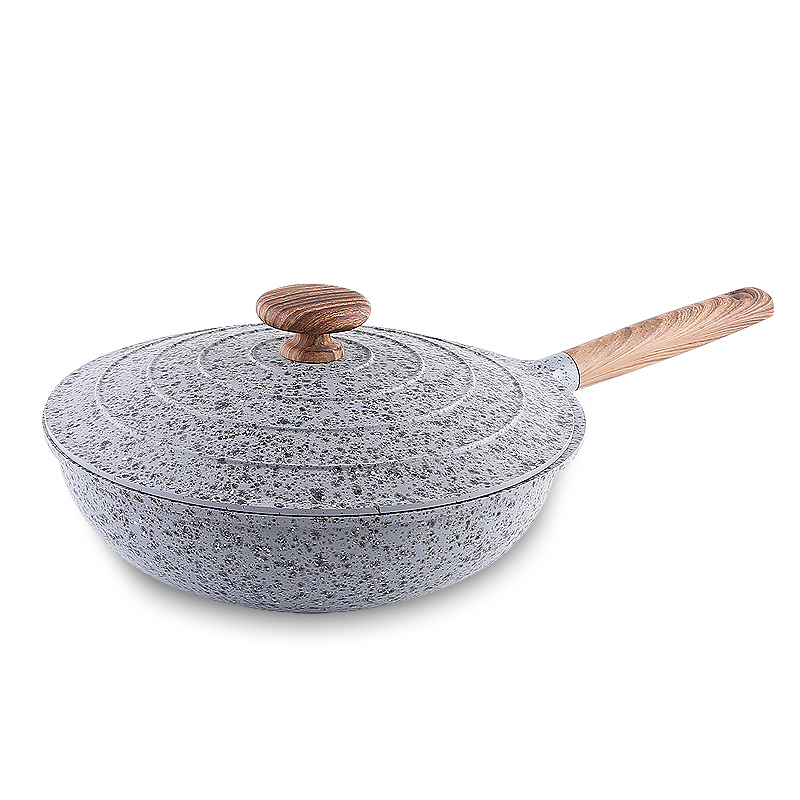
Drawn-body frying direction sourcing illustration
REFERENCE 0128-03

Drawn-body frying direction

A drawn-pan reference shows a rounded cooking body and a single grip. Define the exact profile and working depth with the intended portion size.

Product family
Drawn-body pan
Visible arrangement
Rounded body and single grip
Specification to agree
Body drawing, usable cooking area, coating, base and fittings
Discuss this option ↗
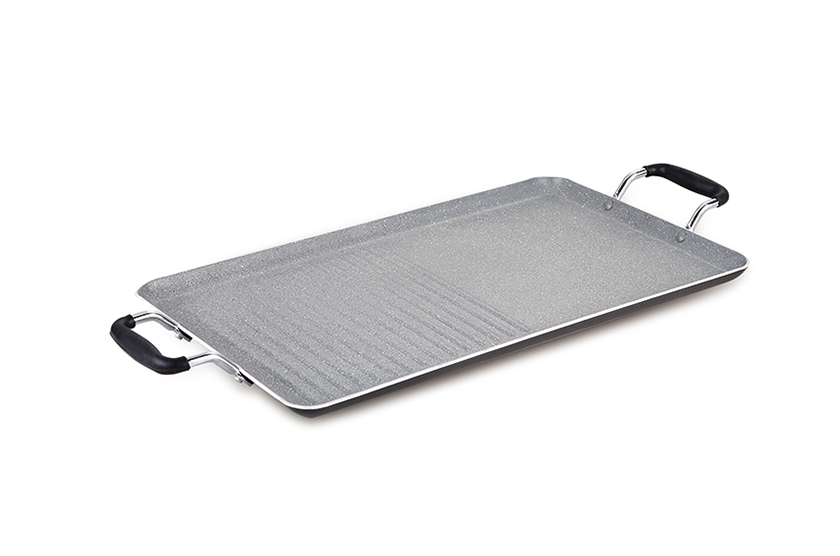
Dual-handle rectangular cooking plate sourcing illustration
REFERENCE 0128-04

Dual-handle rectangular cooking plate

A larger rectangular reference shows a ribbed working surface and grips at both ends. Confirm how the proposed assembly will be used and supported.

Product family
Rectangular cooking plate
Visible arrangement
Ribbed surface with two end grips
Specification to agree
Working dimensions, overall envelope, material, coating and operating conditions
Discuss this option ↗
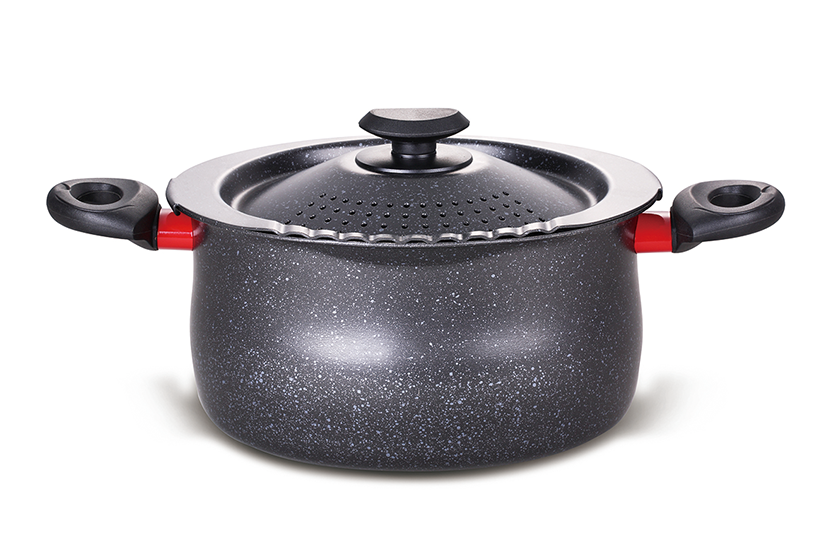
Noodle-pot reference sourcing illustration
REFERENCE 0128-05

Noodle-pot reference

A deep pot direction is shown with two side grips and a perforated lid. Confirm the intended draining arrangement and all operating instructions on the actual sample.

Product family
Noodle pot
Visible arrangement
Dual side grips and perforated lid direction
Specification to agree
Useful volume, lid retention, drainage, material and complete assembly
Discuss this option ↗
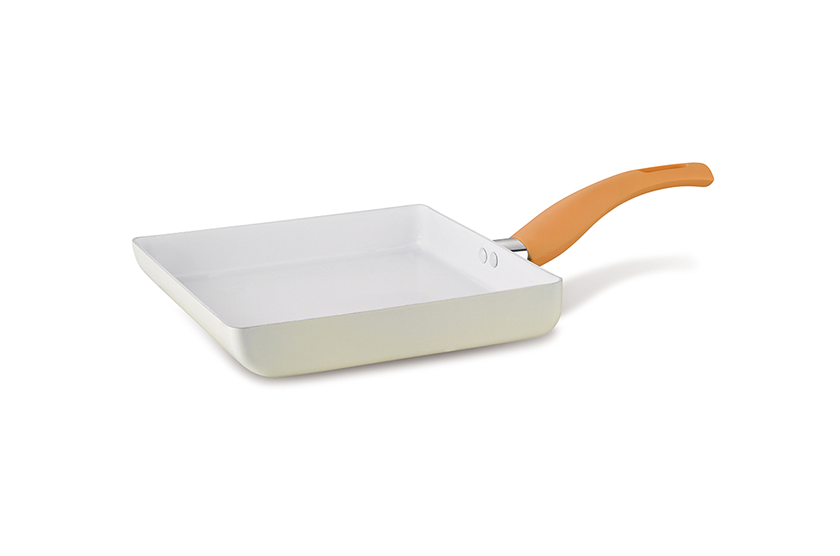
Rectangular omelette-pan direction sourcing illustration
REFERENCE 0128-06

Rectangular omelette-pan direction

A shallow rectangular pan reference shows a single grip and a light-coloured cooking surface. Define the coating system from documents rather than colour.

Product family
Tamagoyaki-style pan
Visible arrangement
Rectangular cooking body and single grip
Specification to agree
Internal dimensions, depth, coating, base and handle
Discuss this option ↗
Single-handle pot direction sourcing illustration
REFERENCE 0128-07

Single-handle pot direction

A separately listed single-handle pot family provides another route for a coordinated cooking range. Select the actual body and lid configuration for the enquiry.

Product family
Single-handle pot
Catalogue directions
Die-cast-style or drawn-body families
Specification to agree
Diameter, useful volume, pouring details, grip and any lid
Discuss this option ↗
Shallow dual-handle vessel direction sourcing illustration
REFERENCE 0128-08

Shallow dual-handle vessel direction

Use a shallow two-grip vessel as a separate part of the assortment. Specify its useful volume and lid requirements for the intended cooking task.

Product family
Shallow dual-handle vessel
Catalogue directions
Die-cast-style or drawn-body families
Specification to agree
Working depth, capacity, body, grips, base and lid
Discuss this option ↗
Pizza-pan direction sourcing illustration
REFERENCE 0128-09

Pizza-pan direction

Pizza-pan references occur in both principal body families. Define the complete cooking envelope and required use before selecting a current design.

Product family
Pizza pan
Catalogue directions
Die-cast-style or drawn-body families
Specification to agree
Working diameter, lip, coating, base and intended heating conditions
Discuss this option ↗
Fish-pan direction sourcing illustration
REFERENCE 0128-10

Fish-pan direction

A dedicated shaped-pan reference can be included for a fish-cooking brief. Confirm the actual dimensions and fittings for the selected proposal.

Product family
Fish pan
Catalogue direction
Die-cast-style special shape
Specification to agree
Working length and width, base contact area, lid, grips and use limits
Discuss this option ↗
Coordinated cookware set direction sourcing illustration
REFERENCE 0128-11

Coordinated cookware set direction

Develop a defined set with individual bodies and accessories identified, rather than treating a catalogue set image as the final pack contents.

Product family
Cookware set
Catalogue directions
Die-cast-style and drawn-body sets
Specification to agree
Every body, size, lid, accessory, finish and packing component
Discuss this option ↗

The product entries describe published shapes and catalogue families. No numerical diameter, capacity, thickness, coating life or temperature is presented as an established specification because the individual source pages do not provide a dependable dimension table. Request a current drawing, material and coating schedule, complete sample and quotation for the selected item. Photographs show reference appearances; actual colours, parts and packing follow approval.

What matters for this category

A better brief.
A clearer comparison.

Focus the sourcing conversation on the features, materials and production details that make a difference to your product range.

01

Breadth across cooking tasks

Connect everyday frying, stir-frying, deeper pots and specialist shapes within one assortment brief. The range can be organised around portions, food preparation and presentation, with a defined size and construction hierarchy for each project.

02

Body, coating and fittings considered together

Compare the required aluminium body with the coating, base, handles and lid as a complete system. Development enquiries can address forming, mould or tooling needs and surface requirements, with the exact current route and assembly confirmed before approval.

03

Evidence-led coating selection

Make the desired release, abrasion and corrosion behaviour part of the specification. Request item-specific coating and finished-vessel evidence for the proposed design and destination, then agree claims and instructions around that evidence.

Branding, configuration & packaging

Make the product
fit your programme.

Bring artwork, reference samples and a target cost. The available process, minimum quantity, sample charges and development scope are reviewed for the chosen option.

01

Shape and functional specification

Send an authorised drawing or reference brief with intended recipe, portions, useful volume, working dimensions and heat source. Discuss body profile, thickness, base, handle interfaces and any tooling requirement for the selected direction.

02

Surface, fittings and presentation

Define inner and outer finish, coating requirements, colour targets, authorised artwork, grips, knobs and lids. Select the actual handle and lid materials rather than inferring them from a wood-look or stone-look finish. Include retail and protective presentation in the enquiry.

03

Samples and order conditions

Request current sample availability, charges, order quantities, development costs and approval stages for each item. Agree the final set contents, carton data and schedule once construction and presentation are confirmed; no universal MOQ or delivery duration is included.

Quality & product evidence

Turn requirements
into checks.

Agree which product characteristics need testing and how the approved sample relates to the bulk order.

01

Body and assembled function

Agree dimensional, flatness, rim, base and fitting criteria for the exact vessel. Check handle and knob attachment, lid fit and the intended handling conditions against an approved sample, with appropriate criteria for any draining or specialty function.

02

Coating and contact materials

Specify the coating system, substrate, preparation and intended use. Request relevant current finished-item evidence for release behaviour, abrasion, corrosion and contact conditions. A test on one coating or model does not establish the same result across every colour, size or body.

03

Use limits and shipment checks

Confirm heating and care instructions for the whole assembly, including grips and lids. Define appearance, component completeness, protective packing and final inspection requirements. Ask for the required performance evidence before making oven, induction, dishwasher or chemical-absence claims.

Test capability is a starting point for the inspection plan. Request the method, applicable model and results needed for your order.

Documents matched to the order

Ask for evidence
that fits the product.

A useful cookware quotation connects body geometry, material, coating, base, fittings and intended use. Provide the following details to turn a catalogue direction into a complete approved proposal.

State the sales market, intended users and required files in your first enquiry. Current validity and scope are checked for the selected supplier and product; a category description does not certify every item.

Share your document requirements ↗
Body and component specification
Provide working and overall dimensions, useful volume, required body construction, wall and base targets, grips, knobs and lid requirements. For sets, identify every vessel, size and included accessory.
Use and performance evidence
State intended heat sources, contents, temperatures, cleaning and destination. Define coating and contact requirements and ask for current applicable evidence matched to the exact proposed assembly and intended claims.
Artwork, sample and packing approval
Supply authorised designs, colour targets, quantities and requested receipt date. Agree tooling or development charges, sample terms, inspection plan, retail presentation, separators, carton data, shipping marks and the approvals that release the order.
Built around how you sell

Different buyers.
Different specifications.

Your sales channel changes the assortment, packaging and quality priorities. Tell us the intended use as well as the product name.

01

Everyday cookware assortments

Plan a coordinated hierarchy of frying pans, woks, saucepans and pots around portions, use and price position, with each assembly specified separately.

02

Specialty cooking collections

Add rectangular omelette, square ribbed, pizza, fish, noodle-pot or larger plate directions where the actual working shape suits the customer brief.

03

Private-label and gifting enquiries

Develop authorised finishes, artwork and presentation for individual pieces or a complete defined set. Confirm current construction, supply terms and approved samples before finalising the assortment.

From first brief to a defined order

One contact.
A practical next step.

Samples, commercial terms and responsibilities are agreed for the project. Use the same product and packing specification when comparing quotations.

01

Share the requirement

Product, reference image, quantity, sales market and timing.

02

Compare suitable options

Review configuration, materials, sample scope and relevant documents.

03

Approve the specification

Agree artwork, packaging, sample, testing and inspection criteria.

04

Confirm the order plan

Set price, payment, production, delivery and defect remedies in writing.

Buyer questions

Before you send
your first enquiry.

Practical answers about this sourcing direction, customization and the reference options. Your agreed specification and written quotation determine the actual order.

Which cookware directions are covered?

Include woks, frying and deep pans, single-handle pots, shallow dual-handle vessels, soup pots, pizza pans and sets in die-cast-style or drawn-body directions. Square pans, rectangular cooking plates, noodle pots, fish pans and rectangular omelette pans are also listed.

Does die-cast-style mean the product is pressure die cast?

The catalogue label describes a product family. Confirm the actual forming process, body construction, wall and base requirements in the current technical proposal. Appearance alone does not establish the manufacturing route.

What sizes and capacities are available?

Send the required diameter or working dimensions, depth and useful volume for each item. A current drawing, sample and quotation are needed to establish those numerical specifications and tolerances; no fixed size ladder is assumed from the photographs.

Can the cookware work on induction, gas or in an oven?

State the intended heat sources and operating conditions. Compatibility depends on the actual body, base, coating, handle, knob and lid. Obtain the current item-specific instructions and evidence for the complete assembly before using a compatibility claim.

Does a speckled or light-coloured surface identify the coating chemistry?

No. Specify the actual coating system and materials in the enquiry. Colour or a stone-look appearance does not establish ceramic construction, mineral content, chemical absence or a safety approval.

Can cookware sets share lids and handles?

Only where that compatibility is specifically confirmed. Identify each body, lid, knob, grip and accessory, then approve fit and function on the selected set. A similar appearance or nominal category does not establish interchangeability.

Can I include preparation or opening tools with the cookware?

A vegetable-cutter, fruit-and-vegetable tool, bottle or jar opener or can-opening brief can be checked as an additional range enquiry. Current designs, materials, specifications and availability must be confirmed individually.

What are the MOQ, sample costs and production schedule?

Request current terms for the exact body, coating, fittings, quantity and presentation. Agree development or tooling costs, sample availability, approvals and packing before the order schedule is confirmed. No universal MOQ or lead time is promised.

Who handles my enquiry?

Factory Sourcing Hub handles this enquiry as an independent sourcing and trading service. The product route, supplier suitability, sample scope and order responsibilities are agreed for the actual project.

How do I get a price and order minimum?

Send the product reference, quantities per variation, customization and packaging. Prices, minimums, sample charges and delivery dates are confirmed in a current quotation; the page is not a live inventory or price feed.

Can I discuss samples and inspection before ordering?

Yes. State whether you need a reference sample, a customized sample or development work. Agree the sample cost and shipping, approval specification, inspection plan and remedy for non-conforming goods before the bulk order.

What should I attach to my email?

Reference images, drawings, logo artwork and a product list are useful. Include quantities, the intended users and sales market, packaging, required documents and timing. After submitting the form, email attachments to kunhuow@gmail.com with your enquiry reference.

Tell us what you are planning

Your next order
starts with a brief.

A reference picture or a short description is enough to begin. Add the details you already know; the optional fields help make the follow-up more useful.

  • Cooking task, product shapes, required dimensions and useful capacities
  • Body forming route, thickness, coating, base, grips, knobs and lids
  • Authorised artwork, quantities, defined set contents, sample and packing requirements
  • Heat sources, use and care conditions, destination, evidence and requested receipt date
kunhuow@gmail.com

Download the enquiry checklist ↓

Independent sourcing and trading service. Supplier choice, service costs and order conditions are discussed for your project.

Discuss your requirements.

Product selection, customization, samples and quotation enquiries.

Add product, quantity or customization details (optional)

Submit your enquiry directly. We use your details to respond to your sourcing request. For attachments, email kunhuow@gmail.com with your enquiry reference. Enquiry data use.

Information basis: published product information reviewed . Reference details support a sourcing discussion. Current supply, samples and product-specific documents are confirmed for the selected item.

Have a product in mind?
Share your sourcing brief.
Send an enquiry ↗