Independent B2B sourcing · One trading contactkunhuow@gmail.com ↗
FACTORY SOURCING HUBProduct sourcing for business buyers
Get a quote ↗
Home/Kitchen & Housewares/Custom Sports Bottles, Vacuum Drinkware, Shakers & Food Containers
Copolyester water bottles · vacuum stainless drinkware · shakers · large jugs · canteens · children’s vessels · food and feeding containers

Build a coordinated hydration and meal range. Match each vessel to its material, closure and purpose.

Custom Sports Bottles, Vacuum Drinkware, Shakers & Food Containers

Source coordinated drinkware and meal-container directions covering clear and frosted plastic bottles, vacuum stainless bottles, handled coffee mugs, fitness shakers, large water jugs, flat canteens, school bottles, dessert bowls and feeding-container options. Compare article-specific capacities, dimensions, carrying details and decoration with a clear brief for samples, packaging and destination-market documentation.

  • Compare single-wall plastic and vacuum stainless constructions separately.
  • Develop closures, carrying details, colours and authorised artwork around the intended user.
  • Use paired size references and project-specific sample, packing and compliance requirements.

Manufacturing, product documents and order conditions depend on the model and supply route selected for your project.

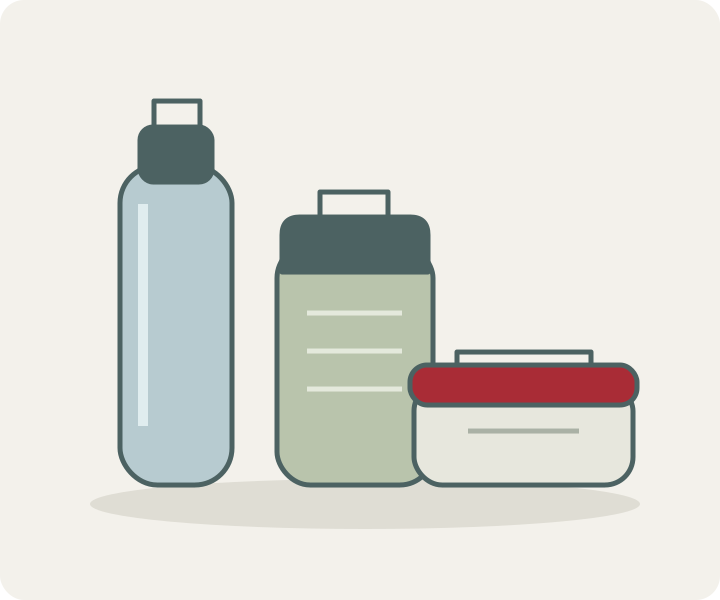
Category illustration of a carry bottle, a shaker and a covered meal container
Original category illustration. Actual shapes, materials, dimensions, performance and included parts depend on the selected article and approved sample.

Start with a product reference, intended use and estimated quantity. We bring product selection, sample questions and quotation details into one conversation.

Email your reference image ↗
Hydration formatsDirect-sip · pop-up · magnetic-lid · straw · flat canteen · large jug
Insulated directions316-inner bottle references · handled mugs · covered dessert bowls
Material choicesCopolyester · article-specific stainless constructions · PPSU feeding directions
Development scopeLogo and colour development · sample review · retail boxes · inspection brief
Explore the product range

Build the range
your buyers need.

Choose a focused product or discuss a coordinated assortment. Each direction can be developed into a more specific model and packaging brief.

Clear and frosted everyday bottles

Develop a clear, translucent or frosted plastic bottle for office, school and daily hydration. Colour, surface appearance, grip and drinking opening affect how the range feels in use. Specify the exact copolyester body, closure and seal rather than treating all plastic vessels as one material specification. These single-wall directions do not provide vacuum insulation.

Enquire about this range ↗

Magnetic-lid sports bottles

A magnetic hold-open detail can keep the lid positioned during drinking. Compare the actual lid movement, carrying handle, opening size and assembly on the selected sample. The reference family includes 800 ml and 1,000 ml bodies with paired dimensions; magnet retention and closure sealing need their own acceptance checks.

Enquire about this range ↗

Compact pop-up and direct-sip bottles

Choose a compact daily bottle with a push opening, direct drinking arrangement or carrying strap. The 500 ml reference pairs a slim body with a woven carry detail. Confirm the locking action, opening force, strap attachment and cleaning access as part of the complete article, especially where several cap choices share a similar body.

Enquire about this range ↗

Vacuum stainless bottles

Build a metal-bottle programme around the actual inner vessel, outer shell, vacuum construction and lid. Particular references specify a 316 stainless inner vessel, a matt powder-coated finish and an integrated carrying handle. A stated steel grade for the inner vessel does not identify every other metal or plastic component.

Enquire about this range ↗

Sharing-lid and travel flasks

A covered travel-flask direction combines an internal closure with an outer drinking-cup arrangement. This is useful when the brief calls for pouring and sharing rather than direct sipping. Review the outer cup, pouring path, sleeve, grip and seal together; decorative patterns and accessories require separate artwork and material approval.

Enquire about this range ↗

Fitness shakers with separate storage

A shaker direction combines a mixing ball with a detachable base compartment. The cited 500 ml article has a stainless mixing ball and a magnetic-lid feature. Identify drinking capacity and dry-storage capacity separately, and specify thread engagement, cleaning access, odour acceptance and accessory retention before production.

Enquire about this range ↗

Large hydration jugs

Large plastic jugs provide a different carrying and drinking format from slim travel bottles. The range includes direct-sip, pop-up, side-grip and shoulder-strap directions. A 1,700 ml reference provides a defined starting point; other multi-variant listings need an agreed model-to-capacity drawing before their dimensions can be used for shelf or carton planning.

Enquire about this range ↗

Flat outdoor canteens

Compare a flatter body with a tethered closure for outdoor carrying and kit organisation. Defined 500 ml, 750 ml and 1,000 ml references allow a size ladder to be discussed. Specify the actual strap or pouch separately and review drop, closure and carrying requirements for the intended use; a canteen shape alone establishes no military or impact certification.

Enquire about this range ↗

School and children’s bottles

The range includes compact pop-up bottles and broader straw, strap and dual-material directions. Plastic and insulated stainless versions must be specified as distinct articles. Use authorised artwork and an agreed age range, then review small parts, straps, drinking components, opening force and the relevant finished-product evidence.

Enquire about this range ↗

Handled coffee mugs and large tumblers

Larger handled mugs provide an office, home and travel-cup direction alongside sports bottles. Particular 850 ml and 1,050 ml references specify a 316 inner vessel and dual-use lid. Confirm the lid’s actual drinking modes, leak behaviour, handle clearance and assembled dimensions rather than assuming that every handled cup fits a vehicle holder.

Enquire about this range ↗

Covered dessert bowls

A compact covered stainless bowl offers a separate dessert-serving direction. The cited 180 ml article uses a vacuum construction with a 316 inner vessel and carrying handle. Set the intended serving temperature, lid function, cleaning method and presentation; nominal bowl volume is not a verified frozen-dessert holding duration.

Enquire about this range ↗

Lunch and food-container directions

Meal-container and food-storage categories extend the programme beyond water bottles. Define whether the brief calls for a lunch box, food container, compartment layout or insulated serving vessel. Agree the actual material of each food-contact part, lid, seal, working volume and carrying accessory on a selected item rather than transferring a bottle’s specification to a meal container.

Enquire about this range ↗

PPSU straw cups and feeding bowls

Feeding directions include PPSU straw cups, handle options, weighted-straw arrangements and bowls with a water-jacket structure and non-slip base. These are different products within a combined listing. Select one configuration first, establish the intended age and supervision information, and obtain the matching assembly drawing, care instructions and finished-product evidence. No universal sterilisation temperature is assumed.

Enquire about this range ↗

Fruit-infuser and coordinated colour ranges

Infuser and colour-coordinated bottle categories provide further assortment directions. Confirm whether a removable infuser, filter, sleeve or strap is included, and inspect the contact surfaces and cleaning access. A shared colour story can connect several vessel types while preserving separate specifications, care labels and packaging for each.

Enquire about this range ↗
Reference product directions

Start with a product.
Define the details.

Use these options to describe what you are buying. The public references identify your enquiry; the final model and specification are confirmed before an order.

700 ml and 1,000 ml vacuum bottles sourcing illustration
REFERENCE 0158-01

700 ml and 1,000 ml vacuum bottles

A matt-finish stainless bottle direction with a screw closure and integrated lid handle. The listed size ladder supports a coordinated small-and-large programme; confirm the exact coating, closure parts and final production tolerances.

Capacity / listed size / net weight
700 ml — 88 × 230 mm — 339 g; 1,000 ml — 88 × 279 mm — 428 g
Inner vessel
316 stainless steel
Construction
Double-wall vacuum direction
Listed packing
24 pieces per carton; final protective and retail packing to agree
Discuss this option ↗
800 ml sharing-lid insulated flask sourcing illustration
REFERENCE 0158-02

800 ml sharing-lid insulated flask

A travel-flask direction with an outer drinking cup, internal closure and sleeve. The product description identifies a 316 inner vessel and 304 outer shell. Review cup fit, pouring path, sleeve material and authorised decoration on the chosen sample.

Capacity
800 ml
Listed size
243.85 × 84.8 mm; axis order to confirm on drawing
Net weight
361.7 g
Listed packing
24 pieces per carton
Discuss this option ↗
800 ml and 1,000 ml magnetic-lid bottles sourcing illustration
REFERENCE 0158-03

800 ml and 1,000 ml magnetic-lid bottles

Single-wall copolyester sports-bottle references with a wide opening and carrying handle. Evaluate the magnet’s hold-open action independently from the closed-lid seal, together with grip and cleaning access.

Capacity / listed size
800 ml — 76 × 230 mm; 1,000 ml — 78 × 263 mm
Body
Copolyester plastic
Closure direction
Magnetic hold-open lid
Listed packing
24 pieces per carton
Discuss this option ↗
500 ml compact pop-up bottle sourcing illustration
REFERENCE 0158-04

500 ml compact pop-up bottle

A slim direct-drinking bottle with a pop-up closure and woven carry detail. Confirm the exact opening mechanism, lock, strap attachment and cleaning instructions for the chosen colour and decoration.

Capacity
500 ml
Listed size
67 × 237 mm
Net weight
159 g
Body / packing
Copolyester; 24 pieces per carton listed
Discuss this option ↗
500 ml shaker with storage base sourcing illustration
REFERENCE 0158-05

500 ml shaker with storage base

A fitness shaker with a separate base compartment, stainless mixing ball and magnetic-lid feature. The stated 500 ml is the drinking-vessel capacity; the storage compartment’s working volume must be defined separately.

Capacity
500 ml drinking vessel
Listed size
236 × 119 × 86 mm
Net weight
282 g
Body / accessory
Copolyester body; stainless mixing ball
Discuss this option ↗
350 ml compact pop-up bottle sourcing illustration
REFERENCE 0158-06

350 ml compact pop-up bottle

A small plastic bottle direction with a locking pop-up lid and carry handle. Develop age-appropriate authorised graphics, drinking components and instructions around the selected configuration; a small capacity alone does not establish a suitable age grade.

Capacity
350 ml
Listed size
180 × 66 mm; source order preserved
Net weight
112 g
Body / packing
Copolyester; 24 pieces per carton listed
Discuss this option ↗
850 ml and 1,050 ml handled mugs sourcing illustration
REFERENCE 0158-07

850 ml and 1,050 ml handled mugs

Large coffee-mug references with a handle and dual-use lid. A 316 inner vessel and 304 outer shell are identified in the article description. Choose the specific lid and drinking mode, then agree dimensions, sealing and surface finish.

Capacity options
850 ml; 1,050 ml
Inner / outer
316 stainless inner vessel / 304 stainless outer shell
Configuration
Handled mug with dual-use lid
Listed packing
24 pieces per carton; no verified dimensions in the specification table
Discuss this option ↗
180 ml covered vacuum dessert bowl sourcing illustration
REFERENCE 0158-08

180 ml covered vacuum dessert bowl

A small vacuum stainless serving-bowl direction with cover and handle. Review the actual usable fill level, rim, lid and care requirements for the intended food and temperature.

Capacity
180 ml
Listed size / net weight
90 × 90 mm; 155 g
Inner vessel
316 stainless steel
Listed packing
24 pieces per carton
Discuss this option ↗
1,700 ml pop-up hydration jug sourcing illustration
REFERENCE 0158-09

1,700 ml pop-up hydration jug

A larger direct-sip plastic jug with side-grip and shoulder-carry directions. Confirm the strap, closure lock and any fill markings on the selected sample before defining the retail description.

Capacity
1,700 ml
Listed size
126 × 233.5 mm
Net weight
230 g
Body / packing
Copolyester; 24 pieces per carton listed
Discuss this option ↗
500 ml, 750 ml and 1,000 ml flat canteens sourcing illustration
REFERENCE 0158-10

500 ml, 750 ml and 1,000 ml flat canteens

A flatter outdoor-bottle family with a tethered closure. Each listed capacity has its own dimension and net-weight reference; review the assembly drawing and carrying accessories before creating a matching pouch or display.

Capacity / listed size / net weight
500 ml — 63 × 104 × 183 mm — 101 g; 750 ml — 73 × 125 × 213 mm — 145 g; 1,000 ml — 78 × 125 × 225 mm — 146 g
Body
Copolyester plastic
Closure direction
Tethered cap
Listed packing
24 pieces per carton
Discuss this option ↗
PPSU feeding-cup and bowl programme sourcing illustration
REFERENCE 0158-11

PPSU feeding-cup and bowl programme

Select a weighted-straw cup, handled cup or water-jacket feeding bowl as an individual article. The combined source groups several models and capacity values without a reliable one-to-one mapping, so a specific sample and drawing form the basis of the quotation.

Product directions
Straw cup; handle options; water-jacket feeding bowl
Material direction
PPSU within the listed programme
Configuration requirement
Match body, lid, straw, seals and accessories to one selected article
Capacity and dimensions
Confirm per selected assembly; no mixed-list pairing assumed
Discuss this option ↗

These are article-specific reference values, not a universal specification or a stock commitment. Dimension order is retained as listed where axes are not labelled. Listed net weight excludes any unconfirmed retail packaging. A quoted capacity does not establish usable fill volume, thermal holding time, temperature limits, child suitability or compatibility with carbonated drinks. Final drawings, samples and written quotation determine the supplied article.

What matters for this category

A better brief.
A clearer comparison.

Focus the sourcing conversation on the features, materials and production details that make a difference to your product range.

01

A coordinated range across distinct constructions

Combine clear or frosted plastic hydration, vacuum stainless drinkware and meal-container directions in one buying programme. Keep materials, closures, sizes, care labels and price comparisons separate by article while coordinating colour and presentation.

02

Functional details that buyers can compare

Magnetic hold-open lids, pop-up locks, carrying handles, woven straps, mixing balls, storage bases, sharing cups and flat bodies provide concrete points for sample evaluation. Select the features that solve the intended use rather than adding every accessory to every vessel.

03

Development around an approved sample

Logo placement, colour and presentation can be developed around an existing article, with a different scope for new body or closure tooling. Record the accepted construction and sample revision so the final product description, inspection plan and packaging refer to the same configuration.

Branding, configuration & packaging

Make the product
fit your programme.

Bring artwork, reference samples and a target cost. The available process, minimum quantity, sample charges and development scope are reviewed for the chosen option.

01

Logo, colour and surface development

Provide vector artwork, colour targets, print positions and the intended finish. Printing and marking directions include screen printing, laser marking and transfer or UV decoration where compatible with the chosen material and surface. Coating or metal-finishing options must not be applied to a plastic body by assumption.

02

Separate stock, custom and new-tooling programmes

An existing decorated stock article, a private-label version and a newly tooled design have different permissions, minimums and costs. Define quantity by item and colour, authorised artwork, tooling ownership and any exclusivity requirement. Obtain a programme-specific minimum and schedule with the quotation.

03

Sample and retail-box approval

Choose the article, colour and logo file, approve the visual proposal and agree the sample charge and freight before sampling. Review the actual sample and original retail-box artwork together. The schedule depends on decoration, tooling, corrections and approval; a sampling estimate is not the bulk-production lead time.

Quality & product evidence

Turn requirements
into checks.

Agree which product characteristics need testing and how the approved sample relates to the bulk order.

01

Verify construction and closure performance

Agree the exact body, inner and outer vessels, lid, gasket, straw, magnet, strap and removable parts. Check opening, closure, leakage under defined conditions, thread engagement and carrying attachment on the final assembly. A component material statement does not replace a complete-product specification.

02

Set measurable appearance and use checks

Define colour, print registration, marking durability, surface defects, odour, dimensions and net weight with tolerances. Where thermal, drop, dishwasher or temperature performance matters, state the method and acceptance criteria for the chosen article rather than relying on a general catalogue claim.

03

Inspect the packed production article

Use the approved sample, material list, artwork and instructions as the reference for production inspection. Include accessory count, separation between parts, retail-box fit, carton arrangement and transit protection. Confirm inspection access, sampling level and any third-party tests before the order is released.

Test capability is a starting point for the inspection plan. Request the method, applicable model and results needed for your order.

Documents matched to the order

Ask for evidence
that fits the product.

Request evidence that identifies the actual finished vessel, contact materials, decoration, destination market and current production configuration. A resin-level statement or an old supplier assessment does not certify every bottle, lid, straw or feeding bowl.

State the sales market, intended users and required files in your first enquiry. Current validity and scope are checked for the selected supplier and product; a category description does not certify every item.

Share your document requirements ↗
Assembly and material file
Request dimensioned drawings, nominal and working capacities, component materials, steel grades where applicable, finish details, colour references and an approved sample record. Keep insulated and single-wall constructions in separate item specifications.
Finished-product compliance and care information
Specify the applicable food-contact and consumer-product requirements for the sales market. For children’s or feeding products, include intended age, small parts, straps, warnings and care or sterilisation instructions as relevant. Review current reports for the actual complete article and test scope.
Packing, artwork and inspection records
Prepare authorised artwork, logo placement, colour-box dielines, item and carton labels, accessory lists and packing specifications. Agree the final inspection record and any report references required for shipment. Source-owned branding, customer graphics and patent rights require separate permission.
Built around how you sell

Different buyers.
Different specifications.

Your sales channel changes the assortment, packaging and quality priorities. Tell us the intended use as well as the product name.

01

Retail hydration and active-lifestyle assortments

Build a stepped capacity range for daily hydration, fitness and outdoor carrying. Compare compact bottles, larger jugs, shakers and canteens with each article’s actual closure and carrying method, then plan the shelf dimensions and retail presentation.

02

Corporate and promotional drinkware

Develop authorised branding and colour around a selected plastic bottle, stainless flask or handled mug. Match the decoration area, surface, sample standard and gift box to the campaign; quotation terms depend on the exact design and quantity split.

03

Family, school and meal-container programmes

Coordinate school-bottle, food-container and feeding directions while retaining distinct age, material, care and safety requirements. Confirm artwork rights and complete-product evidence before making claims or combining items into a retail set.

From first brief to a defined order

One contact.
A practical next step.

Samples, commercial terms and responsibilities are agreed for the project. Use the same product and packing specification when comparing quotations.

01

Share the requirement

Product, reference image, quantity, sales market and timing.

02

Compare suitable options

Review configuration, materials, sample scope and relevant documents.

03

Approve the specification

Agree artwork, packaging, sample, testing and inspection criteria.

04

Confirm the order plan

Set price, payment, production, delivery and defect remedies in writing.

Buyer questions

Before you send
your first enquiry.

Practical answers about this sourcing direction, customization and the reference options. Your agreed specification and written quotation determine the actual order.

Can I combine plastic bottles and stainless drinkware in one programme?

Yes, a buying brief can cover both directions, including compact bottles, jugs, shakers, vacuum flasks and handled mugs. Each article needs a separate construction, material, closure, care and packing specification. Quantities and commercial terms are confirmed by item and colour rather than assumed across the whole assortment.

Are the clear plastic bottles insulated?

The copolyester bottle direction is single-wall and is not vacuum insulated. It will respond to surrounding conditions. Choose a separately specified vacuum stainless article when a defined thermal requirement is part of the brief, and agree how that requirement will be tested.

Which references use a 316 stainless inner vessel?

The cited 700 ml and 1,000 ml vacuum bottles, 800 ml sharing-lid flask, 850 ml and 1,050 ml handled mugs, and 180 ml dessert bowl identify a 316 inner vessel. This does not identify every cap, outer shell, straw or fitting. Some descriptions separately identify a 304 outer shell; confirm the complete material list for the selected item.

What does the shaker include?

The 500 ml reference combines a copolyester drinking vessel, a stainless mixing ball, a separate storage base and a magnetic-lid feature. Confirm the actual accessory set, base-compartment volume, seals and cleaning access. The drinking capacity is not the storage-compartment capacity.

What large-capacity options can I discuss?

The references include a 1,700 ml pop-up hydration jug, magnetic-lid bottles up to 1,000 ml, flat canteens up to 1,000 ml and handled mugs up to 1,050 ml. Other larger-jug listings require exact variant selection before dimensions and capacity are paired for a quotation.

Can you develop a children’s or feeding range?

The directions include small pop-up bottles, straw bottles, PPSU feeding cups and water-jacket bowls. Select the actual construction and intended age first. Review drinking parts, straps, small components, warnings, care instructions and the destination-market evidence for that complete article. No general catalogue statement replaces this review.

Can I use my logo, colours and retail-box design?

Provide authorised vector artwork, colour targets and box design files. Printing, marking and compatible transfer or UV directions can be discussed for the chosen surface. A new body, closure or special mould requires a separate development and tooling agreement. Confirm private-label availability for the selected design.

What is the minimum order quantity?

The minimum depends on whether the programme uses an existing stock item, a private-label colour and decoration, or new tooling. Provide the quantity split by article and colour, artwork and packaging brief so the applicable minimum can be confirmed. A branded-stock minimum must not be reused as a custom-production minimum.

How are samples and timing arranged?

Confirm the article, colour, original logo file, visual proposal, charge and freight before sampling. The sample is checked against the approved design and then reviewed for any corrections. Request a current sample schedule and a separate bulk-production schedule; design complexity, tooling and approvals can change both.

Are all items dishwasher-safe or suitable for boiling liquids?

Care and temperature limits must be established for the actual assembly. Body resin, lid, seals, straw, print and any metal parts may have different limits. Request the selected article’s instructions and matching evidence before specifying dishwasher use, sterilisation, freezing, hot filling or other demanding conditions.

Can I publish BPA-free, food-contact or thermal claims?

Use only claims supported for the exact finished article, component materials, decoration and sales market. Request current test reports and review their scope and conditions. Resin documentation, a generic supplier statement or an old assessment does not establish every complete-product claim.

What should I send for an accurate quotation?

Send the intended use and sales market, selected vessel direction and capacity, material and closure requirements, quantity split by colour, authorised artwork, packing brief and required delivery date. Include any test methods, age grading, sample approval and inspection requirements so the quotation covers the actual programme.

Who handles my enquiry?

Factory Sourcing Hub handles this enquiry as an independent sourcing and trading service. The product route, supplier suitability, sample scope and order responsibilities are agreed for the actual project.

How do I get a price and order minimum?

Send the product reference, quantities per variation, customization and packaging. Prices, minimums, sample charges and delivery dates are confirmed in a current quotation; the page is not a live inventory or price feed.

Can I discuss samples and inspection before ordering?

Yes. State whether you need a reference sample, a customized sample or development work. Agree the sample cost and shipping, approval specification, inspection plan and remedy for non-conforming goods before the bulk order.

What should I attach to my email?

Reference images, drawings, logo artwork and a product list are useful. Include quantities, the intended users and sales market, packaging, required documents and timing. After submitting the form, email attachments to kunhuow@gmail.com with your enquiry reference.

Tell us what you are planning

Your next order
starts with a brief.

A reference picture or a short description is enough to begin. Add the details you already know; the optional fields help make the follow-up more useful.

  • Vessel type, capacity, construction, intended use and sales market
  • Quantity per item and colour, artwork and required finish
  • Closure, carrying parts, accessories, age range and performance requirements
  • Sample approval, retail and transit packing, documents and required delivery date
kunhuow@gmail.com

Download the enquiry checklist ↓

Independent sourcing and trading service. Supplier choice, service costs and order conditions are discussed for your project.

Discuss your requirements.

Product selection, customization, samples and quotation enquiries.

Add product, quantity or customization details (optional)

Submit your enquiry directly. We use your details to respond to your sourcing request. For attachments, email kunhuow@gmail.com with your enquiry reference. Enquiry data use.

Information basis: published product information reviewed . Reference details support a sourcing discussion. Current supply, samples and product-specific documents are confirmed for the selected item.

Have a product in mind?
Share your sourcing brief.
Send an enquiry ↗