Independent B2B sourcing · One trading contactkunhuow@gmail.com ↗
FACTORY SOURCING HUBProduct sourcing for business buyers
Get a quote ↗
Home/Electrical Controls & Lighting/Miniature Circuit Breaker, Residual-Current Device & Isolator Sourcing
MCB, RCCB, RCBO, ISOLATION & RELATED LOW-VOLTAGE COMPONENTS

Specify protection devices for the actual circuit Keep current, voltage, poles and breaking ratings distinct

Miniature Circuit Breaker, Residual-Current Device & Isolator Sourcing

Source miniature circuit breakers, residual-current devices, combined overcurrent and residual protection, isolators, surge-protection enquiries and selected related electrical component directions with model-specific technical review.

  • Compare miniature breakers, residual-current devices and isolators by their distinct protection and switching functions.
  • Specify rated voltage, current, pole arrangement, trip characteristic and the appropriate breaking or conditional rating.
  • Request the exact drawing, test evidence, marking and destination documents before approving a device.

Manufacturing, product documents and order conditions depend on the model and supply route selected for your project.

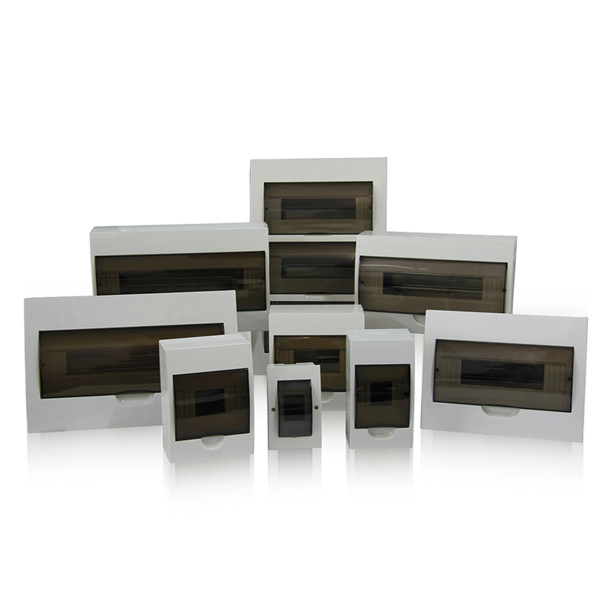
Illustration of modular circuit protection devices on a mounting rail
Category illustration. The selected article, ratings, dimensions, configuration and documentation are confirmed in the current quotation.

Start with a product reference, intended use and estimated quantity. We bring product selection, sample questions and quotation details into one conversation.

Email your reference image ↗
Core protectionMiniature breakers, residual-current devices and combined protection
Switching and extensionsIsolators, surge-protection and related component enquiries
Published reference examplesAC devices with model-specific pole, current and voltage schedules
Technical approvalCircuit duties, ratings, terminals, documentation and sample review
Explore the product range

Build the range
your buyers need.

Choose a focused product or discuss a coordinated assortment. Each direction can be developed into a more specific model and packaging brief.

Miniature circuit breakers

Compare overcurrent-protection devices with an agreed current, pole arrangement and trip characteristic. Short-circuit selection must use the correct rating definition and applicable circuit conditions.

Enquire about this range ↗

Compact phase-and-neutral breakers

Explore a phase-and-neutral direction where the technical reference specifies 1P+N. Confirm which poles are protected, switched or neutral and the actual device width and wiring arrangement.

Enquire about this range ↗

Residual-current circuit breakers

Specify residual protection independently from overcurrent protection. Define current, poles, residual-current type and sensitivity, coordination and the required upstream protective device.

Enquire about this range ↗

Combined residual and overcurrent devices

Compare an RCBO direction for a circuit needing both functions. Request the exact residual sensitivity and unit, trip characteristic and wiring diagram for the selected variant.

Enquire about this range ↗

Switch-disconnectors and isolators

Choose an isolation or switching direction for the actual duty. Making capacity and short-time withstand values are distinct from a circuit breaker interrupting rating; the device is not assumed to provide overload protection.

Enquire about this range ↗

Surge-protection enquiries

Submit the electrical system, earthing arrangement and surge-protection coordination brief. Product class, continuous operating voltage, discharge ratings, protection level and backup protection require a specific current data sheet.

Enquire about this range ↗

Moulded-case and smart relay directions

Related product directions include moulded-case breakers and intelligent relays. Specify the protection or control function, terminals, communication needs and applicable standards; current article specifications require review.

Enquire about this range ↗

Battery contact-component enquiries

Selected related battery-electrode or terminal-component projects can be evaluated from a drawing and material brief. Confirm the actual production and sales route separately; breaker test evidence does not qualify a battery component.

Enquire about this range ↗

Project-specific OEM and component development

Develop a technical enquiry around the circuit duty, mechanical envelope, terminal requirements, marking and packaging. Engineering changes, tooling, sample scope and minimum quantities require confirmation.

Enquire about this range ↗
Reference product directions

Start with a product.
Define the details.

Use these options to describe what you are buying. The public references identify your enquiry; the final model and specification are confirmed before an order.

AC miniature breaker reference, up to 63 A sourcing illustration
REFERENCE 0207-01

AC miniature breaker reference, up to 63 A

A miniature-breaker reference with distinct nominal and service breaking values. Select the actual pole configuration and current variant against the intended circuit.

Pole directions
1P, 1P+N, 2P, 3P, 3P+N and 4P
Rated voltage
AC 230/400 V
Rated current options
1, 2, 3, 4, 6, 10, 13, 16, 20, 25, 32, 40, 50 and 63 A
Trip curves
B, C and D
Published Icn
10 kA
Published Ics
7.5 kA
Frequency
50/60 Hz
Mounting direction
35 mm symmetrical DIN rail or panel mounting
Discuss this option ↗
Terminal and mounting reference for the 63 A family sourcing illustration
REFERENCE 0207-02

Terminal and mounting reference for the 63 A family

The connection schedule belongs to this specific miniature-breaker reference. Confirm the conductor type, terminal arrangement and fastening instructions on the current drawing.

Rigid-conductor connection capacity
Up to 25 mm²
Published fastening torque
2.0 N·m
Terminal connection height
19 mm
Published electro-mechanical endurance
20,000 operations
Contact feature
Position indication
Discuss this option ↗
Compact 1P+N miniature breaker reference sourcing illustration
REFERENCE 0207-03

Compact 1P+N miniature breaker reference

A separate phase-and-neutral reference with its own current range and connection schedule. Its short-circuit value is retained under the source designation and must not be relabelled as another rating.

Poles
1P+N
Rated voltage
AC 230 V
Rated current options
1, 2, 3, 4, 6, 10, 16, 20, 25 and 32 A
Trip curves
B and C
Published service short-circuit capacity
6,000 A
Frequency
50/60 Hz
Rigid conductor
Up to 10 mm²
Fastening torque
1.2 N·m
Mounting direction
35 mm symmetrical DIN rail or panel mounting
Discuss this option ↗

Electromagnetic residual-current breaker reference sourcing illustration
REFERENCE 0207-04

Electromagnetic residual-current breaker reference

A residual-current device reference with conditional short-circuit ratings. The listed residual characteristics are options to select and verify, not functions automatically combined in every article.

Pole options
2P or 4P
Rated current options
25, 40 and 63 A
Rated voltage
AC 230(240)/400(415) V
Frequency
50/60 Hz
Residual operating-current options
0.03, 0.1, 0.3 and 0.5 A
Listed residual characteristics
A, AC, G and S options; confirm variant
Published conditional short-circuit current Inc
10 kA
Published conditional residual short-circuit current I△c
10 kA
Published protection class
IP20
Discuss this option ↗
RCCB connection and switching reference sourcing illustration
REFERENCE 0207-05

RCCB connection and switching reference

A connection and switching schedule for the same residual-current reference. Conditional short-circuit ratings require the appropriate coordination rather than assuming a standalone breaker capability.

Making/breaking capacity
500 A for rated current 25/40 A; 630 A for rated current 63 A
Rigid-conductor capacity
25 mm²
Fastening torque
2.0 N·m
Terminal height
19 mm
Published electro-mechanical endurance
4,000 cycles
Mounting direction
35 mm symmetrical DIN rail or panel mounting
Discuss this option ↗

Combined-protection 1P+N reference sourcing illustration
REFERENCE 0207-06

Combined-protection 1P+N reference

An electromagnetic RCBO direction with overcurrent and residual protection. Confirm the exact residual sensitivity and unit, wiring and protection configuration on the current model-specific data sheet.

Poles
1P+N
Rated voltage
AC 240 V
Rated current options
1, 2, 3, 4, 6, 10, 16, 20, 25, 32 and 40 A
Trip curves
B, C and D
Published short-circuit capacity
10 kA
Frequency
50/60 Hz
Residual characteristics
AC or A option; confirm article
Rigid conductor
16 mm²
Residual sensitivity
Require an unambiguous model-specific schedule
Discuss this option ↗
AC isolator reference, up to 63 A sourcing illustration
REFERENCE 0207-07

AC isolator reference, up to 63 A

A switching and isolation reference with separate making and withstand ratings. These figures do not establish an overcurrent-protection function.

Pole options
1P, 2P, 3P and 4P
Rated current options
16, 25, 40 and 63 A
Rated voltage
AC 230/400 V
Frequency
50/60 Hz
Published short-circuit making capacity
6 kA
Published withstand current
1 kA for 1 second
Rigid conductor
25 mm²
Mounting direction
35 mm symmetrical DIN rail or panel mounting
Discuss this option ↗

Surge-protection device enquiry sourcing illustration
REFERENCE 0207-08

Surge-protection device enquiry

A surge-protection procurement direction requiring a defined system and protection brief. Submit the network, installation point and coordination requirements so that an actual device can be specified.

To define
System voltage, earthing arrangement, device class and coordination
Technical data needed
Continuous operating voltage, discharge ratings, protection level and backup protection
Discuss this option ↗
Moulded-case breaker and smart-relay enquiry sourcing illustration
REFERENCE 0207-09

Moulded-case breaker and smart-relay enquiry

Request related protection or control components from a current technical brief. Exact ratings, adjustable settings and communication protocols are not inferred from the miniature-breaker examples.

Product directions
Moulded-case circuit breaker and intelligent relay
To define
Circuit duty, ratings, control function, terminals and interface
Discuss this option ↗
Drawing-based battery terminal component enquiry sourcing illustration
REFERENCE 0207-10

Drawing-based battery terminal component enquiry

Explore a battery electrode or terminal-component direction as a separate development project. Material, electrical and mechanical criteria require their own drawing and acceptance schedule.

Component direction
Selected battery electrode or terminal parts
To define
Drawing, alloy, finish, dimensional tolerance and electrical requirements
Approval scope
Separate supplier, process and component qualification
Discuss this option ↗

Confirm each device’s current revision, complete electrical schedule, mounting and destination requirements before purchasing. Icn, Ics, conditional current, making capacity and withstand current are different ratings. Residual-current sensitivity and units require an approved model-specific specification.

What matters for this category

A better brief.
A clearer comparison.

Focus the sourcing conversation on the features, materials and production details that make a difference to your product range.

01

Distinct functions in one technical comparison

Compare overcurrent, residual-current, combined protection, isolation and surge needs without treating one device function as a substitute for another.

02

Ratings stay attached to the selected reference

Keep pole layout, current, voltage, breaking designation, terminals and mounting together when comparing a particular article.

03

A useful brief for component development

Bring the circuit duty, mechanical envelope, marking, documents and acceptance criteria into the enquiry before agreeing samples and production terms.

Branding, configuration & packaging

Make the product
fit your programme.

Bring artwork, reference samples and a target cost. The available process, minimum quantity, sample charges and development scope are reviewed for the chosen option.

01

Electrical and mechanical brief

Provide current, voltage, poles, curve or residual type, circuit duty, conductor and installation envelope. Availability of a changed configuration needs technical confirmation.

02

Marking and packaging

Specify private-label artwork, device markings, instruction language, barcodes, individual packs and carton quantities. Confirm document and test implications for any modified article.

03

Samples and development terms

Request reference or development samples with a clear acceptance plan. Engineering changes, tooling, costs, minimum order and lead time require project-specific agreement.

Quality & product evidence

Turn requirements
into checks.

Agree which product characteristics need testing and how the approved sample relates to the bulk order.

01

Rating and drawing consistency

Check that markings, pole arrangement, wiring, rated values, terminal capacity and assembly match the approved technical schedule for the actual article.

02

Performance evidence

Request applicable product test reports with the exact model, rating, standard, site and revision. Separate switching, interrupting, conditional and residual-protection results.

03

Production and inspection scope

Agree appearance, mechanical operation, terminal, marking and relevant routine electrical checks. Define sampling and traceability requirements without assuming a group-wide certification.

Test capability is a starting point for the inspection plan. Request the method, applicable model and results needed for your order.

Documents matched to the order

Ask for evidence
that fits the product.

Request technical and conformity evidence for the exact article, production route and destination. A report issued for another brand, applicant or device family does not automatically cover the selected private-label product.

State the sales market, intended users and required files in your first enquiry. Current validity and scope are checked for the selected supplier and product; a category description does not certify every item.

Share your document requirements ↗
Technical approval schedule
Current data sheet, dimensions, wiring diagram, pole and protection arrangement, ratings, terminal and mounting instructions.
Applicable test and conformity documents
Model-specific test reports and applicable conformity or market documents showing the issuing body, applicant, factory, standard, revision and scope.
Project and shipping records
Approved sample, marking artwork, inspection and traceability requirements, packing schedule and the actual commercial, sampling and delivery terms.
Built around how you sell

Different buyers.
Different specifications.

Your sales channel changes the assortment, packaging and quality priorities. Tell us the intended use as well as the product name.

01

Building and equipment distribution

Define the circuits, voltage, current and coordination needs for a distribution or equipment-protection project.

02

Panel and control integration

Review physical mounting, terminals, wiring and control requirements for the selected protective or switching device.

03

OEM and related component programmes

Develop private-label electrical devices or a separately qualified battery-component enquiry from an approved drawing and test brief.

From first brief to a defined order

One contact.
A practical next step.

Samples, commercial terms and responsibilities are agreed for the project. Use the same product and packing specification when comparing quotations.

01

Share the requirement

Product, reference image, quantity, sales market and timing.

02

Compare suitable options

Review configuration, materials, sample scope and relevant documents.

03

Approve the specification

Agree artwork, packaging, sample, testing and inspection criteria.

04

Confirm the order plan

Set price, payment, production, delivery and defect remedies in writing.

Buyer questions

Before you send
your first enquiry.

Practical answers about this sourcing direction, customization and the reference options. Your agreed specification and written quotation determine the actual order.

Are MCB, RCCB and RCBO interchangeable?

They have different protection functions. Define whether the circuit needs overcurrent protection, residual-current protection or both and approve the specific device and coordination arrangement.

What is the difference between Icn and Ics?

They are different short-circuit rating designations. Keep the value attached to the source definition and applicable standard; do not compare or replace them without technical review.

Does a conditional 10 kA RCCB rating mean standalone interruption?

A conditional rating must be reviewed with the specified protective coordination and test conditions. It must not be treated automatically as a standalone overcurrent breaker rating.

Can the residual sensitivity be selected?

A residual-current device schedule lists several options. Request the exact variant, sensitivity and unit; any ambiguous source value must be clarified before purchase.

Does an isolator provide overload protection?

That function is not assumed. Select an isolator for its switching and isolation duty and confirm separate protection and coordination requirements.

Can I enquire about surge protection and related components?

Yes. Provide the network and coordination brief for surge devices, or a specific control or drawing brief for other components. The current article specifications need confirmation.

Are certifications and market approval included for every option?

No universal approval is assumed. Request evidence for the exact article, rating, brand configuration, producing site and destination requirements.

What should I include in a quotation request?

Send product function, current, voltage, poles, trip or residual characteristic, fault-level and coordination requirements, installation dimensions, quantities, destination, documents and target schedule.

Who handles my enquiry?

Factory Sourcing Hub handles this enquiry as an independent sourcing and trading service. The product route, supplier suitability, sample scope and order responsibilities are agreed for the actual project.

How do I get a price and order minimum?

Send the product reference, quantities per variation, customization and packaging. Prices, minimums, sample charges and delivery dates are confirmed in a current quotation; the page is not a live inventory or price feed.

Can I discuss samples and inspection before ordering?

Yes. State whether you need a reference sample, a customized sample or development work. Agree the sample cost and shipping, approval specification, inspection plan and remedy for non-conforming goods before the bulk order.

What should I attach to my email?

Reference images, drawings, logo artwork and a product list are useful. Include quantities, the intended users and sales market, packaging, required documents and timing. After submitting the form, email attachments to kunhuow@gmail.com with your enquiry reference.

Tell us what you are planning

Your next order
starts with a brief.

A reference picture or a short description is enough to begin. Add the details you already know; the optional fields help make the follow-up more useful.

  • Protection or switching function, electrical system and destination
  • Current, voltage, poles, characteristic and coordination requirements
  • Mechanical envelope, terminals, markings and packaging
  • Quantity, sample tests, conformity documents and target schedule
kunhuow@gmail.com

Download the enquiry checklist ↓

Independent sourcing and trading service. Supplier choice, service costs and order conditions are discussed for your project.

Discuss your requirements.

Product selection, customization, samples and quotation enquiries.

Add product, quantity or customization details (optional)

Submit your enquiry directly. We use your details to respond to your sourcing request. For attachments, email kunhuow@gmail.com with your enquiry reference. Enquiry data use.

Information basis: published product information reviewed . Reference details support a sourcing discussion. Current supply, samples and product-specific documents are confirmed for the selected item.

Have a product in mind?
Share your sourcing brief.
Send an enquiry ↗