Independent B2B sourcing · One trading contactkunhuow@gmail.com ↗
FACTORY SOURCING HUBProduct sourcing for business buyers
Get a quote ↗
Home/Electrical Controls & Lighting/Circuit Breakers, Motor Control, Distribution Boxes & Accessories
MCCB · MCB · RCBO · RCCB · ACB · motor control · distribution boxes · breaker accessories

Match protection to the circuit. Coordinate the controls and enclosure.

Circuit Breakers, Motor Control, Distribution Boxes & Accessories

Source fixed, adjustable and electronic circuit protection, motor switching, distribution boxes and matched accessories. Compare voltage-specific fault ratings, trip settings, mounting, packaging and technical-document requirements for each product.

  • Build a coordinated enquiry across feeder protection, modular devices, motor control and empty boxes.
  • Compare actual interruption ratings, setting ranges, supply conditions and installation details.
  • Plan sample approval, private-label presentation, packing and product-specific evidence.

Manufacturing, product documents and order conditions depend on the model and supply route selected for your project.

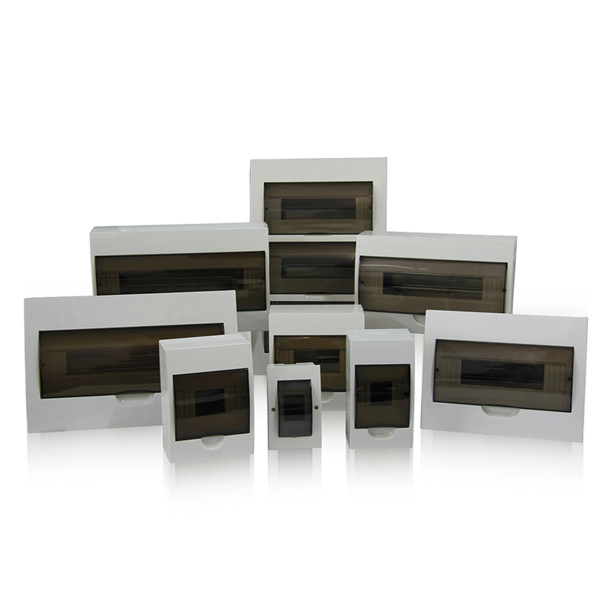
Original product reference showing empty modular enclosures in different sizes
Original product appearance reference. Confirm the exact version, dimensions, electrical duty, accessories and installation requirements in the quotation.

Start with a product reference, intended use and estimated quantity. We bring product selection, sample questions and quotation details into one conversation.

Email your reference image ↗
Protection directionsFixed · adjustable · electronic · residual-current · motor protection
Distribution scopeModular indoor and sealed boxes · main air breakers · busbar covers
Accessory matchingHost frame · control voltage · contacts · mounting and operating mechanism
Buying briefCircuit schedule · ratings · drawings · approved sample · packing · destination
Explore the product range

Build the range
your buyers need.

Choose a focused product or discuss a coordinated assortment. Each direction can be developed into a more specific model and packaging brief.

Fixed thermal-magnetic moulded-case breakers

Feeder protection options include different frames, pole layouts and short-circuit performance levels. Select the actual operating voltage, rated current and trip arrangement for the circuit. Fixed thermal-magnetic protection can be coordinated with terminals, phase separators, panel mounting and optional operating accessories. Frame size and rated current should be recorded separately in the purchasing schedule.

Enquire about this range ↗

Adjustable thermal and magnetic protection

Adjustable MCCB directions allow overload and instantaneous settings to be selected for the load and protection study. Thermal-only and thermal-plus-magnetic arrangements are separate options. Specify the adjustment range, rating plug or current reference, required fault performance and upstream/downstream coordination. Approval should use the exact trip-unit curve and setting instructions.

Enquire about this range ↗

Electronic-trip moulded-case breakers

Electronic releases provide another protection direction for industrial feeders. Define the required overload, short-circuit and any additional protection functions, then compare the actual trip unit and adjustable settings. The available settings differ from thermal-magnetic products. Submit the load schedule, selectivity requirements and control or indication needs for technical matching.

Enquire about this range ↗

AC miniature circuit breakers

Modular MCB directions cover different module widths, current selections, B/C/D characteristics and breaking-capacity versions. Confirm the voltage, poles, terminal arrangement and DIN-rail layout. Compare the actual Icn or other declared interruption rating at the relevant voltage. A high-capacity version should remain a distinct line item from a lower-capacity device in the same family.

Enquire about this range ↗

Compact phase-and-neutral devices

Compact MCB and RCBO directions support distribution boards with limited module space. Specify whether neutral switching is required and confirm the actual internal pole arrangement, width and terminals. For RCBO enquiries, include residual-current sensitivity, waveform response and operating technology as well as the overcurrent specification.

Enquire about this range ↗

DC miniature circuit protection

DC breaker enquiries require the maximum circuit voltage, current, polarity and pole connection. Submit the source and load characteristics, including photovoltaic or battery conditions where relevant. Request the selected DC wiring diagram and interruption evidence. AC voltage or AC breaking figures should not be used to establish a DC rating.

Enquire about this range ↗

Residual-current circuit breakers

RCCB directions include two-pole and four-pole arrangements across several constructions. Confirm rated current, residual-current response, sensitivity, delay and compatibility with separate overcurrent protection. Electronic and electromagnetic operating directions need individual selection. The waveform type and required operation under supply conditions should be part of the technical brief.

Enquire about this range ↗

Residual-current and overcurrent combined protection

RCBO products combine circuit overload/short-circuit protection with a residual-current function. Compact and other modular constructions can be reviewed for the board layout. State poles, supply, curve, current and sensitivity. Confirm the specific residual-current type and supporting test evidence instead of treating every RCBO as having the same leakage response.

Enquire about this range ↗

Moulded-case residual-current breakers

Residual-current MCCB directions suit feeder-level enquiries where overcurrent and earth-leakage functions are required together. Sensitivity and delay selections are tied to the actual frame and release. Provide the protection study and the required coordination with downstream devices. Different delay or threshold options must be confirmed in the selected order code.

Enquire about this range ↗

Air circuit breakers

Low-voltage ACB directions address main incomers and larger distribution circuits with electronic protection. Specify current, poles, fault performance, fixed or withdrawable arrangement and required controller functions. Enclosure protection depends on the mounting compartment, door frame and cover. The bare device and the completed switchboard should have separate scope and documentation.

Enquire about this range ↗

AC contactors and motor switching

Contactor enquiries can be matched to motor power, utilization category, operating voltage and coil supply. Include auxiliary contacts, duty cycle and coordination with the protective device. Motor power ratings are voltage- and duty-dependent. Additional thermal-overload relay requirements can be submitted with the starter brief for technical and availability review.

Enquire about this range ↗

Motor-protection circuit breakers

Adjustable motor-protection devices support matching overload settings to the motor current. Supply the nameplate current, motor voltage, starting method and coordination requirements. A motor power example at one voltage should not be used at another voltage. Confirm the specific operating mechanism, accessories and short-circuit coordination for the starter.

Enquire about this range ↗

Isolation and local switching

Single-pole isolator directions can be considered alongside the protection schedule. Specify the current, voltage, isolation function, utilization duty and mounting. A switching or isolation device needs separate overcurrent and residual-current protection where required by the installation design. Locking and indication requirements should be agreed for the selected construction.

Enquire about this range ↗

Indoor plastic distribution boxes

Empty modular boxes include surface and flush mounting, plastic-base and iron-base directions, and several way counts. Select the rail, terminals, cover, door and cable-entry requirements. Indoor IP40 and smaller IP30 constructions are different products. Confirm whether the quotation is for the empty box, accessories or an equipped distribution board.

Enquire about this range ↗

Sealed distribution boxes

IP65 catalogue directions include different plastic constructions and module capacities. Provide the installation environment, number of ways, cable glands, terminal needs and mounting layout. Review the actual enclosure drawing and sealing arrangement. The rating must be supported for the supplied construction and cable-entry configuration; it is not a promise of performance in every outdoor condition.

Enquire about this range ↗

Steel-base modular enclosures

Steel-base boxes with plastic cover options provide another surface or flush mounting direction. Define module arrangement, opaque or transparent cover, incoming cable details and finish requirements. Approve the actual dimensions and supplied hardware. Quotation and packing should identify the exact enclosure variant rather than relying on a family photograph.

Enquire about this range ↗

Heat-shrink busbar junction covers

L-, T- and straight-joint cover directions are listed in different voltage classes. Submit the busbar dimensions, joint form, phase spacing, installation conditions and required electrical evidence. Select the actual cover and shrink procedure. A catalogue voltage-class label does not by itself approve a completed busbar assembly or establish compliance for every application.

Enquire about this range ↗

Breaker mounting, operation and indication accessories

Accessories include plug-in and draw-out arrangements, rotary handles, motor operating mechanisms, shunt and undervoltage releases, auxiliary contacts and alarm contacts. State the host breaker, frame, contact function, control voltage and installation arrangement. Mechanical fit and electrical compatibility require confirmation for the exact combination. Specialist vacuum-breaker enquiries can be reviewed separately with the required voltage class and technical brief.

Enquire about this range ↗
Reference product directions

Start with a product.
Define the details.

Use these options to describe what you are buying. The public references identify your enquiry; the final model and specification are confirmed before an order.

6 kA or 10 kA modular MCB reference sourcing illustration
REFERENCE 0217-01

6 kA or 10 kA modular MCB reference

Two interruption versions are listed for the same modular family. Select the actual current, poles and trip curve, with the required version recorded explicitly.

Current choices
6, 10, 16, 20, 25, 32, 40, 50, 63 A
Pole options
1P, 2P, 3P, 4P
Catalogue Icn versions
6 kA or 10 kA, depending on version
Characteristics / frequency
B, C or D; 50–60 Hz
Width
18 mm per pole
Discuss this option ↗
Higher-current modular breaker reference sourcing illustration
REFERENCE 0217-02

Higher-current modular breaker reference

A wider modular construction with separate normal and higher interruption versions. Confirm the selected rating at the actual supply voltage.

Rated-current schedule
6, 10, 16, 20, 25, 32, 40, 50, 63, 80, 100, 125 A
Poles
1P–4P
Catalogue Icn versions
10 kA or 15 kA
Characteristic options
B, C, D
Width / height / depth
27 mm per pole; 90 mm high; 75.5 mm deep
Discuss this option ↗
18 mm phase-and-neutral RCBO reference sourcing illustration
REFERENCE 0217-03

18 mm phase-and-neutral RCBO reference

A compact combined-protection direction. The residual-current sensitivity and waveform response must be specified with the quotation.

Pole arrangement / width
1P+N; 18 mm
Rated-current table reference
40 A
Supply
230 V; 50–60 Hz
Trip curve
B or C
Catalogue breaking reference
6 kA
Discuss this option ↗
125 A frame fixed MCCB reference sourcing illustration
REFERENCE 0217-04

125 A frame fixed MCCB reference

This S-version example keeps ultimate and service short-circuit ratings separate. Select the required current within the frame and confirm terminals and mounting.

Frame / poles
125 A frame; 3P or 4P
Operating voltage
400 V
Icu / Ics
50 kA / 37.5 kA, S version at 400 V
Insulation / impulse reference
Ui 750 V; Uimp 10,000 V
Trip construction
Fixed thermal-magnetic
Discuss this option ↗
250 A frame adjustable MCCB reference sourcing illustration
REFERENCE 0217-05

250 A frame adjustable MCCB reference

An adjustable thermal-plus-magnetic direction for protection coordination. Settings apply to this construction rather than electronic releases.

Frame / poles
250 A frame; 3P or 4P
Operating voltage
400/415 V
Icu / Ics
50 kA / 37.5 kA, S version
Thermal setting reference
70–100% of In
Magnetic setting reference
5–10 × In
Discuss this option ↗
Electronic-release MCCB direction sourcing illustration
REFERENCE 0217-06

Electronic-release MCCB direction

The electronic family lists its own adjustment references. Request the selected frame, trip-unit functions and complete curve before approval.

Family current reference
100–1600 A AC, with the actual frame selected separately
Overload setting reference
40–100% of In
Instantaneous setting reference
1.5–12 × In
Required selection
Exact trip unit, current rating, poles and fault ratings
Discuss this option ↗
160 A frame residual-current MCCB reference sourcing illustration
REFERENCE 0217-07

160 A frame residual-current MCCB reference

A four-pole feeder-protection example with selectable residual-current thresholds and delays. Coordination must use the selected settings.

Frame / poles
160 A frame; 4P
Operating voltage
400/415 V
Icu / Ics
50 kA / 37.5 kA, S version
Residual-current selections
100, 300, 500 mA
Delay selections
50, 500, 800 ms
Discuss this option ↗
1000 A frame air breaker reference sourcing illustration
REFERENCE 0217-08

1000 A frame air breaker reference

A main-distribution reference with separate voltage-dependent interruption figures. Enclosure ratings require the specified compartment and additional parts.

Frame / current selections
1000 A frame; 200, 400, 630, 800, 1000 A
Poles
3P or 4P
At 400 V
Icu 42 kA; Ics 30 kA; Icw 20 kA
At 690 V
Icu 25 kA; Ics 20 kA; Icw 20 kA
Normal open mounting
IP30 catalogue reference
Discuss this option ↗
AC-3 contactor family reference sourcing illustration
REFERENCE 0217-09

AC-3 contactor family reference

Motor switching capacity is specified at a particular voltage and utilization category. Select the actual contactor and coil for the motor.

Main-circuit family range
9–370 A
Motor-power family reference
4–200 kW at 400 V, AC-3
Quote details
Motor current, coil voltage, auxiliary contacts and duty
Discuss this option ↗
6–10 A adjustable motor-protection reference sourcing illustration
REFERENCE 0217-10

6–10 A adjustable motor-protection reference

This setting range is tied to a specific motor-protection reference. The motor-power example is conditional on the stated supply.

Adjustable current
6–10 A
Motor-power example
4 kW at 380/415/440 V, AC-3
Alternative voltage example
2.2 kW at 220 V, AC-3
Required coordination
Motor current, starting duty and upstream protection
Discuss this option ↗
12-way indoor surface enclosure reference sourcing illustration
REFERENCE 0217-11

12-way indoor surface enclosure reference

An empty plastic-base box direction. The listed carton is a packing reference for this exact surface-mount variant, subject to the agreed order pack.

Way count / mounting
12 ways; surface mounting
Catalogue enclosure protection
IP40
Reference carton quantity
20 pieces
Reference carton size
52 × 42.5 × 54 cm
Reference gross / net weight
15.8 kg / 12.3 kg per carton
Discuss this option ↗
12-way sealed distribution-box reference sourcing illustration
REFERENCE 0217-12

12-way sealed distribution-box reference

A sealed empty-box direction with its own pack schedule. Specify entries, seals, terminals and installation before confirming the enclosure configuration.

Way count
12 ways
Catalogue enclosure protection
IP65
Reference carton quantity
20 pieces
Reference carton size
57 × 41.5 × 53.5 cm
Reference gross / net weight
16.3 kg / 15.3 kg per carton
Discuss this option ↗
Busbar joint-cover direction sourcing illustration
REFERENCE 0217-13

Busbar joint-cover direction

Select the voltage class and joint geometry for the actual busbar installation. Request the corresponding dimensions and electrical documentation.

Joint geometries
L, T and straight forms
Catalogue voltage-class directions
1 kV, 10 kV and 35 kV; separate selections
Required match
Busbar section, joint layout, cover dimensions and shrink procedure
Discuss this option ↗
Undervoltage-release control options sourcing illustration
REFERENCE 0217-14

Undervoltage-release control options

An accessory direction requiring an exact host-breaker match. The listed control supplies are alternatives rather than one universal coil.

Listed control-voltage alternatives
AC 380 V; AC 220 V; DC 110 V; DC 220 V
Accessory function
Undervoltage release
Required host information
Breaker frame, mounting and control-circuit drawing
Discuss this option ↗

References describe separate catalogue constructions and selected versions. Current, poles, interruption performance, residual-current response and enclosure protection must be confirmed together for the quoted item. Illustrations show product directions; equipped boards and empty enclosures require separate scope.

What matters for this category

A better brief.
A clearer comparison.

Focus the sourcing conversation on the features, materials and production details that make a difference to your product range.

01

Compare the protection choices together

A combined enquiry can cover modular and moulded-case protection, main air breakers and motor switching. Recording the intended load, fault level, trip requirements and installation keeps alternatives comparable. Accessories and boxes can be reviewed with the device schedule rather than added without a compatibility check.

02

Make settings and accessories part of the specification

Fixed, adjustable and electronic releases serve different selection needs. Include settings, control voltages, contact functions and operating mechanisms in the brief. This supports a clearer quotation and sample review, especially when the device must fit an existing panel or control arrangement.

03

Connect technical selection with order preparation

Private-label or specification-development requirements can be submitted with artwork, drawings and the expected documentation. Agree sample acceptance, unit labels, language, pack contents and carton handling before production commitments. Model-specific packing references help plan consolidation without applying one carton schedule to every item.

Branding, configuration & packaging

Make the product
fit your programme.

Bring artwork, reference samples and a target cost. The available process, minimum quantity, sample charges and development scope are reviewed for the chosen option.

01

Private-label and development review

Submit your product specification, desired presentation and permitted artwork. Label layout, colour or construction changes need feasibility review for the selected device. Any technical change requires assessment of markings, test evidence and certification scope. Minimum quantities, development charges and tooling ownership are quoted for the actual project.

02

Sample and fit approval

State the precise electrical version, accessories, mounting space and terminal needs when requesting samples. Review operation, dimensions, labels and supplied documents against the approved specification. Sample availability, charges and timing depend on the selected product and changes; agree them before relying on a programme date.

03

Unit packs, cartons and consolidation

Specify individual-box contents, accessory bags, instructions, barcode placement and destination labels. Confirm carton quantity, gross weight and dimensions for each variant. Packing schedules differ between surface/flush boxes and between breaker frames. Agree any protective inserts, pallet plan or mixed-order consolidation in the quotation.

Quality & product evidence

Turn requirements
into checks.

Agree which product characteristics need testing and how the approved sample relates to the bulk order.

01

Electrical and trip-performance review

Request product-specific evidence for trip limits, overload response, short-circuit performance and temperature rise as appropriate. For electronic products, define electromagnetic-compatibility and controller checks. Confirm the current, voltage, poles, settings and test conditions in the evidence; a general laboratory list is not an approval for every product.

02

Construction and installation checks

Review enclosure moulding, metal parts, riveting or welding, terminal fastening and assembly against the agreed specification. Approve mechanical operation, mounting dimensions, accessory fit and cable-entry arrangements. For boxes and busbar covers, confirm the supplied construction and installation conditions supporting the requested protection.

03

Batch acceptance and traceability

Agree incoming-material records where needed, sampling, visual inspection, functional checks and label verification. Record the approved version and accessory combination so substitutions require review. Set the required batch identification, inspection report and acceptance criteria before order confirmation rather than assuming a universal testing or warranty package.

Test capability is a starting point for the inspection plan. Request the method, applicable model and results needed for your order.

Documents matched to the order

Ask for evidence
that fits the product.

Technical evidence should identify the exact item, rating and configuration. Tell us the destination and required approvals so document availability and scope can be reviewed before purchase.

State the sales market, intended users and required files in your first enquiry. Current validity and scope are checked for the selected supplier and product; a category description does not certify every item.

Share your document requirements ↗
Data, curves and installation drawings
Request the selected data sheet, trip curves, setting instructions, terminal capacity, torque values and dimensioned drawing. Include wiring and accessory diagrams. Clarify Icn, Icu, Ics and Icw references and the voltage associated with each figure; they are different ratings.
Applicable test and compliance evidence
List the product standard and market requirements needed for the order. Review current reports or certificates against the model, poles, rating, construction and issuing body. General approval logos or historic company certificates should not be treated as proof that the entire range is covered.
Order, packing and inspection records
Agree the specification, artwork approval, bill of materials or included accessories, packing schedule and inspection report. Installation and user information should match the supplied version and language. Additional shipment or conformity documents depend on the product, destination and agreed supply scope.
Built around how you sell

Different buyers.
Different specifications.

Your sales channel changes the assortment, packaging and quality priorities. Tell us the intended use as well as the product name.

01

Panel builders and distribution projects

Submit the single-line diagram, incoming and outgoing circuits, fault levels and panel layout. Compare main and feeder protection with device width, terminals and mounting. Confirm whether your scope requires components, empty enclosures or an assembled board with separate assembly evidence.

02

Motor starters and machinery controls

Provide motor nameplates, supply, starting duty and control-circuit requirements. Match contactor duty, motor-protection settings, auxiliaries and release voltages. Existing-panel replacements require dimensions and wiring review rather than an assumption of cross-brand interchangeability.

03

Electrical wholesalers and private-label ranges

Create a clear product matrix by current, poles, curve, sensitivity and performance version. Review pack sizes, language, barcode and technical-document needs for your market. Keep different construction and rating variants identifiable through samples, labels and ordering codes.

From first brief to a defined order

One contact.
A practical next step.

Samples, commercial terms and responsibilities are agreed for the project. Use the same product and packing specification when comparing quotations.

01

Share the requirement

Product, reference image, quantity, sales market and timing.

02

Compare suitable options

Review configuration, materials, sample scope and relevant documents.

03

Approve the specification

Agree artwork, packaging, sample, testing and inspection criteria.

04

Confirm the order plan

Set price, payment, production, delivery and defect remedies in writing.

Buyer questions

Before you send
your first enquiry.

Practical answers about this sourcing direction, customization and the reference options. Your agreed specification and written quotation determine the actual order.

What should I include in a circuit-breaker enquiry?

Send the supply voltage and frequency, AC or DC, current, poles, required trip characteristic and prospective fault level. Add residual-current requirements, installation space, terminals and destination. A drawing, load schedule or single-line diagram makes it easier to compare suitable options.

Are Icn, Icu, Ics and Icw interchangeable?

They describe different short-circuit performance references. Provide the value and standard required by the design. Each figure must be matched to the selected device and operating voltage; a family maximum or a figure at another voltage should not replace the required rating.

Can fixed and adjustable MCCBs use the same settings?

Fixed protection and adjustable releases have different selection and coordination requirements. Thermal-plus-magnetic and electronic versions also list different adjustment ranges. Request the exact trip-unit data and curves, then agree the rated current and settings with the project designer.

How do I specify residual-current protection?

State RCCB, RCBO or residual-current MCCB, along with poles, current, sensitivity, time delay and waveform response. Include any requirement for supply-independent operation and coordination with upstream or downstream devices. The actual selected product and supporting evidence determine suitability.

Can an AC breaker be used on a DC circuit?

Provide the complete DC voltage, current, source, polarity and wiring arrangement for a DC-specific review. Request the selected product’s DC rating and connection diagram. AC ratings alone do not establish a suitable DC interruption capability.

Do contactor motor-power ratings apply at every voltage?

No. Motor power depends on supply voltage and utilization duty. Submit the motor current, voltage, starting method, operating frequency and coil supply. The contactor and motor-protection device should be selected and coordinated for that actual duty.

Are the distribution boxes supplied with breakers?

The listed enclosure directions are empty-box references unless the quotation explicitly includes devices and accessories. Specify the rail, terminal bars, cover, cable entries and component schedule. An equipped or tested board requires its own defined supply scope.

Does IP65 apply after any cable entry is made?

The completed installation must use the appropriate entries, glands, seals and mounting arrangement. Confirm the selected enclosure’s supporting evidence and instructions. The enclosure rating should not be assumed for an altered or differently assembled box.

Can you arrange private-label or modified products?

Send the technical specification, presentation requirements and artwork for feasibility review. Agree samples, approval criteria, quantities and any development work. Technical changes can affect documentation and approval scope, so final arrangements are confirmed for the actual selected construction.

Can accessories be used on other makes of breaker?

Provide the exact host, frame, mounting details and circuit diagram. Mechanical and electrical compatibility must be established for the specific combination. A similar outline or familiar family description does not establish interchangeability or authorization.

What are the MOQ, sample time and production lead time?

These are quoted for the selected product, quantity, current availability and customization. Provide your required delivery window and destination. Confirm sample charges, approval steps, packing and production timing in the order rather than applying one schedule to every range.

What documentation and inspection can be requested?

List the destination requirements, applicable standard, technical data, drawings and test or conformity evidence needed. Agree batch inspection, traceability, label review and packing checks. Document availability and any certification scope must be verified for the actual model and rating.

Who handles my enquiry?

Factory Sourcing Hub handles this enquiry as an independent sourcing and trading service. The product route, supplier suitability, sample scope and order responsibilities are agreed for the actual project.

How do I get a price and order minimum?

Send the product reference, quantities per variation, customization and packaging. Prices, minimums, sample charges and delivery dates are confirmed in a current quotation; the page is not a live inventory or price feed.

Can I discuss samples and inspection before ordering?

Yes. State whether you need a reference sample, a customized sample or development work. Agree the sample cost and shipping, approval specification, inspection plan and remedy for non-conforming goods before the bulk order.

What should I attach to my email?

Reference images, drawings, logo artwork and a product list are useful. Include quantities, the intended users and sales market, packaging, required documents and timing. After submitting the form, email attachments to kunhuow@gmail.com with your enquiry reference.

Tell us what you are planning

Your next order
starts with a brief.

A reference picture or a short description is enough to begin. Add the details you already know; the optional fields help make the follow-up more useful.

  • Circuit and load schedule, supply, poles, current, trip requirements and fault level
  • Installation drawing, dimensions, terminals, enclosure environment and matched accessories
  • Quantities by variant, sample approval, artwork, language, unit pack and carton needs
  • Destination, required technical evidence, inspection criteria and delivery window
kunhuow@gmail.com

Download the enquiry checklist ↓

Independent sourcing and trading service. Supplier choice, service costs and order conditions are discussed for your project.

Discuss your requirements.

Product selection, customization, samples and quotation enquiries.

Add product, quantity or customization details (optional)

Submit your enquiry directly. We use your details to respond to your sourcing request. For attachments, email kunhuow@gmail.com with your enquiry reference. Enquiry data use.

Information basis: published product information reviewed . Reference details support a sourcing discussion. Current supply, samples and product-specific documents are confirmed for the selected item.

Have a product in mind?
Share your sourcing brief.
Send an enquiry ↗