Independent B2B sourcing · One trading contactkunhuow@gmail.com ↗
FACTORY SOURCING HUBProduct sourcing for business buyers
Get a quote ↗
Home/Kitchen & Housewares/Insulated Drinkware, Food Jars, Glass Teaware & Custom Bottles
Vacuum bottles · tumblers · coffee mugs · food jars · serving pitchers · glass and smart drinkware

Drinkware made for the way it is used. From a travel tumbler to a complete range.

Insulated Drinkware, Food Jars, Glass Teaware & Custom Bottles

Develop drinkware and food-container programmes across stainless-steel vacuum bottles, tumblers, mugs, food jars, serving pitchers, clear plastic bottles, glass teaware, titanium vessels and selected smart bottles. Compare exact reference specifications and plan materials, lids, decoration, samples, evidence and packaging around your market.

  • Choose stainless steel, glass, titanium or clear plastic for the intended use.
  • Compare real capacity, geometry, material and carton references by product.
  • Develop from an existing direction or a new brief, with samples before production.

Manufacturing, product documents and order conditions depend on the model and supply route selected for your project.

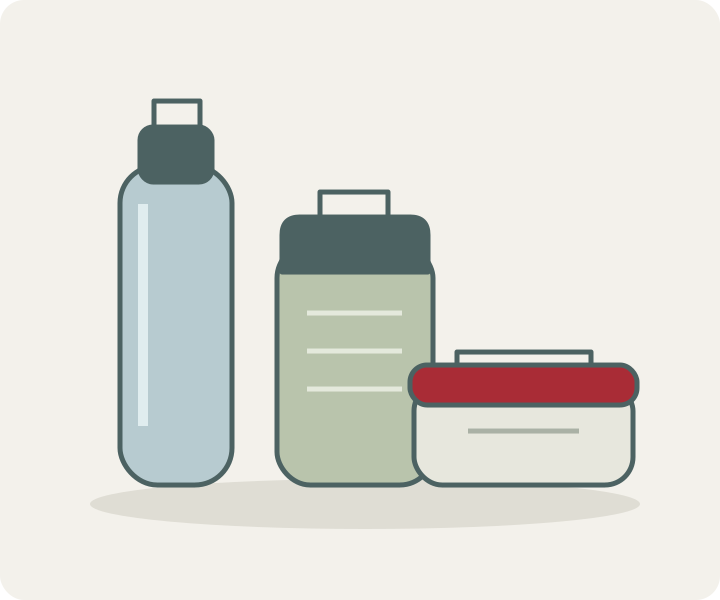
Insulated Drinkware, Food Jars, Glass Teaware & Custom Bottles category illustration
Category illustration. Product details and the final appearance are confirmed against the selected model and approved sample.

Start with a product reference, intended use and estimated quantity. We bring product selection, sample questions and quotation details into one conversation.

Email your reference image ↗
Material directions304 / 316 stainless steel · glass · titanium · copolyester
Everyday drinkingTumblers · mugs · sports bottles · large jugs
Food and servingFood jars · lunch containers · pitchers · filters
Branding scopeSurface finish · lids · graphics · gift and retail packaging
Explore the product range

Build the range
your buyers need.

Choose a focused product or discuss a coordinated assortment. Each direction can be developed into a more specific model and packaging brief.

Vacuum tumblers

Compare handled, straw, direct-sip and dual-use lid directions for everyday beverages. Select nominal capacity, grip, base profile, lid opening and the desired contact material. Cup-holder fit should be checked against actual dimensions, while leakage and thermal performance are agreed for the complete selected assembly.

Enquire about this range ↗

Coffee mugs and travel cups

Develop desk, commuting or outdoor coffee formats with a handle or a compact travel profile. Compare wide mouths, drinking openings, closure parts and cleaning access. Specify whether your priority is open-cup convenience, carry sealing or a particular serving experience.

Enquire about this range ↗

Sports and outdoor bottles

Explore slim and larger sports-bottle directions, carrying handles, straps, one-hand lids and spout covers. Match the bottle geometry and opening to the activity and beverage. Vacuum stainless constructions and clear non-vacuum bottles should have distinct performance and use instructions.

Enquire about this range ↗

Large bottles and jugs

Build a larger-capacity range for shared or extended-use drinking needs. Compare vessel weight, carrying arrangements, mouth size and optional filters. Specify the full and empty handling requirements and whether the product must be insulated or simply a clear, lightweight vessel.

Enquire about this range ↗

Food jars and thermal lunch containers

Choose a wide-mouth food container around the meal, portion and cleaning task. Compare shell materials, lid and seal, carrying needs and included bowls or spoons. Nominal jar volume does not establish a food-safety holding time; agree use instructions and relevant evidence for the selected product.

Enquire about this range ↗

Serving pitchers and coffee carafes

Compare stainless serving pitchers, infuser vessels and coffee-carafe directions for tables, rooms or meeting areas. Define capacity, pouring control, filter inclusion and lid retention. A vacuum pitcher is a passive thermal container and should not be described as an electric heating kettle.

Enquire about this range ↗

Glass teaware

Explore double-wall borosilicate-glass vessels with lid and tea-strainer directions. Specify the intended beverage, thermal conditions and closure design. Agree care limits and protective packing, with tests suited to the actual glass construction rather than a general heat-resistant label.

Enquire about this range ↗

Clear plastic and copolyester drinkware

Develop clear bottles, tumblers, jugs and shaker directions with the required polymer grade and lid arrangement. Define beverage temperature, cleaning method, colour and graphics. Clear-body visibility is a useful design direction; it does not imply vacuum insulation or automatic suitability for boiling water.

Enquire about this range ↗

Titanium containers

Consider titanium bottle and cup directions where the material and feel suit the programme. Request the exact grade and the material breakdown for shells, lids, seals and accessories. Compare geometry and actual sample weight without applying a universal percentage weight saving or health claim.

Enquire about this range ↗

Smart drinkware

Review temperature indicators, reminders, charging and other electronic features by model. Decide which functions are required locally and which rely on software. Define charging accessories, module protection, app availability, languages, updates and data handling before selecting a smart configuration.

Enquire about this range ↗

Children’s bottle programmes

Send the intended age group, drinking method, capacity, strap and carrying needs for a children’s bottle brief. Review detachable parts, closure strength, cleaning, warnings and relevant destination evidence for the exact design. Children’s use should not inherit adult-bottle assumptions.

Enquire about this range ↗

Wine, beer and specialist serving

Explore wine tumblers, beer-container and specialist drinking-set directions as separate programmes. Define beverage type, carbonation or pressure needs where relevant, closure, cleaning and handling. A general insulated bottle does not establish suitability for pressurised or carbonated contents.

Enquire about this range ↗

Lids, filters and accessories

Compare direct-drink, straw, push, flip and cup-style lid directions, together with straps, handles, filters and protective accessories. Provide the exact bottle neck and thread reference. Some existing combinations may fit, while other pairings need tooling and a fresh fit or functional review.

Enquire about this range ↗

Branding and retail presentation

Coordinate surface colour, graphic, marking and packaging with your product programme. Consider laser marking, screen or digital printing, transfer methods and suitable coating directions. Decoration choices depend on the substrate and construction; samples should show the actual finished product and packaging together.

Enquire about this range ↗

Electric water-heating enquiries

Send a separate brief for an electric kettle or actively heated water vessel, including capacity, voltage, frequency, plug, controls and intended market. The exact current model, heating arrangement and supporting evidence require confirmation; a temperature-display bottle or passive vacuum pitcher does not heat water.

Enquire about this range ↗
Reference product directions

Start with a product.
Define the details.

Use these options to describe what you are buying. The public references identify your enquiry; the final model and specification are confirmed before an order.

Large insulated straw-and-sip tumbler sourcing illustration
REFERENCE 0136-01

Large insulated straw-and-sip tumbler

A colour-blocked tumbler reference with a carrying strap, PP handle and flip-up straw. Define the final lid configuration, grip and pack presentation, then check your actual cup-holder or storage dimensions rather than assuming universal fit.

Listed capacity
950 ml
Listed dimensions
10.5 × 8.42 × 27.7 cm
Main vessel
304 stainless steel; double-wall vacuum direction
Lid use
Direct sipping or flip-up straw
Reference carton count
24 pieces; not a minimum order
Discuss this option ↗
Large vacuum bottle with removable tea filter sourcing illustration
REFERENCE 0136-02

Large vacuum bottle with removable tea filter

A wide-mouth stainless bottle family with an integrated rotating handle and PP lid. A removable filter supports a tea-infusion direction; confirm the selected lid, filter and straw options as exact pack components.

Listed capacities
1,200 / 1,900 ml
Dimensions by capacity
9.8 × 11 × 26.3 cm / 11.9 × 12.5 × 28 cm
Listed product weights
0.56 / 0.75 kg respectively
Vessel material
304 stainless steel
Reference carton count
16 pieces
Discuss this option ↗
Wide-mouth insulated food-jar family sourcing illustration
REFERENCE 0136-03

Wide-mouth insulated food-jar family

A food-container direction with a 316 inner shell and 304 outer shell. The lid can serve as an eating bowl and a folding spoon is listed. Agree the seal, accessories, use instructions and food-contact requirements for the selected version.

Listed capacities
800 / 1,000 ml
Dimensions by capacity
12.3 × 12 × 16.2 cm / 12.3 × 12 × 19.8 cm
Listed product weights
0.45 / 0.49 kg respectively
Shell materials
316 stainless interior; 304 stainless exterior
Reference carton count
24 pieces
Discuss this option ↗
Clear outdoor sports bottle sourcing illustration
REFERENCE 0136-04

Clear outdoor sports bottle

A copolyester bottle direction with a flip-up drinking lid and spout cover. Specify the exact polymer grade, lid construction, desired graphics and beverage-use limits. This is a clear plastic direction and should not be presented as a vacuum flask.

Listed capacity
1,000 ml
Listed dimensions
8.3 × 11.7 × 25 cm
Listed product weight
0.19 kg
Body direction
Clear copolyester
Reference carton count
30 pieces
Discuss this option ↗
Handled clear-jug family sourcing illustration
REFERENCE 0136-05

Handled clear-jug family

A non-vacuum copolyester jug family with carrying handles and a wide mouth. Compare straw and direct-drink lid directions for your intended use and confirm the complete lid and strap configuration.

Listed capacities
1,100 / 1,300 ml
Dimensions by capacity
12.7 × 13 × 18.5 cm / 14.5 × 13.4 × 19.3 cm
Listed product weights
0.24 / 0.28 kg respectively
Construction
Clear copolyester; no vacuum insulation
Reference carton count
24 pieces
Discuss this option ↗
Double-wall glass tea vessel sourcing illustration
REFERENCE 0136-06

Double-wall glass tea vessel

A borosilicate-glass tea-cup direction with a lid and tea-straining arrangement. Confirm seal design, thermal-use instructions and protective packaging for the exact glass and closure configuration.

Listed capacity
280 ml
Listed dimensions
7.4 × 7.4 × 17.4 cm
Material direction
Borosilicate glass
Construction
Double-wall glass; lid and tea strainer
Reference carton count
30 pieces
Discuss this option ↗
Slim titanium vacuum bottle sourcing illustration
REFERENCE 0136-07

Slim titanium vacuum bottle

A titanium-shell direction with a direct-drinking lid and a slim profile. Request the exact titanium grade, wall and closure construction and a physical sample; the lid, seals and any additional components need their own material schedule.

Listed capacity
450 ml
Shell direction
Titanium inner and outer walls
Construction
Double-wall vacuum
Decoration directions
Printing, laser marking and compatible coating options
Discuss this option ↗
Temperature-display smart bottle sourcing illustration
REFERENCE 0136-08

Temperature-display smart bottle

A slim insulated reference with a temperature display, magnetic lid charging and app-related reminder functions. Review the electronic module, app availability, charging parts and data requirements for the intended destination before approving the complete version.

Listed capacity
450 ml
Listed dimensions
6.6 × 6.6 × 20.9 cm
Listed product weight
0.25 kg
Shell materials
316 stainless interior; 304 stainless exterior
Reference carton count
30 pieces
Discuss this option ↗
Stainless infuser serving-pitcher family sourcing illustration
REFERENCE 0136-09

Stainless infuser serving-pitcher family

A serving-vessel direction with a removable stainless filter and PP lid or handle components. Define tea, fruit-water or coffee service as the intended task, with cleaning, seal and material requirements suited to that use.

Listed capacities
500 / 800 / 1,000 ml
Dimensions by capacity
15.5 × 11.1 × 14.2; 16.1 × 12.5 × 17.3; 17.1 × 12.5 × 19.1 cm
Listed product weights
0.42 / 0.54 / 0.58 kg respectively
Body and filter
304 stainless steel; vacuum body direction
Reference carton count
12 pieces
Discuss this option ↗

These are separate reference configurations, with dimensions and weights tied to the capacity shown. Carton counts are packing references and are not minimum orders. Confirm current availability, final material and component specifications, care limits, performance evidence, decoration and packaging before purchase.

What matters for this category

A better brief.
A clearer comparison.

Focus the sourcing conversation on the features, materials and production details that make a difference to your product range.

01

Match construction to the drinking task

Compare insulation, transparency, material, vessel weight and opening style before choosing the appearance. A clear non-vacuum jug, a glass tea vessel and a stainless vacuum bottle solve different problems, even when they form part of one visually coordinated range.

02

Existing directions and new development

Start from a listed bottle or container direction for a private-label programme, or bring a new concept for structural and tooling review. The brief can cover shape, material, lid, graphics and packaging, with sample approval before the production specification is fixed.

03

The vessel and package considered together

Plan individual retail boxes, gift presentations, multipacks, display cartons and carry-bag combinations alongside the product. Align the accessory list and protection needs with the actual bottle, lid and finish so that the customer receives a complete, clearly specified item.

Branding, configuration & packaging

Make the product
fit your programme.

Bring artwork, reference samples and a target cost. The available process, minimum quantity, sample charges and development scope are reviewed for the chosen option.

01

Body, lid and material development

Provide a sketch, drawing or physical sample, nominal capacity, body profile, material and required lid functions. Review neck and thread compatibility when mixing existing components. New capacity, material, lid or structural combinations may require tooling and additional verification rather than a simple cosmetic change.

02

Graphics, colour and packaging

Send artwork, colour references, marking position and desired texture or finish. Printing, laser marking, transfers, powder coatings and other surface directions can be reviewed for the chosen substrate. Packaging directions include individual boxes, multipacks, gift boxes, retail display cartons and drawstring-bag combinations.

03

Order route and sample approval

For suitable stock available for simple private labelling, starting quantities may be 200 pieces per colour. The described custom-production programme lists 2,000 pieces per colour. Exact item, stock, changes and artwork determine applicability. Agree sample charges, timing, tooling and final order terms in a written quotation.

Quality & product evidence

Turn requirements
into checks.

Agree which product characteristics need testing and how the approved sample relates to the bulk order.

01

Material and production checks

Plan the quality requirements at the prototype stage. Request material and surface evidence, then agree in-process checks for forming, joining, finish and assembly. The selected contact surfaces, polymer components, seals and markings should be identifiable in the final specification.

02

Closure, thermal and functional performance

Set leakage, closure-cycle, handling and thermal-retention criteria for the actual vessel and lid, with clear test conditions. For glass, electronic modules, straps or specialised accessories, add the relevant use and mechanical checks. A broad catalogue description is not a product-specific test result.

03

Finished product and packaging approval

Review the finished article, contents and decoration against the approved sample. Agree measurement, appearance and packaging acceptance criteria, together with any transport checks. For smart products, include function, charging, firmware or app configuration and instructions in the approval record.

Test capability is a starting point for the inspection plan. Request the method, applicable model and results needed for your order.

Documents matched to the order

Ask for evidence
that fits the product.

State the destination, beverage or food use, cleaning method and required evidence when enquiring. Documents should match the selected vessel, lid, contact materials, colour and any electronic module.

State the sales market, intended users and required files in your first enquiry. Current validity and scope are checked for the selected supplier and product; a category description does not certify every item.

Share your document requirements ↗
Specification and approved sample record
Request drawings, capacities, dimensions, component and material schedules, finish and marking artwork, lid and accessory details and the complete pack contents. Record the approved sample, tolerances, care instructions and packaging specification before production.
Contact-use and performance evidence
Request applicable material/contact-use documentation and the agreed leakage, thermal, mechanical or decoration checks for the selected configuration. Verify the model, material, colour, test conditions and issuing date. Generic certification lists do not establish coverage for every product.
Smart-product and shipping documentation
For electronics, request the module, charging and battery information and relevant destination documents, with instructions and app requirements. For the order, agree invoice and packing-list descriptions, carton details, marking and any requested origin or destination paperwork.
Built around how you sell

Different buyers.
Different specifications.

Your sales channel changes the assortment, packaging and quality priorities. Tell us the intended use as well as the product name.

01

Retail drinkware ranges

Build a clear capacity and material ladder across tumblers, mugs and bottles. Define the lid experience, carrying needs, finishes and price direction for each item, then coordinate packaging without assuming that every product shares the same performance.

02

Corporate gifts and branded programmes

Develop an individual vessel or coordinated gift pack with your own graphic and colour direction. Use samples to confirm decoration, packaging, accessories and the end-user instructions before the final order is approved.

03

Food, workplace and hospitality use

Compare lunch jars, serving pitchers, coffee carafes and task-specific bottles for the actual meal or beverage programme. Define portion, pouring, cleaning, handling and documentation requirements instead of relying only on a product category name.

From first brief to a defined order

One contact.
A practical next step.

Samples, commercial terms and responsibilities are agreed for the project. Use the same product and packing specification when comparing quotations.

01

Share the requirement

Product, reference image, quantity, sales market and timing.

02

Compare suitable options

Review configuration, materials, sample scope and relevant documents.

03

Approve the specification

Agree artwork, packaging, sample, testing and inspection criteria.

04

Confirm the order plan

Set price, payment, production, delivery and defect remedies in writing.

Buyer questions

Before you send
your first enquiry.

Practical answers about this sourcing direction, customization and the reference options. Your agreed specification and written quotation determine the actual order.

What product families can I include in an enquiry?

Include tumblers, coffee mugs, travel cups, sports bottles, large jugs, food jars, serving pitchers, glass teaware, titanium vessels, clear plastic bottles and selected smart drinkware. List each item’s material, capacity, lid, quantity and intended use separately.

Can I choose between 304 and 316 stainless steel?

Selected references use 304 shells, while others specify a 316 interior and 304 exterior. Request the exact material for each component and the relevant contact-use documentation. Do not assume that every lid, filter or accessory has the same grade as the vessel.

Are clear plastic jugs insulated?

The handled clear-jug reference is explicitly non-vacuum. Choose it for the intended cold or room-temperature beverage use and visibility, subject to the confirmed material limits. If thermal retention is required, specify a suitable vacuum-container construction and performance test.

Can I mix a different lid with an existing bottle?

Compatibility depends on neck, thread, sealing and functional details. Some existing combinations may fit; others need new tooling. Provide the exact parts or samples, and confirm fit, leakage, cleaning and performance before ordering the combination.

What are the minimum order quantities?

Suitable available stock for simple private labelling may start at 200 pieces per colour, subject to the exact item and stock. The custom-production programme described here lists 2,000 pieces per colour. Confirm applicability, artwork, finish and packaging in your quotation; carton counts are not minimum orders.

Can I request my own colour, graphics and retail pack?

Send artwork, colour references, logo location, finish direction and packaging requirements. Decoration and coating methods are reviewed for the actual material. Agree the sample, accessory list, protective packing and final order conditions before production.

How long will a sample or custom order take?

Timing depends on whether the programme uses available items, new decoration, different components or new tooling. Ask for separate sample, testing and production stages with approval dates. A single general lead time should not be treated as a commitment for all materials and configurations.

Do all vacuum products keep contents hot or cold for the same time?

Thermal retention depends on vessel size, fill, starting temperature, environment, lid and test method. Set the required performance and request evidence for the selected complete product. Food-use instructions also need appropriate review and should not be replaced by a general insulation-hours claim.

Which smart-bottle functions are available?

One reference includes temperature display, magnetic lid charging and app-related reminders. Confirm the exact module, app availability, languages, charging accessories, firmware, data handling and destination documents. A temperature-sensing lid does not establish active water heating.

Can I specify children’s or glass drinkware?

Yes, send the intended age group or glass-use conditions with the brief. Review closure and detachable parts, care instructions, warnings and relevant destination evidence for the exact version. Neither adult-bottle claims nor a general heat-resistant description replaces that review.

Can a titanium bottle use any finish or lid?

Request the titanium grade, shell construction and full component schedule first. Finishes and lid choices need compatibility and feasibility review for the chosen design. Claims about health, universal corrosion resistance or percentage weight savings require relevant supporting evidence.

What information helps produce an accurate quotation?

Send the chosen direction or drawing, capacity, dimensions, materials, lid and accessory list, colour, artwork, quantity, destination and target schedule. Include beverage or food use, required tests, care expectations, packaging and sample needs so the proposed configuration can be assessed together.

Who handles my enquiry?

Factory Sourcing Hub handles this enquiry as an independent sourcing and trading service. The product route, supplier suitability, sample scope and order responsibilities are agreed for the actual project.

How do I get a price and order minimum?

Send the product reference, quantities per variation, customization and packaging. Prices, minimums, sample charges and delivery dates are confirmed in a current quotation; the page is not a live inventory or price feed.

Can I discuss samples and inspection before ordering?

Yes. State whether you need a reference sample, a customized sample or development work. Agree the sample cost and shipping, approval specification, inspection plan and remedy for non-conforming goods before the bulk order.

What should I attach to my email?

Reference images, drawings, logo artwork and a product list are useful. Include quantities, the intended users and sales market, packaging, required documents and timing. After submitting the form, email attachments to kunhuow@gmail.com with your enquiry reference.


Tell us what you are planning

Your next order
starts with a brief.

A reference picture or a short description is enough to begin. Add the details you already know; the optional fields help make the follow-up more useful.

  • Product direction or drawings, capacity, dimensions, material and intended beverage or food use.
  • Lid, seals, handles, filters, straps, electronics and complete accessory list.
  • Quantity by item and colour, destination, required performance evidence and target schedule.
  • Artwork, finish, packaging, leaflet languages and sample expectations.
kunhuow@gmail.com

Download the enquiry checklist ↓

Independent sourcing and trading service. Supplier choice, service costs and order conditions are discussed for your project.

Discuss your requirements.

Product selection, customization, samples and quotation enquiries.

Add product, quantity or customization details (optional)

Submit your enquiry directly. We use your details to respond to your sourcing request. For attachments, email kunhuow@gmail.com with your enquiry reference. Enquiry data use.

Information basis: published product information reviewed . Reference details support a sourcing discussion. Current supply, samples and product-specific documents are confirmed for the selected item.

Have a product in mind?
Share your sourcing brief.
Send an enquiry ↗