Independent B2B sourcing · One trading contactkunhuow@gmail.com ↗
FACTORY SOURCING HUBProduct sourcing for business buyers
Get a quote ↗
Home/Kitchen & Housewares/Carbon Steel Bakeware, Cake Moulds, Roasters & Non-Stick Cookware
Sheet pans · cake and tart tins · loaf pans · muffin and pastry moulds · novelty shapes · roasting pans · frying pans · woks

Build a baking range around shape, gauge and finish. Add coordinated roasters and low-heat cookware.

Carbon Steel Bakeware, Cake Moulds, Roasters & Non-Stick Cookware

Source carbon steel bakeware and selected non-stick cookware covering baking sheets, cake and tart tins, loaf pans, multi-cavity moulds, muffin trays, novelty and seasonal shapes, roasters, frying pans and woks. Compare actual interior and exterior dimensions, article-specific steel thickness, coating, handling details and packing before approving samples and a private-label programme.

  • Compare interior baking space and exterior fit separately.
  • Select article-specific carbon steel thickness, coating and rim or handle details.
  • Develop authorised sizes, colours, embossed logos and bulk or retail packing.

Manufacturing, product documents and order conditions depend on the model and supply route selected for your project.

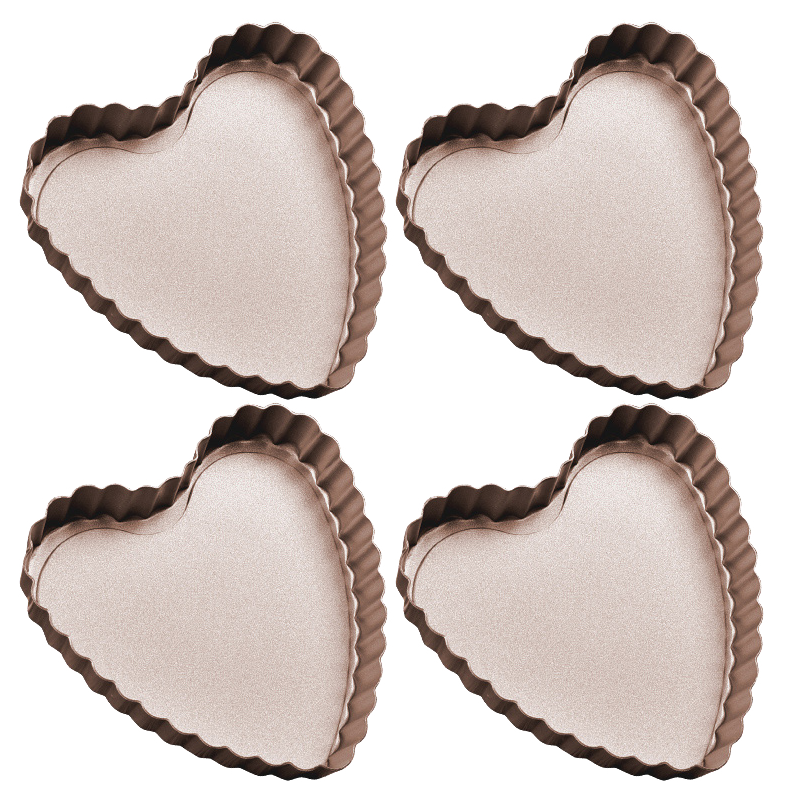
Heart-shaped fluted tart-pan styles with a pale metallic finish
Original catalogue visual of heart-shaped tart-pan styles. Exact set contents, coating, colour and dimensions are confirmed per selected item.

Start with a product reference, intended use and estimated quantity. We bring product selection, sample questions and quotation details into one conversation.

Email your reference image ↗
Baking formatsSheets · cake and tart tins · loaf pans · muffin and shaped cavity moulds
Cooking directionsTurkey roasters and rack sets · frying pans · wok and cookware-set directions
Reference detailInterior/exterior measurements · selected thicknesses · cavity counts · scoped weights
Development scopeSize and depth · coating colour · bottom embossing or stamping · private-label packing
Explore the product range

Build the range
your buyers need.

Choose a focused product or discuss a coordinated assortment. Each direction can be developed into a more specific model and packaging brief.

Baking sheets and shallow oven trays

Compare usable baking area with the outside dimensions needed for the intended oven, rack, display and shipping carton. Specific references distinguish interior and exterior sizes. Select the rim, grip, steel thickness and coating independently; a nominal inch label is not the same measurement as the full outside length.

Enquire about this range ↗

Round cake and shallow baking pans

Round pan directions include shallow formats and other cake-pan shapes. Define the actual depth, rim, base and release arrangement for the recipe and presentation. A thin, shallow round reference should not be described as a deep cake tin or springform without checking its construction.

Enquire about this range ↗

Tart tins and removable-base directions

Fluted tart directions include a round format shown with a separate base and smaller shaped tins. Review the rim profile, base fit, release clearance and exact dimensions on the selected sample. A photo containing several tins does not automatically define the commercial set quantity.

Enquire about this range ↗

Loaf and bread pans

Loaf directions include full-size bread tins and multi-cavity mini-loaf trays. Define the actual interior baking space, draft angle, rim and depth, then confirm the outside envelope and material gauge. A nominal loaf-pan size does not establish a bread weight or recipe yield.

Enquire about this range ↗

Muffin, cupcake and pudding trays

Single trays with multiple cavities provide another baking assortment. Compare cavity count, opening, depth, spacing and tray grip with the intended liners and oven. A twelve-cavity reference gives defined tray dimensions and an approximate net weight; its cavity count is a tooling feature rather than a guaranteed serving size.

Enquire about this range ↗

Brownie, financier and small-cake moulds

Multi-cavity brownie and small-cake directions allow portion shapes to be planned across a range. Specify the cavity geometry, usable fill volume and overall tray envelope rather than relying on a product photograph alone. Confirm release, flatness, coating coverage and cleaning access on the approved sample.

Enquire about this range ↗

Shaped bowls and covered mould directions

Multi-shaped bowl pans and a covered variation extend the formed-tray assortment. Treat any lid as a separately specified component with its own material, fit and care instructions. Define the intended baked shape and cavity details on a drawing; a generic cavity dimension may not describe a non-circular mould accurately.

Enquire about this range ↗

Madeleine and other pastry moulds

The catalogue includes madeleine, canelé-style and other pastry directions alongside general multi-cavity trays. Define the number and shape of cavities, rim, overall dimensions and finish for the particular item. Confirm the tool and recipe requirements before promising release behaviour, portion volume or commercial oven compatibility.

Enquire about this range ↗

Pizza and flat baking directions

Pizza-pan and flatter round baking directions can be included in the assortment. Select the actual solid or perforated construction, edge and base for the intended method. Agree material, gauge, dimensions and coating limits separately; a pizza category does not establish perforations or a particular heat-source rating.

Enquire about this range ↗

Turkey roasters and roasting-pan sets

Roasting directions include deeper turkey pans and sets with racks. Compare the pan dimensions, handle arrangement, rack fit and intended loaded weight, including oven and lifting clearance. Confirm the actual included pieces, rack material and assembly; a size family needs a separate drawing and packing specification for each member.

Enquire about this range ↗

Novelty and seasonal bakeware

Heart, flower, paw, banana and seasonal holiday directions support themed baking ranges. Specify the actual shape, cavity count, embossed detail and permitted design. Novelty appearance is a design choice; it does not establish child suitability, a particular recipe or an automatic right to reproduce a protected character.

Enquire about this range ↗

Cooling racks and coordinated baking sets

Cooling-rack, mini-mould-set and broader bakeware-set directions extend the buying programme. Define the included articles, rack spacing, support, materials and nesting arrangement. Keep each piece’s care, coating, dimensions and food-contact scope identifiable within the set.

Enquire about this range ↗

Non-stick frying pans

A thin-gauge carbon steel frying-pan reference is presented for gentle frying and low-heat cooking. Select the actual body, handle, coating and heat-source requirements on the chosen item. Do not convert an oven-tray temperature statement into permission to overheat an assembled frying pan or use it on every cooktop.

Enquire about this range ↗

Woks and broader cookware directions

Wok and cookware-set directions complete the cooking side of the range. A defined carbon steel wok uses a thicker body than the cited light frying pan. Confirm the base, handle materials, attachment, lid, intended heat source and care separately. General sauce-pot and stamped or spun cookware directions require an item-specific quotation.

Enquire about this range ↗
Reference product directions

Start with a product.
Define the details.

Use these options to describe what you are buying. The public references identify your enquiry; the final model and specification are confirmed before an order.

Large rectangular baking-sheet reference sourcing illustration
REFERENCE 0167-01

Large rectangular baking-sheet reference

A carbon steel baking sheet with distinct interior and exterior dimensions. Agree the steel gauge, forming tolerance, rim and coating on the selected sample.

Exterior / interior
Approx. 44.7 × 30 × 2.4 cm / 43.2 × 28.7 × 2.4 cm
Listed thickness
0.8 mm; final tolerance to agree
Material / finish
Carbon steel; non-stick coating; dark-grey reference
Nominal designation
17 × 11 inch; use actual dimensions for fit
Discuss this option ↗
Larger sheet-pan reference sourcing illustration
REFERENCE 0167-02

Larger sheet-pan reference

A second rectangular sheet direction provides a different interior area and outer envelope. Confirm the chosen texture, coating colour, gauge and rim on the sample.

Exterior / interior
Approx. 45.7 × 33.6 × 2.4 cm / 44.3 × 32 × 2.4 cm
Listed thickness
0.8 mm; final tolerance to agree
Material / finish
Carbon steel; non-stick coating; rose-gold reference
Nominal designation
18 × 13 inch; outside fit follows listed dimensions
Discuss this option ↗
Wide-grip baking-sheet direction sourcing illustration
REFERENCE 0167-03

Wide-grip baking-sheet direction

A wider outside envelope around a defined interior area provides a different handling format. Review the grip and edge with the actual oven gloves and rack clearance.

Exterior / interior
Approx. 52.2 × 34.7 × 2.5 cm / 45.6 × 32.9 × 2.5 cm
Listed thickness
0.6 mm, ±0.05 mm
Material / finish
Carbon steel; non-stick coating; black reference
Design requirement
Confirm rim, grip and outside clearance
Discuss this option ↗
Fluted round tart-pan reference sourcing illustration
REFERENCE 0167-04

Fluted round tart-pan reference

A round tart direction shown with a separate base. Confirm the removable-base fit and fluted profile, with the final nominal size and outside diameter on a drawing.

Exterior / interior
Approx. diameter 25.2 × 3.5 cm / diameter 25 × 3.5 cm
Listed thickness
0.8 mm; final tolerance to agree
Material / finish
Carbon steel; non-stick coating
Nominal designation
10 inch
Discuss this option ↗
Four heart-shaped fluted tart-pan styles in the original catalogue image
REFERENCE 0167-05

Small heart-shaped tart-pan direction

The small shaped tart direction is shown as a group of fluted tins. The numerical size is an overall envelope, with axis and set contents to be confirmed rather than inferred from the photograph.

Approximate overall size
10.2 × 10.2 × 2 cm
Listed thickness
0.6 mm, ±0.05 mm
Material / finish
Carbon steel; non-stick coating; champagne-gold direction
Set and base detail
Confirm exact quantity and construction in the quotation
Discuss this option ↗
Twelve-cavity muffin-tray reference sourcing illustration
REFERENCE 0167-06

Twelve-cavity muffin-tray reference

A twelve-cavity muffin tray with defined outside dimensions. Compare each cavity with the intended liners and recipe, and check grip and oven clearance.

Cavity count
12
Approximate tray / cavity opening
40.6 × 27.8 × 4.5 cm / diameter 7 cm
Listed thickness / net weight
0.6 mm, ±0.05 mm / approximately 860 g
Material / finish
Carbon steel; non-stick coating; silver reference
Discuss this option ↗
Eight-cavity mini-loaf tray sourcing illustration
REFERENCE 0167-07

Eight-cavity mini-loaf tray

Eight rectangular mini-loaf cavities provide a compact baking format. Specify cavity length, width, depth and working fill on the drawing, alongside overall oven fit.

Cavity count
8
Approximate exterior
35.5 × 27 × 3.5 cm
Listed thickness direction
0.6–0.8 mm; selected gauge and tolerance to confirm
Material / finish
Carbon steel; non-stick coating; rose-gold direction
Discuss this option ↗
Six-cavity shaped-bowl pan with lid direction sourcing illustration
REFERENCE 0167-08

Six-cavity shaped-bowl pan with lid direction

A covered multi-cavity mould direction requires the tray and lid to be specified together. Confirm the actual lid material, fit and use limits separately from the coated steel tray.

Cavity count
6
Approximate exterior
32.5 × 25.5 × 2.8 cm
Listed thickness direction
0.6–0.8 mm; selected gauge to confirm
Body / configuration
Coated carbon steel tray; lid details to agree
Discuss this option ↗
Nine-cavity brownie-mould reference sourcing illustration
REFERENCE 0167-09

Nine-cavity brownie-mould reference

A multi-cavity brownie direction with a defined outside envelope. Review the cavity drawing, tray flatness, rim and coating coverage on the sample.

Cavity count
9
Approximate exterior
27 × 26 × 4 cm
Listed thickness direction
0.6–0.8 mm; selected gauge to confirm
Material / finish
Carbon steel; non-stick coating; rose-gold direction
Discuss this option ↗
Ten-cavity banana-shaped mould sourcing illustration
REFERENCE 0167-10

Ten-cavity banana-shaped mould

A novelty tray with ten shaped cavities provides another portion-format direction. Confirm each non-circular cavity’s actual geometry and intended fill rather than treating a generic table symbol as its complete specification.

Cavity count
10
Approximate exterior
32.5 × 22.5 × 2 cm
Listed thickness direction
0.6–0.8 mm; selected gauge to confirm
Material / finish
Carbon steel; non-stick coating; colour options to quote
Discuss this option ↗
Deep turkey-roaster reference sourcing illustration
REFERENCE 0167-11

Deep turkey-roaster reference

A deep carbon steel roasting-pan direction. Review the actual handles, lifting clearance, rack or lid inclusion and permitted loaded weight with the intended oven.

Approximate listed pan size
43.5 × 34.2 × 10 cm
Listed thickness direction
0.6–0.8 mm; selected gauge to confirm
Material / finish
Carbon steel; non-stick coating; red/grey direction
Nominal designation
17 inch; dimensions and included pieces govern supply
Discuss this option ↗
Small and medium roasting-pan with rack directions sourcing illustration
REFERENCE 0167-12

Small and medium roasting-pan with rack directions

Two clearly listed pan sizes offer a starting comparison within a rack-set family. The accessory dimensions and exact piece count need an approved assembly and packing brief.

Listed small pan
28 × 23 × 5 cm
Listed medium pan
35 × 25 × 6.2 cm
Material / thickness direction
Carbon steel; 0.6–0.8 mm selected gauge to confirm
Configuration
Roasting pan and rack-set direction; components to agree
Discuss this option ↗
Two-size light frying-pan direction sourcing illustration
REFERENCE 0167-13

Two-size light frying-pan direction

A coated carbon steel frying-pan direction explicitly aimed at gentle cooking. Define the handle, base and compatible heat source on the selected complete article.

Nominal sizes
20 cm and 26 cm
Listed pan envelopes
Approx. diameter 20.5 × 3.6 cm / diameter 25.6 × 3.8 cm
Listed thickness
0.5 mm, ±0.05 mm
Finish / use direction
Non-stick; red exterior/black interior reference; low-heat cooking
Discuss this option ↗
Carbon steel wok reference sourcing illustration
REFERENCE 0167-14

Carbon steel wok reference

A coated carbon steel wok with a thicker body. Specify the handle, base, compatible heat source and complete-article care requirements.

Nominal size / listed pan envelope
30 cm / approximately diameter 30.5 × 8.5 cm
Listed thickness
1.5 mm, ±0.05 mm
Material / finish
Carbon steel; black non-stick coating direction
Final configuration
Confirm complete handle envelope, base, heat source and care
Discuss this option ↗

These reference values are article-specific catalogue data and require current drawing and sample confirmation. Approximate interior space, exterior size and nominal inch designation serve different purposes. Thickness ranges require a selected gauge, and an incomplete tolerance is not silently changed. Non-stick does not mean PFAS-free, dishwasher-safe, scratch-proof or suitable for every heat source. The complete article’s coating, handles, lid and instructions determine its permitted use.

What matters for this category

A better brief.
A clearer comparison.

Focus the sourcing conversation on the features, materials and production details that make a difference to your product range.

01

An assortment built around actual forms

Combine everyday sheet, cake, loaf and muffin formats with pastry, novelty, seasonal and roasting directions. Compare usable baking space, cavity geometry and outside fit while keeping each article’s material, gauge, coating and accessory specification clear.

02

Useful gauge, rim and handling comparisons

Different thickness and handling directions give buyers concrete choices rather than a single generic pan. Compare grip, rim stiffness, base flatness and stacking or nesting on the sample, with material and finish selected for the intended product and price position.

03

Private-label development and presentation

Size and depth development, colour options, bottom embossing or logo stamping and retail or bulk packing provide several routes to a coordinated range. Define authorised artwork, tooling ownership, sample approval and final specification before committing to production.

Branding, configuration & packaging

Make the product
fit your programme.

Bring artwork, reference samples and a target cost. The available process, minimum quantity, sample charges and development scope are reviewed for the chosen option.

01

Size, depth and tooling development

Provide the intended recipe or use, target oven or rack space, required interior and exterior measurements, cavity drawing and material gauge. Distinguish an existing article from a new tool or revised depth. Agree drawings, tolerances, sample approval and tooling terms for the actual design.

02

Coating, colour and authorised marking

Select a documented coating system, colour and surface appearance for each item. Bottom embossing, logo stamping and private-label presentation can be discussed with original artwork. Confirm compatibility with the material and geometry and request the matching coating and food-contact evidence.

03

Retail, bulk and export packing

Plan bulk packing or a customised retail presentation with suitable separation between coated surfaces. Master cartons and pallet arrangements can be developed around the chosen item or set. Confirm quantities, labels, box dimensions and transport protection in the written quotation; minimums and timing remain product-specific.

Quality & product evidence

Turn requirements
into checks.

Agree which product characteristics need testing and how the approved sample relates to the bulk order.

01

Check formed geometry and surface finish

Agree interior and exterior dimensions, selected gauge, base flatness, rim and edge condition, cavity layout and accessory fit. Confirm colour, coating coverage and acceptable cosmetic defects using the actual approved sample and drawing.

02

Set performance tests for the chosen article

Define coating adhesion, wear, release, corrosion and heat or handle tests where relevant, with methods and acceptance criteria. Review the complete assembly’s care and use limits. A general coating temperature or a catalogue compliance statement is not a reviewed finished-product report.

03

Inspect production and packing

Process and finished-product inspection can be specified, with third-party inspection arranged when agreed. Check part count, embossing or artwork, nesting, separators, retail labels and cartons before shipment. Keep the inspection record tied to the actual article revision and packing configuration.

Test capability is a starting point for the inspection plan. Request the method, applicable model and results needed for your order.

Documents matched to the order

Ask for evidence
that fits the product.

Request the material, coating and finished-article evidence needed for the intended sales market and use. Product specifications, sample approval and current reports should identify the actual construction and finish; supplier-level claims are not automatically transferable to every pan or set.

State the sales market, intended users and required files in your first enquiry. Current validity and scope are checked for the selected supplier and product; a category description does not certify every item.

Share your document requirements ↗
Drawing and component specification
Prepare interior and exterior dimensions, gauge and tolerances, cavity details, removable bases, rack or lid drawings, handles and coating identification. Record nominal and usable dimensions separately, with the actual included pieces listed for each set.
Food-contact, coating and care evidence
Specify the applicable food-contact requirements for the finished coated article and destination market. Request current reports with model, coating and test conditions. Confirm heat, cleaning, utensil and storage instructions before making oven, dishwasher, chemical-content or performance claims.
Approval and shipment file
Keep authorised artwork, colour samples, tooling and design permissions, packaging layouts, carton and pallet information and inspection records together. Agree any third-party checks and the final shipping terms in the quotation; no general factory audit is presented as the trading service’s own credential.
Built around how you sell

Different buyers.
Different specifications.

Your sales channel changes the assortment, packaging and quality priorities. Tell us the intended use as well as the product name.

01

Retail bakeware assortments

Develop a stepped range of sheets, cake tins, loaf pans and cavity trays, with sizes and presentation matched to the target shopper. Use actual dimensions for oven fit, shelf planning and packing rather than nominal size labels alone.

02

Baking and food-service buying programmes

Compare cavity layout, usable area, gauge, handling and cleaning requirements for the intended baking workflow. Commercial-use suitability, performance and inspection criteria need confirmation for the selected article and operating conditions.

03

Seasonal, gift and private-label ranges

Combine authorised novelty or holiday shapes with selected everyday pans in a coordinated colour and presentation. Agree the design rights, individual item specifications, included pieces, protective packing and approval schedule before ordering.

From first brief to a defined order

One contact.
A practical next step.

Samples, commercial terms and responsibilities are agreed for the project. Use the same product and packing specification when comparing quotations.

01

Share the requirement

Product, reference image, quantity, sales market and timing.

02

Compare suitable options

Review configuration, materials, sample scope and relevant documents.

03

Approve the specification

Agree artwork, packaging, sample, testing and inspection criteria.

04

Confirm the order plan

Set price, payment, production, delivery and defect remedies in writing.

Buyer questions

Before you send
your first enquiry.

Practical answers about this sourcing direction, customization and the reference options. Your agreed specification and written quotation determine the actual order.

What does the range include?

The range covers baking sheets, cake and tart tins, loaf and bread pans, muffin and pastry trays, shaped and novelty moulds, cooling-rack and baking-set directions, turkey roasters, frying pans, woks and cookware-set directions. Each item has its own dimensions, material gauge, coating, accessories and care requirements.

What body material and finish can I specify?

The cited references specify carbon steel with a non-stick coating. Choose the actual body gauge, forming details and identified coating for the selected article, with current food-contact evidence and complete-article care instructions.

Why are interior and exterior sizes shown separately?

Interior measurements help define baking space, while exterior dimensions affect oven, rack, packing and display fit. Handles and rims can add considerable width. Nominal inch labels are convenient range names, but the approved drawing and sample determine the actual fit.

What thickness choices can be discussed?

Individual references include 0.5 mm light frying-pan, 0.6 mm bakeware, 0.8 mm sheet or tart directions and a 1.5 mm wok body. Some mould pages list a 0.6–0.8 mm range rather than one selected gauge. Choose the actual thickness and agree the tolerance for the quoted article.

What cavity formats are available?

The examples include six-cavity shaped-bowl directions, eight-cavity mini-loaf trays, nine-cavity brownie moulds, ten-cavity banana shapes and a twelve-cavity muffin tray. Madeleine and other pastry directions are also included. Confirm each cavity’s drawing and working fill for the intended recipe.

Can a tart pan have a removable base?

A cited round fluted tart reference is shown with a separate base. Confirm the base, rim profile, fit and release clearance on the exact selected item. Other shaped tins or photos of several pieces must not be assumed to share that base construction or set quantity.

Are frying pans and woks intended for high-heat cooking?

The cited frying-pan and wok directions are described for gentle or low-heat cooking. Establish the actual coating, handle, base and compatible heat source on the supplied version. Do not infer high-heat searing, empty heating or universal cooktop compatibility from the body material.

Can I request a coating colour or logo?

Colour, size and depth development, bottom embossing, logo stamping and private-label presentation can be discussed for the selected item. Provide original artwork and the desired coating specification. Confirm tool changes, compatibility, sample approval and the matching food-contact evidence before production.

Does non-stick mean PFAS-free or dishwasher-safe?

No such blanket claim is assumed. Request the exact coating identification, relevant current reports and the complete article’s care instructions. Chemical-content, food-contact, dishwasher and temperature claims need evidence for the selected finish, components and destination market.

What roasting and rack-set options are included?

The references include a deep turkey pan and smaller or medium roasting-pan directions with racks. Confirm the exact included pieces, handle and rack materials, load, oven clearance and packing. A multi-size listing does not establish one shared dimension or accessory set.

What are the minimum and delivery schedule?

Minimums vary by product and customisation. Provide the item list, quantity split, sizes, coating, colours, artwork and packing requirements for a current quotation. Agree samples, corrections and a separate production schedule; no fixed lead time is assumed across every article.

What should I provide for a quotation?

Send the product direction, interior and exterior size targets, material gauge, cavity or recipe requirements, coating and colour, quantity, artwork and sales market. Include the intended heat and cleaning conditions, set contents, packing, required documents, inspection and delivery date.

Who handles my enquiry?

Factory Sourcing Hub handles this enquiry as an independent sourcing and trading service. The product route, supplier suitability, sample scope and order responsibilities are agreed for the actual project.

How do I get a price and order minimum?

Send the product reference, quantities per variation, customization and packaging. Prices, minimums, sample charges and delivery dates are confirmed in a current quotation; the page is not a live inventory or price feed.

Can I discuss samples and inspection before ordering?

Yes. State whether you need a reference sample, a customized sample or development work. Agree the sample cost and shipping, approval specification, inspection plan and remedy for non-conforming goods before the bulk order.

What should I attach to my email?

Reference images, drawings, logo artwork and a product list are useful. Include quantities, the intended users and sales market, packaging, required documents and timing. After submitting the form, email attachments to kunhuow@gmail.com with your enquiry reference.

Tell us what you are planning

Your next order
starts with a brief.

A reference picture or a short description is enough to begin. Add the details you already know; the optional fields help make the follow-up more useful.

  • Article list, intended use, oven or rack fit, dimensions and cavity requirements
  • Selected steel gauge, coating, colour, handles, base, rack and lid details
  • Quantity per item, authorised logos, tooling and retail or bulk presentation
  • Samples, care and test requirements, inspection, packing and delivery target
kunhuow@gmail.com

Download the enquiry checklist ↓

Independent sourcing and trading service. Supplier choice, service costs and order conditions are discussed for your project.

Discuss your requirements.

Product selection, customization, samples and quotation enquiries.

Add product, quantity or customization details (optional)

Submit your enquiry directly. We use your details to respond to your sourcing request. For attachments, email kunhuow@gmail.com with your enquiry reference. Enquiry data use.

Information basis: published product information reviewed . Reference details support a sourcing discussion. Current supply, samples and product-specific documents are confirmed for the selected item.

Have a product in mind?
Share your sourcing brief.
Send an enquiry ↗