Independent B2B sourcing · One trading contactkunhuow@gmail.com ↗
FACTORY SOURCING HUBProduct sourcing for business buyers
Get a quote ↗
Home/Kitchen & Housewares/Stainless Steel & Aluminium Cookware, Frying Pans, Saucepans & Woks
Frying pans · saucepans · woks · stockpots · steamers · cookware collections · coated and uncoated surfaces · aluminium and stainless construction

Build cookware from a clear material schedule. Compare the body, base, coating, handles and lid.

Stainless Steel & Aluminium Cookware, Frying Pans, Saucepans & Woks

Source stainless steel and aluminium cookware covering frying pans, saucepans, woks, stockpots, steamer combinations and coordinated sets. Compare actual model sizes, body gauge, composite-base construction, surface treatments, handles and lids, then agree samples, customisation, packing and product-specific use requirements.

  • Compare coated and uncoated cookware without confusing the body with the base.
  • Select real reference sizes and component materials for each piece.
  • Develop shapes, accessories, markings, coating directions and retail or mail-order packing.

Manufacturing, product documents and order conditions depend on the model and supply route selected for your project.

Stainless Steel & Aluminium Cookware, Frying Pans, Saucepans & Woks category illustration
Category illustration. Product details and the final appearance are confirmed against the selected model and approved sample.

Start with a product reference, intended use and estimated quantity. We bring product selection, sample questions and quotation details into one conversation.

Email your reference image ↗
Main formatsFrying and deeper pans · saucepans · woks · stockpots · sets
Construction choicesStainless bodies · selected layered bodies or composite bases · aluminium directions
Surface directionsPolished or satin · selected non-stick · honeycomb · hard-anodised · decorative finishes
Development scopeAppearance · material thickness · coating · handles and accessories · logo · packaging
Explore the product range

Build the range
your buyers need.

Choose a focused product or discuss a coordinated assortment. Each direction can be developed into a more specific model and packaging brief.

Uncoated stainless frying pans

Selected frying-pan directions use an uncoated stainless cooking surface with a separate composite base. Compare body gauge, working diameter, depth and handle construction. An uncoated pan should not be sold with the same release or care promises as a coated pan merely because its size or silhouette matches.

Enquire about this range ↗

Coated stainless frying and sauté pans

Coated stainless directions include shallow and deeper formats with different finishes, handles and lid arrangements. Specify the substrate and actual coating system independently. Choose the working area, depth, rim and grip needed for the intended cooking use, then confirm suitable instructions for the complete article.

Enquire about this range ↗

Aluminium non-stick frying pans

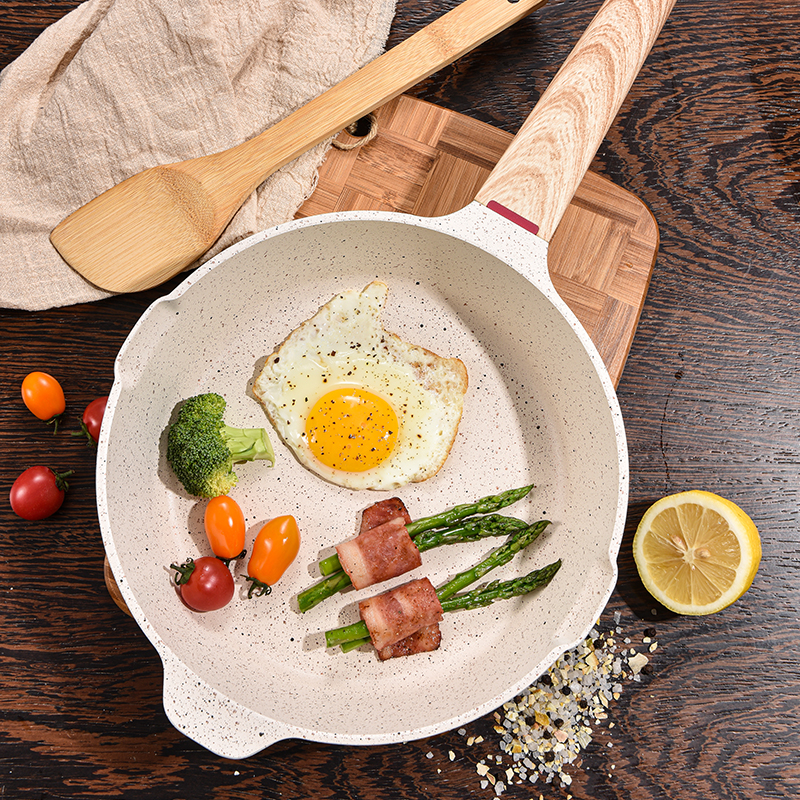
Aluminium directions include plain-colour and stone-effect coated presentations, with selected magnetic-base components and handle types. Define the aluminium body gauge, base, interior coating and outside treatment. A stone-like pattern does not establish a naturally non-stick stone body or prove a particular coating chemistry.

Enquire about this range ↗

Saucepans and smaller cooking pots

Saucepan directions include single-handle stainless and aluminium formats, with selected steel or glass lids. Compare body depth, useful capacity, pouring edge and lid fit rather than inferring volume from a nominal diameter. Handle and knob materials require their own specification and temperature limits.

Enquire about this range ↗

Stockpots and two-handle cooking vessels

Two-handle pots and stockpot directions include different depths and lid constructions. Define the actual body, composite base, handles and cover for each size. A deeper member of a range needs its own capacity and packing information; a generic litre claim in a URL is not a verified fill capacity.

Enquire about this range ↗

Woks and larger shallow vessels

Wok directions include selected stainless bodies with twin handles and glass lids, alongside aluminium and coated alternatives. Specify base geometry, diameter, depth, rim and handles for the intended hob and handling method. Similar appearance does not establish that every version uses the same body construction.

Enquire about this range ↗

Wok-and-steamer combinations

Selected wok combinations include matching steamer inserts and lids. Keep the dimensions and material of each component on the specification, and confirm fit and steam clearance on the assembled sample. A steamer insert can use a different bottom construction from the cooking vessel underneath it.

Enquire about this range ↗

Coordinated stainless cookware collections

Set directions combine saucepans, stockpots, frying pans and selected steamer inserts. Define every cooking vessel, lid and accessory rather than relying on the number embedded in a model name. Individual pieces may have different surfaces or cover arrangements, even within one visually coordinated collection.

Enquire about this range ↗

Coordinated aluminium collections

Aluminium cookware-set directions extend the assortment with selected colour, non-stick and hard-anodised presentations. Agree each pot or pan, lid, base and handle within the proposed pack. Material, coating and use evidence should remain identifiable by item rather than being assumed from the set’s overall appearance.

Enquire about this range ↗

Layered bodies and composite bases

A selected saucepan reference lists a stainless–aluminium–stainless layered body, while other references list a thinner stainless body and a separate composite bottom. These are distinct constructions. Request a cross-section and agreed layer schedule so that a thick bottom is not described as a fully layered body.

Enquire about this range ↗

Honeycomb and selected stainless-grade directions

The wider catalogue includes honeycomb-style surfaces and selected 304 or 316 category directions. The exact article specification and material evidence determine the grade supplied. Surface texture, category wording or a decorative pattern is not sufficient to establish a component’s composition or a coating-free construction.

Enquire about this range ↗

Hard-anodised and decorative coating directions

Selected aluminium families include hard-anodised, stone-effect and other coating directions, while coloured exterior finishes are listed for both metal families. Confirm the actual treatment, layer system, colour and intended contact surfaces. No PFAS-free, ceramic or mineral-composition statement is inferred from a marketing name.

Enquire about this range ↗

Lids, handles and configurable accessories

Glass and stainless lids, metal or selected heat-resistant-plastic handles, helper grips and some detachable-handle directions provide configuration choices. Specify the exact parts, attachment and testing required. A pan body’s heat resistance does not automatically apply to its handle, lid, seal or decorative finish.

Enquire about this range ↗
Reference product directions

Start with a product.
Define the details.

Use these options to describe what you are buying. The public references identify your enquiry; the final model and specification are confirmed before an order.

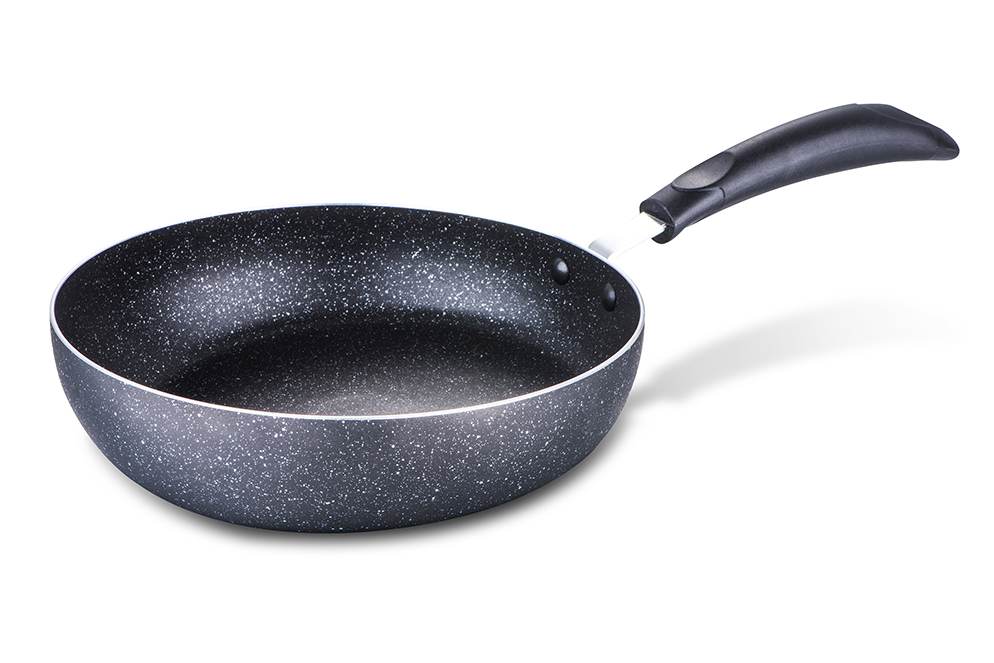
Small coated aluminium frying-pan reference sourcing illustration
REFERENCE 0182-01

Small coated aluminium frying-pan reference

A white stone-effect coated aluminium pan direction with a heat-resistant-plastic handle. Confirm the exact coating, finish and lid inclusion in the selected specification.

Listed size
20 × 4.5 cm
Body gauge
2.2 mm aluminium
Listed base direction
2.2 mm aluminium + 0.5 mm 430 stainless
Surface and handle
Non-stick interior, painted exterior; Bakelite-type handle
Discuss this option ↗
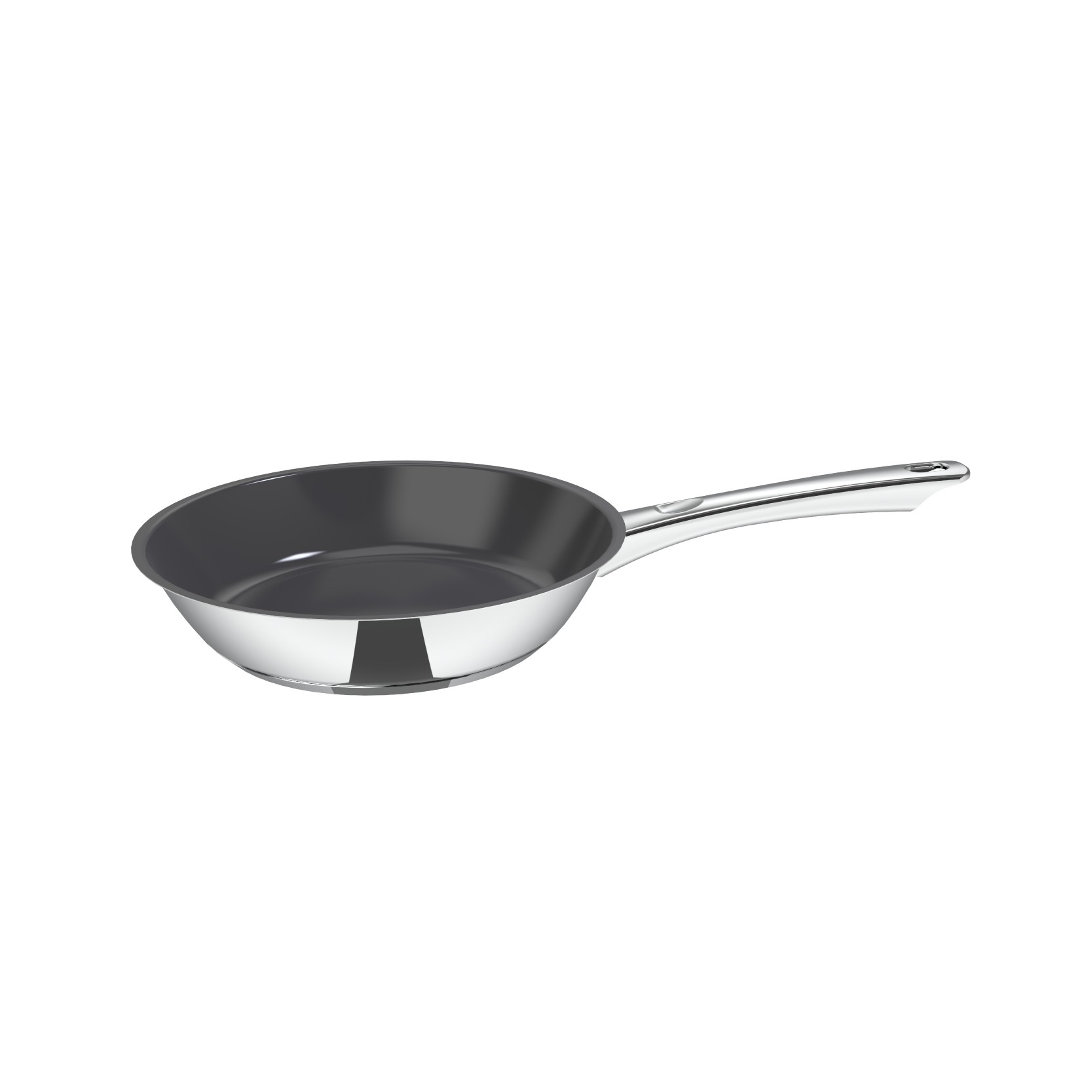
Small coated stainless frying-pan direction sourcing illustration
REFERENCE 0182-02

Small coated stainless frying-pan direction

A shallow stainless pan reference with a separately listed composite base and metal handle.

Listed size
20 × 4.3 cm
Listed body
0.6 mm 304 stainless
Listed base stack
0.6 mm 304 stainless + 4.0 mm aluminium + 0.5 mm 430 stainless
Handle / surface
304 stainless handle; coated interior, polished exterior
Discuss this option ↗
Satin-exterior coated frying-pan reference sourcing illustration
REFERENCE 0182-03

Satin-exterior coated frying-pan reference

A separate reference with the same nominal size and a satin exterior direction. Final colour and lid contents are selected on approval.

Listed size
20 × 4.3 cm
Listed body / base
0.6 mm 304 stainless body; 0.6 mm 304 stainless + 4.0 mm aluminium + 0.5 mm 430 stainless base
Handle
304 stainless
Surface
Non-stick interior; satin exterior
Discuss this option ↗
Uncoated stainless frying-pan reference sourcing illustration
REFERENCE 0182-04

Uncoated stainless frying-pan reference

An uncoated pan with a defined body and base schedule. Review its cooking and cleaning instructions separately from the coated references.

Listed size
24 × 4.8 cm
Listed body
0.6 mm 304 stainless
Listed base stack
0.6 mm 304 stainless + 4.0 mm aluminium + 0.5 mm 430 stainless
Surface and handle
Polished interior, satin exterior; 304 stainless handle
Discuss this option ↗
Deeper coated frying-pan direction sourcing illustration
REFERENCE 0182-05

Deeper coated frying-pan direction

A deeper pan reference with a defined stainless body and separate aluminium-core bottom.

Listed size
24 × 6.5 cm
Listed body
0.6 mm 304 stainless
Listed base stack
0.6 mm 304 stainless + 4.0 mm aluminium + 0.5 mm 430 stainless
Configuration
304 stainless handle; lid separately confirmed
Discuss this option ↗
Covered deep-pan reference sourcing illustration
REFERENCE 0182-06

Covered deep-pan reference

A deeper coated pan listed with a tempered-glass lid and separate stainless handle details.

Listed size
28 × 7.5 cm
Listed body / base
0.6 mm 304 stainless body; 0.6 mm 304 stainless + 4.0 mm aluminium + 0.5 mm 430 stainless base
Listed lid
4 mm tempered glass
Handle direction
304 stainless; confirm the exact long and helper-handle configuration
Discuss this option ↗
Layered-body coated pan reference sourcing illustration
REFERENCE 0182-07

Layered-body coated pan reference

A separate larger pan specifies both a layered body and a different composite bottom. Keep the two schedules distinct.

Listed size
30 × 6 cm
Listed body layers
0.6 mm 304 stainless + 1.5 mm aluminium + 0.5 mm 430 stainless
Listed base stack
0.6 mm 304 stainless + 4.0 mm aluminium + 0.5 mm 430 stainless
Handle direction
202 stainless; helper-handle contents confirmed
Discuss this option ↗
Layered stainless saucepan with glass lid sourcing illustration
REFERENCE 0182-08

Layered stainless saucepan with glass lid

A saucepan reference with an explicitly listed three-layer body, different handle steel and a glass lid.

Listed size
16 × 9.5 cm
Listed body
2.5 mm total: 0.5 mm 304 stainless + 1.5 mm aluminium + 0.5 mm 430 stainless
Handle / lid
202 stainless handle; 4.0 mm glass lid
Surface
Satin interior, mirror-polished exterior
Discuss this option ↗
Steel-lid saucepan reference sourcing illustration
REFERENCE 0182-09

Steel-lid saucepan reference

A separate saucepan direction with a thinner stainless body and defined steel-lid thickness. The bottom aluminium thickness needs final confirmation.

Listed size
18 × 9 cm
Listed body
0.6 mm 304 stainless
Listed lid
0.8 mm steel
Surface
Satin interior, mirror exterior
Discuss this option ↗
Shallow two-handle stockpot direction sourcing illustration
REFERENCE 0182-10

Shallow two-handle stockpot direction

A stockpot reference with glass cover and listed stainless body. Usable capacity and the final bottom schedule are confirmed on the drawing.

Listed size
20 × 9 cm
Listed body
0.6 mm 304 stainless
Listed lid
4.0 mm glass
Surface
Satin interior, mirror exterior
Discuss this option ↗
Deeper steel-lid stockpot reference sourcing illustration
REFERENCE 0182-11

Deeper steel-lid stockpot reference

A deeper member with a steel lid and body details. Do not infer a litre volume from its nominal diameter and depth.

Listed size
20 × 12 cm
Listed body
0.6 mm 304 stainless
Listed lid
0.8 mm steel
Surface
Satin interior, mirror exterior
Discuss this option ↗
Two-handle covered wok direction sourcing illustration
REFERENCE 0182-12

Two-handle covered wok direction

A larger stainless wok reference with a glass lid. Composite-bottom thickness is subject to clarification.

Listed size
32 × 9 cm
Listed body
0.9 mm 304 stainless
Listed lid
4.0 mm glass
Surface
Satin interior and exterior
Discuss this option ↗
Wok with matching steamer direction sourcing illustration
REFERENCE 0182-13

Wok with matching steamer direction

A cooking vessel and steamer combination for review as an assembled product, including actual lid and handle contents.

Listed wok size
32 × 9 cm
Listed steamer size
32 × 8.5 cm
Wok body direction
0.9 mm 304 stainless
Assembly confirmation
Insert fit, complete lid arrangement and bottom schedule
Discuss this option ↗
Larger wok-and-steamer direction sourcing illustration
REFERENCE 0182-14

Larger wok-and-steamer direction

A separate larger combination with its own nominal vessel and insert dimensions.

Listed wok size
36 × 9 cm
Listed steamer size
36 × 8.5 cm
Wok body direction
0.9 mm 304 stainless
Lid direction
4.0 mm glass; full assembly confirmed
Discuss this option ↗
Five-vessel stainless collection direction sourcing illustration
REFERENCE 0182-15

Five-vessel stainless collection direction

An assortment lists two saucepans and three stockpots. The smaller tall saucepan is listed without a lid; final set counts distinguish vessels from covers.

Listed saucepans
16 × 8 cm; 14 × 11 cm
Listed stockpots
20 × 9 cm; 20 × 11.5 cm; 24 × 13.5 cm
Body / base direction
0.6 mm 304 body; 0.6 mm 304 stainless + 4.0 mm aluminium + 0.5 mm 430 stainless base
Lids
Selected 4 mm glass lids; 14 × 11 cm saucepan listed without lid
Discuss this option ↗
Cookware-and-steamer collection reference sourcing illustration
REFERENCE 0182-16

Cookware-and-steamer collection reference

A collection combines a saucepan, stockpots, frying pan and steamer insert. The steamer’s single bottom is distinguished from the cooking vessels’ composite bases.

Listed components
16 × 7.5 cm saucepan; 20 × 11.5 cm and 24 × 13.8 cm stockpots
Pan and insert
24 × 7 cm frying pan; 24 × 9 cm steamer
Body direction
0.6 mm 304 stainless; selected 304 handles
Base and lid scope
Composite-base cooking vessels; single-bottom steamer; selected 4 mm glass lids
Discuss this option ↗

Dimensions and construction schedules apply to each reference. Approve body and base layers, tolerances, material grades, lids, set contents, hob compatibility, care and temperature limits on the selected drawing and sample.

What matters for this category

A better brief.
A clearer comparison.

Focus the sourcing conversation on the features, materials and production details that make a difference to your product range.

01

Compare the construction behind the cookware

A clear schedule distinguishes body layers, base layers, coating, handle and lid. This allows buyers to compare products with similar dimensions while understanding the actual material and construction offered, including differences between uncoated, coated and layered references.

02

Develop a useful cooking assortment

Shallow and deeper pans, saucepans, stockpots, woks and steamer combinations can be planned together. Agree the required pieces and capacities, handle and lid compatibility, visual finish and pack arrangement instead of relying on a generic piece-count title.

03

Use drawings and samples to control development

Selected shape, thickness, coating, marking and accessory work can be reviewed from buyer samples or technical drawings. The approved sample and written specification provide a practical basis for tooling, finish matching, inspection and the final purchase.

Branding, configuration & packaging

Make the product
fit your programme.

Bring artwork, reference samples and a target cost. The available process, minimum quantity, sample charges and development scope are reviewed for the chosen option.

01

Appearance, shape and thickness

Discuss exterior design, metal thickness and forming needs with a drawing or sample. Moulds and fixtures can be reviewed for feasible development. Confirm tolerances, tooling charges, confidentiality arrangements and sample approval rather than promising every shape without engineering review.

02

Surface, coating and authorised marking

Select the actual interior treatment, exterior finish, colour and logo or label. Specify the desired performance and relevant evidence before choosing a coating. Trade names and stone-like descriptions do not establish chemical composition or a free-from claim; the approved system must be identified for the selected product.

03

Accessories and private-label presentation

Discuss handles, knobs, lids and selected accessory configurations alongside colour boxes or ordinary mail-order cartons. Confirm the full piece list, authorised artwork, instructions and protective inserts. A detachable handle or glass cover shown in another item is not automatically included.

Quality & product evidence

Turn requirements
into checks.

Agree which product characteristics need testing and how the approved sample relates to the bulk order.

01

Check materials and geometry

Agree body and base gauges, layer identity, dimensions, flatness, handle attachment, lid fit and visual finish. For layered or composite products, obtain a clear construction drawing and suitable evidence rather than assuming the entire vessel has the base thickness.

02

Test the selected surface and assembly

Define appropriate coating adhesion, abrasion, corrosion or functional checks for the intended use. Hob compatibility, handle temperature, oven limits and cleaning instructions apply to the complete article. Surface appearance and a supplier’s coating relationship do not establish a verified result for every variant.

03

Approve samples and inspection records

Set the pre-production sample, defect criteria, packing standard and pre-shipment inspection needs in writing. Materials, surface treatment and supplied parts should remain traceable to the approved specification. After-sales issues are reviewed against the actual order and evidence, with the response process agreed commercially.

Test capability is a starting point for the inspection plan. Request the method, applicable model and results needed for your order.

Documents matched to the order

Ask for evidence
that fits the product.

Include the intended destination, cooking methods, material and coating requirements when requesting documentation. Records should match the selected cookware, handles, lid and contact surfaces rather than a broad product category.

State the sales market, intended users and required files in your first enquiry. Current validity and scope are checked for the selected supplier and product; a category description does not certify every item.

Share your document requirements ↗
Construction and sample file
Request the article drawing, component materials, layer thicknesses, dimensions, finish, exact contents and approved sample reference. Set programmes need an itemised vessel, lid and accessory schedule.
Relevant food-contact and performance evidence
Request applicable material and coating reports and the agreed product tests. Supplier-system or coating-license information needs current scope review and is not trader-owned product certification. Any free-from or specific temperature claim requires appropriate evidence.
Care, packing and shipment records
Approve care instructions, intended hob and oven limits, labels, authorised artwork, protective packing, carton dimensions and weights. Agree inspection records and commercial documents for the actual shipment.
Built around how you sell

Different buyers.
Different specifications.

Your sales channel changes the assortment, packaging and quality priorities. Tell us the intended use as well as the product name.

01

Retail cookware ranges

Develop coordinated stainless or aluminium assortments around real pan and pot sizes, chosen surfaces and itemised lids. Define positioning through material and construction, then approve retail presentation and care information.

02

Cooking and steaming collections

Combine saucepans, stockpots, woks and selected steamer inserts for the intended household cooking programme. Confirm assembly, hob requirements, capacity definitions and handling before preparing the offer.

03

Private-label development

Submit samples or drawings for selected shapes, thicknesses, finishes and accessories. Agree feasibility, prototype stages, materials, documentation and pack layout before committing to production.

From first brief to a defined order

One contact.
A practical next step.

Samples, commercial terms and responsibilities are agreed for the project. Use the same product and packing specification when comparing quotations.

01

Share the requirement

Product, reference image, quantity, sales market and timing.

02

Compare suitable options

Review configuration, materials, sample scope and relevant documents.

03

Approve the specification

Agree artwork, packaging, sample, testing and inspection criteria.

04

Confirm the order plan

Set price, payment, production, delivery and defect remedies in writing.

Buyer questions

Before you send
your first enquiry.

Practical answers about this sourcing direction, customization and the reference options. Your agreed specification and written quotation determine the actual order.

Which cookware formats can be sourced?

The range covers frying pans, saucepans, woks, stockpots, steamer combinations and cookware sets, with stainless and aluminium directions. Specify the actual sizes, surfaces, handles, lids and quantities needed for each article.

Is every stainless product made from 316?

No. Category headings include different grade directions, while several actual article tables specify 304 bodies and separate 430 base components or 202 handles. The approved component schedule and material evidence determine the grade supplied.

What is the difference between a layered body and a composite base?

They describe different parts of the construction. A selected reference lists stainless–aluminium–stainless body layers, while another may use a thin stainless body over a thicker separate base. Request the drawing and layer schedule rather than applying a bottom thickness to the whole vessel.

Are stone-effect coatings automatically free from PFAS or PTFE?

No such inference is made. Stone-effect or granite-style wording describes a product direction and appearance, not a verified chemical specification. State the required coating properties and claims, then review appropriate evidence for the selected system.

Are honeycomb products coating-free?

Texture alone does not establish the coating or material system. Confirm the actual substrate, surface treatment and cooking-area construction for the chosen item. Use product-specific evidence for any coating-free or durability statement.

Do all pans include a lid?

Lids are specified individually. The selected quotation and approved sample identify the actual supplied cover, its material and every accessory. Include your preferred lid arrangement in the enquiry.

Can I combine different pans and pots into a set?

Selected collection development can be discussed. Itemise vessels, lids and accessories, with their dimensions, materials, surfaces and packing. A number in a model name does not necessarily establish the retail piece count.

Can a logo or a new design be developed?

Drawing-based and sample-based work, logo or label printing, shape, thickness, coating and accessory customisation can be discussed. Provide authorised artwork and requirements, then agree tooling, charges, confidentiality and sample approval for the project.

Are samples free and when can production start?

Sample availability, charges, freight and any credit against a later order are confirmed for the selected project. Production timing depends on the article, quantity, approved sample, materials and packing. Obtain a written schedule instead of treating a general sample invitation as a universal condition.

What is the minimum order quantity?

Request a current quotation by model, size, surface and packaging. Trial orders, existing tools and new development can have different minimum quantities and sample conditions.

Can the cookware be used on every hob or in the oven?

Confirm the selected base and complete assembly against the intended cooking method. Handles, lids, knobs and coatings can have different limits. General hob wording does not establish a universal oven temperature or compatibility for every product.

What details should I include in an enquiry?

Send model or design direction, dimensions and capacity needs, body and base construction, coating, handle and lid requirements, quantities, destination, intended use and required evidence. Include authorised artwork, packing, sample needs and delivery requirements.

Who handles my enquiry?

Factory Sourcing Hub handles this enquiry as an independent sourcing and trading service. The product route, supplier suitability, sample scope and order responsibilities are agreed for the actual project.

How do I get a price and order minimum?

Send the product reference, quantities per variation, customization and packaging. Prices, minimums, sample charges and delivery dates are confirmed in a current quotation; the page is not a live inventory or price feed.

Can I discuss samples and inspection before ordering?

Yes. State whether you need a reference sample, a customized sample or development work. Agree the sample cost and shipping, approval specification, inspection plan and remedy for non-conforming goods before the bulk order.

What should I attach to my email?

Reference images, drawings, logo artwork and a product list are useful. Include quantities, the intended users and sales market, packaging, required documents and timing. After submitting the form, email attachments to kunhuow@gmail.com with your enquiry reference.


Tell us what you are planning

Your next order
starts with a brief.

A reference picture or a short description is enough to begin. Add the details you already know; the optional fields help make the follow-up more useful.

  • Cookware references, sizes, capacities and exact vessel/lid quantities
  • Body and base layers, materials, coating and handle or lid configuration
  • Authorised artwork, packing format, intended cooking methods and required evidence
  • Order quantities, destination, sample and tooling needs, inspection and delivery requirements
kunhuow@gmail.com

Download the enquiry checklist ↓

Independent sourcing and trading service. Supplier choice, service costs and order conditions are discussed for your project.

Discuss your requirements.

Product selection, customization, samples and quotation enquiries.

Add product, quantity or customization details (optional)

Submit your enquiry directly. We use your details to respond to your sourcing request. For attachments, email kunhuow@gmail.com with your enquiry reference. Enquiry data use.
Information basis: published product information reviewed . Reference details support a sourcing discussion. Current supply, samples and product-specific documents are confirmed for the selected item.

Have a product in mind?
Share your sourcing brief.
Send an enquiry ↗