Independent B2B sourcing · One trading contactkunhuow@gmail.com ↗
FACTORY SOURCING HUBProduct sourcing for business buyers
Get a quote ↗
Home/Textiles & Fabrics/Shirting Fabrics, Cotton Yarns, Apparel & Home Textiles
Yarn-dyed shirting · woven and knitted fabrics · cotton yarn · finishing · shirts · home textiles

Develop the fabric around the finished product. Coordinate yarn, colour, finishing and garment requirements.

Shirting Fabrics, Cotton Yarns, Apparel & Home Textiles

Source yarn-dyed, dyed and printed fabrics, ring and compact cotton yarns, knitted developments, shirts, women’s and children’s apparel and home textiles. Build a precise brief for composition, construction, colour, care, samples, testing and packing.

  • Connect yarn, fabric, finish and finished-product development in one sourcing brief.
  • Compare count and construction with hand, colour, care and end-use performance.
  • Plan swatches, lab dips, handlooms, garment samples and documented bulk acceptance.

Manufacturing, product documents and order conditions depend on the model and supply route selected for your project.

Illustration of fabric, a thread spool and garment trim
Category illustration. Develop the fibre, yarn, construction, shade, finish and sample standard for your fabric or finished-article brief.

Start with a product reference, intended use and estimated quantity. We bring product selection, sample questions and quotation details into one conversation.

Email your reference image ↗
Core directionsShirting fabric · cotton yarn · apparel · home textiles
Fabric routesYarn dyed · piece dyed · printed · knitted development
Selected developmentCrease care · wool · brushed texture · stretch and function
Approval sequenceSpecification · colour/design sample · testing · bulk standard
Explore the product range

Build the range
your buyers need.

Choose a focused product or discuss a coordinated assortment. Each direction can be developed into a more specific model and packaging brief.

Yarn-dyed shirting fabrics

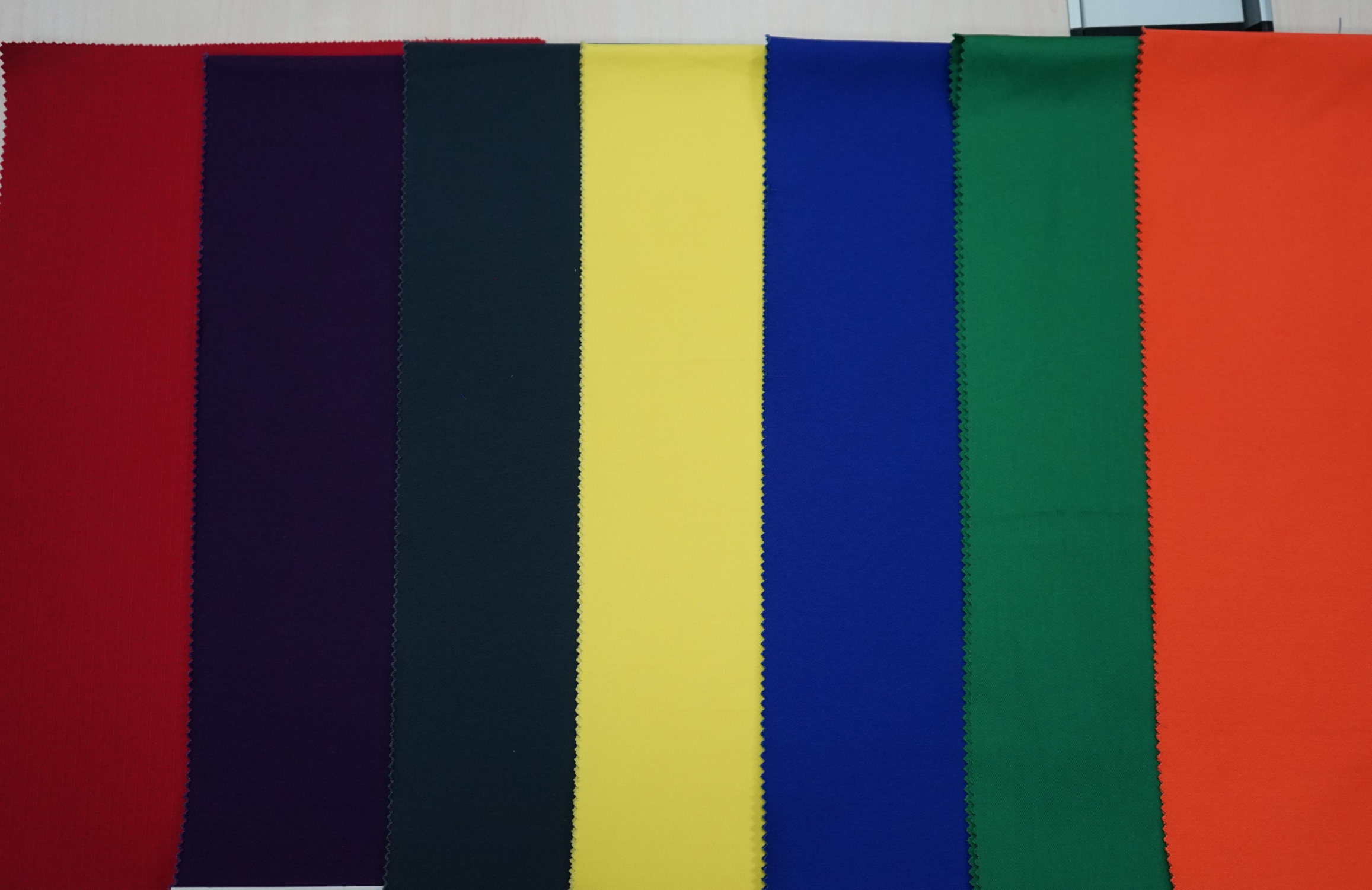
Yarn-dyed fabric directions support coordinated colours and woven patterns for shirts and related apparel. Supply target composition, yarn count, construction, density, usable width and weight. Agree stripe or check repeat, hand and finishing. Lab dips, handlooms and an approved bulk standard help define colour and design acceptance.

Enquire about this range ↗

High-count and long-staple cotton directions

Fine-count and long-staple cotton enquiries can be developed around surface, handle and the intended garment. Specify fibre requirements and traceability, rather than assuming every fine fabric uses the same cotton. Compare count, ply, construction, weight and finishing on the selected swatch. No fibre-origin claim is made without matching evidence.

Enquire about this range ↗

Jacquard, textured and alternative spinning

Jacquard and textured directions include different weave effects and current vortex-spun development. Provide the desired face, motif, repeat, drape and end use. Select fibre blend, yarn and finishing together. A spinning-method description does not alone establish pilling, strength, softness or care performance for a finished fabric.

Enquire about this range ↗

Piece-dyed woven fabrics

Dyeing directions can be reviewed against a shade standard and the required construction. Submit composition, yarn/density, usable width, weight and finish. Agree colour assessment, allowable shade variation and required fastness. Trial approval and bulk shade control need the selected material and dye process.

Enquire about this range ↗

Printed fabrics

Printed-fabric enquiries should include artwork ownership, repeat, placement, colour count and scale. Match the base cloth and printing process to hand, appearance, fastness and care. Request strike-offs and agree bulk tolerances. A printed pattern shown for inspiration is not permission to reproduce another design or brand artwork.

Enquire about this range ↗

Crease-care and easy-care finishing

Current directions include high-count cotton with non-iron development. Define the desired appearance, laundering procedure and acceptance grade, together with hand, strength and composition. Test the actual selected construction and, where relevant, the finished garment. A treatment label does not guarantee wrinkle-free wear under every condition.

Enquire about this range ↗

Washable wool and blended-material development

Machine-washable wool and other alternative-material directions expand apparel selection. Provide composition, weight, width, hand and the intended wash/dry method. Confirm dimensional stability and surface appearance on the sample. Fibre blend, treatment and care conditions determine the actual garment and label requirements.

Enquire about this range ↗

Brushing, raising and soft textures

Brushed and raised surfaces can support casual and cooler-season apparel briefs. Define face, pile, weight, colour and desired hand. Include pilling, abrasion, strength and shade acceptance after care. A soft or warm-touch description does not establish a quantified insulation value.

Enquire about this range ↗

Stretch and performance-finishing projects

Stretch, water/oil-repellent, soil-release, thermal, UV, moisture-management, flame-performance and other finishing requirements can be submitted for selected constructions. Define the exact function, method, performance target and care cycles. Chemistry declarations and functional claims require matching current evidence. Antibacterial or insect-related descriptions are development enquiries, not medical or universal protection promises.

Enquire about this range ↗

Cotton yarn: ring and compact spinning

Catalogue yarn references include different counts in ring and compact spinning routes. Confirm cotton specification, count system, twist, direction, ply and quality limits for the intended use. Package type, cone weight, lot consistency and dyeability should be agreed with the order. Yarn count does not establish all downstream fabric properties.

Enquire about this range ↗

Dyed yarn and cotton-blend requests

Dyed-yarn and blend requirements can include cotton with polyester, viscose, linen or other specified fibres. Submit the exact percentage and count, shade, ply and intended process. The selected production and supply route needs confirmation. Avoid inferring a blend percentage from an unclear catalogue abbreviation.

Enquire about this range ↗

Knitted fabric directions

Knitted development directions include single jersey, double-face constructions, interlock, sweatshirt/terry, rib, piqué and stripe effects. Define composition, gauge/construction, weight, width, stretch and finishing. Agree spirality, stability, pilling and colour requirements. These routes are selected to the project rather than presented as every construction’s common specification.

Enquire about this range ↗

Men’s formal and casual apparel

Formal and casual shirt enquiries can combine fabric selection with pattern, fit and garment development. Provide the tech pack, size chart, seam and trim requirements. Approve fabric, colour and a fit sample before bulk production. Labels, presentation and inspection criteria belong to the actual style and destination.

Enquire about this range ↗

Women’s and children’s apparel

The apparel range includes women’s and children’s directions. Specify style, wearer/age group, size range, fibre, trims and care. Sample evaluation should cover comfort, fit, workmanship and the applicable destination requirements. A general product category does not establish approval for a particular child’s garment or accessory.

Enquire about this range ↗

Home-textile programmes

Home-textile themes include floral, fashion, children’s, premium and wedding directions. Define the finished article, dimensions, material, construction and set contents. Review artwork permissions, colour coordination, laundering and packaging. Filling, closures and article-specific testing are confirmed for the selected product rather than assumed across the range.

Enquire about this range ↗

Design, colour and handloom sampling

Development routes include market/product design, colour matching and handloom preparation. Supply the target concept, original artwork and reference swatches. Agree which prototype will be supplied and the approval sequence. Sampling cost, material availability and timing depend on construction and complexity; a historic cycle-time statement is not an order commitment.

Enquire about this range ↗

Textile testing and order documentation

Available testing directions cover yarn and fibre checks, strength, tearing, fastness, shrinkage, pilling and abrasion. Define the method, specimen conditions, limits and report scope. Sustainability or fibre-origin requirements need product and transaction evidence. Historical laboratory recognition should not be assumed to be a current accreditation for every requested test.

Enquire about this range ↗
Reference product directions

Start with a product.
Define the details.

Use these options to describe what you are buying. The public references identify your enquiry; the final model and specification are confirmed before an order.

40s ring spun cotton yarn sourcing illustration
REFERENCE 0235-01

40s ring spun cotton yarn

Compare count and spinning route; agree twist, quality limits, shade and packing for the intended weaving requirement.

Catalogue yarn count
40s
Spinning route
Ring spun
Material direction
Cotton yarn; confirm fibre specification and grade
Discuss this option ↗
50s ring spun cotton yarn sourcing illustration
REFERENCE 0235-02

50s ring spun cotton yarn

Compare count and spinning route; agree twist, quality limits, shade and packing for the intended weaving requirement.

Catalogue yarn count
50s
Spinning route
Ring spun
Material direction
Cotton yarn; confirm fibre specification and grade
Discuss this option ↗
40s compact spun cotton yarn sourcing illustration
REFERENCE 0235-03

40s compact spun cotton yarn

Compare count and spinning route; agree twist, quality limits, shade and packing for the intended weaving requirement.

Catalogue yarn count
40s
Spinning route
Compact spun
Material direction
Cotton yarn; confirm fibre specification and grade
Discuss this option ↗
50s compact spun cotton yarn sourcing illustration
REFERENCE 0235-04

50s compact spun cotton yarn

Compare count and spinning route; agree twist, quality limits, shade and packing for the intended weaving requirement.

Catalogue yarn count
50s
Spinning route
Compact spun
Material direction
Cotton yarn; confirm fibre specification and grade
Discuss this option ↗
High-count cotton with crease-care finishing sourcing illustration
REFERENCE 0235-05

High-count cotton with crease-care finishing

A current development direction for business and cross-occasion shirting. Specify the hand, appearance and laundering procedure, then evaluate the selected fabric and finished garment. No particular wrinkle grade or wash durability is assumed.

Material direction
High-count cotton
Development direction
Crease-care / non-iron finishing
Acceptance focus
Appearance after the agreed laundering procedure
Discuss this option ↗
Machine-washable wool fabric direction sourcing illustration
REFERENCE 0235-06

Machine-washable wool fabric direction

A wool development direction for apparel with defined care needs. Review the selected composition, hand, stability and appearance through a wash trial. The actual care label and laundering conditions depend on the approved construction.

Material direction
Wool; actual blend to confirm
Care direction
Machine-washable development
Parameters to specify
Weight, width, stability and approved care method
Discuss this option ↗
Brushed and raised textured fabric sourcing illustration
REFERENCE 0235-07

Brushed and raised textured fabric

A soft-surface direction for casual clothing. Provide the desired face, texture, weight and hand. Evaluate pilling, shade, strength and laundering on the selected sample; the treatment should not be equated to an untested thermal rating.

Surface directions
Brushed / raised texture
End-use direction
Casual apparel
Sample review
Hand, surface appearance and pilling
Discuss this option ↗
Stretch fabric with a water-repellent finish brief sourcing illustration
REFERENCE 0235-08

Stretch fabric with a water-repellent finish brief

A development direction combining stretch with selected protective or comfort finishes. Define fibre content, recovery, care and finish chemistry. Ask for model-specific test evidence rather than assuming a waterproof garment or a universal fluorine-related declaration.

Development direction
Stretch with selected water-repellent finishing
Chemistry requirement
Fluorine-free formulation request subject to evidence
Test brief
Recovery, water repellency and durability after agreed care
Discuss this option ↗
Vortex-spun fabric construction direction sourcing illustration
REFERENCE 0235-09

Vortex-spun fabric construction direction

A current illustrated direction for comparing a different yarn structure and fabric surface. Select the exact fibre blend, weave and finishing from a swatch. Generic process comparisons do not establish the finished fabric’s abrasion or pilling result.

Spinning direction
Vortex-spun yarn construction
Construction review
Confirm fibre blend, weave, yarn count and finishing
Discuss this option ↗
Formal and casual shirt development sourcing illustration
REFERENCE 0235-10

Formal and casual shirt development

Coordinate a selected woven fabric with fit, pattern, trims and care requirements. The garment schedule should define size tolerances, fabric-to-garment approval and packing. Non-iron appearance requires acceptance on the actual finished garment.

Product directions
Men’s formal and casual shirts; crease-care options
Development inputs
Size chart, pattern, fabric and trims
Acceptance focus
Fit, workmanship and agreed care performance
Discuss this option ↗
Women’s and children’s apparel enquiries sourcing illustration
REFERENCE 0235-11

Women’s and children’s apparel enquiries

Develop the garment around the intended wearer, design and material brief. Specify age or size range and destination requirements before selecting trims or testing. A category listing does not establish children’s-product approval for every design.

Product directions
Women’s and children’s apparel
Development inputs
Tech pack, size range, material and trim schedule
Order review
Sample, destination requirements and packing
Discuss this option ↗
Coordinated home-textile design direction sourcing illustration
REFERENCE 0235-12

Coordinated home-textile design direction

Home-textile themes include floral, fashion, children’s, premium and wedding ranges. Define the article, finished dimensions, fabric, construction, set contents and design permissions. Confirm filling, closures and performance only where included in the selected specification.

Theme directions
Floral, fashion, children’s, premium and wedding
Specification inputs
Article, finished sizes, fabric and set contents
Sample review
Colour, construction, dimensions and care
Discuss this option ↗

The yarn references retain the published count and spinning route. Other examples identify genuine material, process or product directions, with construction, composition percentage, usable width and weight to be confirmed in the selected quotation. A named finish is not a verified universal performance grade. Agree the technical sheet, sample, care method and acceptance limits for the actual supply.

What matters for this category

A better brief.
A clearer comparison.

Focus the sourcing conversation on the features, materials and production details that make a difference to your product range.

01

Develop from fibre and yarn to the final article

Bring the material, construction, colour and finish together with the intended garment or home-textile design. Compare relevant swatches and yarn directions, then define an approved route for bulk supply. The enquiry can cover a material-only requirement or a finished-product project with its own specification.

02

Use samples to resolve appearance and performance

Lab dips, handlooms, strike-offs and garment prototypes address different approval questions. Define the target shade, pattern, hand and care result before selecting a production reference. Agree how a development sample relates to bulk fabric, and which tests or tolerances will be used for acceptance.

03

Organize repeatable buying requirements

Prepare a fabric/style matrix covering count or composition, construction, colour, size and packing. Include seasonal developments, replenishment priorities and required documents. This gives a clearer basis for quotation, sampling and repeat-order comparison without assuming one specification fits every textile.

Branding, configuration & packaging

Make the product
fit your programme.

Bring artwork, reference samples and a target cost. The available process, minimum quantity, sample charges and development scope are reviewed for the chosen option.

01

Material and construction development

Submit reference swatches, composition, yarn count/ply, weave or knit, density, width, weight and finish. Discuss feasible alternatives around hand, appearance, cost and care. Performance targets require a defined test method and sample acceptance. Changes to the base cloth or finish need review before bulk approval.

02

Colour, pattern and apparel design

Provide colour standards and original artwork with repeat, placement and scale. Request appropriate lab dips, handlooms or strike-offs. Apparel briefs need a tech pack, size chart, pattern, trims and labels. Approve material and fit samples separately, including the relationship between fabric colour and assembled garment.

03

Private labels, packing and production planning

Submit label/artwork, language and the required roll, cone, garment or set presentation. Agree sample charges, pack quantities, shade or size assortment, inspection and delivery milestones. MOQ, sampling time and lead time depend on the selected fabric, finish and style; historic general figures are not a fixed promise.

Quality & product evidence

Turn requirements
into checks.

Agree which product characteristics need testing and how the approved sample relates to the bulk order.

01

Fibre, yarn and construction checks

Agree composition, count and ply, yarn evenness or strength where relevant, construction, density, usable width and weight. Testing and tolerances should follow the intended process and end use. Record lot identification and approved technical data so a similar-looking fabric is not accepted solely by appearance.

02

Colour, physical and care-performance review

Include the required colour assessment, fastness, dimensional stability, strength, tearing, abrasion and pilling as applicable. Define laundering or cleaning conditions and acceptance criteria. Functional or easy-care finishes need their own test scope and durability requirements on the actual selected material or garment.

03

Bulk shade, workmanship and packing acceptance

Agree the bulk standard, shade grouping, allowable defects, roll lengths or garment size tolerances, inspection and packing marks. Finished-product checks should cover construction and set contents as appropriate. Document deviations and approvals against the order rather than relying on a general quality slogan.

Test capability is a starting point for the inspection plan. Request the method, applicable model and results needed for your order.

Documents matched to the order

Ask for evidence
that fits the product.

Request a document set matched to the actual material, finish, finished article and destination. Corporate awards, historical laboratory status or a related product’s certificate do not establish current product approval.

State the sales market, intended users and required files in your first enquiry. Current validity and scope are checked for the selected supplier and product; a category description does not certify every item.

Share your document requirements ↗
Specification, sample and colour file
Request the technical sheet, construction details, artwork or pattern reference, approved swatches and colour standards. Record width/weight tolerances, care procedure and finish requirements. For yarn include count, twist and packing; for apparel or home textiles include finished dimensions, trims and set contents.
Test reports and claim evidence
Specify the method and required limits for physical, colour, care and functional performance. Review reports matching the selected product, construction and finish. If fibre origin, organic/recycled content or restricted-chemistry requirements matter, request the applicable current scope and transaction evidence instead of assuming a range-wide certification.
Order, traceability and shipment records
Agree lot and shade identification, inspection records, artwork/label approval, roll or pack lists and shipment documents. State destination labelling and article-specific requirements. Commercial quantities, sample charges, delivery, claims handling and warranty arrangements belong in the approved quotation and order.
Built around how you sell

Different buyers.
Different specifications.

Your sales channel changes the assortment, packaging and quality priorities. Tell us the intended use as well as the product name.

01

Shirt and apparel brands

Develop business, casual and cross-occasion fabrics around the intended fit, care and hand. Supply a tech pack and approved colour or design reference. Compare fabric samples before garment prototyping, then confirm the tested construction and finished-product acceptance criteria.

02

Fabric merchants and textile converters

Build an item schedule by fibre, yarn count, construction, width, weight, colour and finish. Include stock or replenishment needs without assuming current availability. Agree swatches, minimum production units, testing and roll presentation for each selected material.

03

Home-textile and coordinated collection programmes

Provide finished articles, dimensions, set configuration and design direction for floral, fashion, children’s, premium or wedding themes. Align fabrics, colour, care and packaging. Article-specific requirements and children’s-use considerations need the actual product design and destination.

From first brief to a defined order

One contact.
A practical next step.

Samples, commercial terms and responsibilities are agreed for the project. Use the same product and packing specification when comparing quotations.

01

Share the requirement

Product, reference image, quantity, sales market and timing.

02

Compare suitable options

Review configuration, materials, sample scope and relevant documents.

03

Approve the specification

Agree artwork, packaging, sample, testing and inspection criteria.

04

Confirm the order plan

Set price, payment, production, delivery and defect remedies in writing.

Buyer questions

Before you send
your first enquiry.

Practical answers about this sourcing direction, customization and the reference options. Your agreed specification and written quotation determine the actual order.

Which textile directions can be included in one enquiry?

Yarn-dyed, dyed and printed woven fabrics, cotton yarns, knitted development, finishing, shirts, women’s and children’s apparel and home-textile requirements can be organized together. Specify whether the scope is material-only, processing development or a complete finished-product programme.

What should a fabric specification contain?

Provide composition and blend percentage, yarn count/ply, weave or knit, density, usable width, weight, colour or pattern, hand and finish. Include care, end use, required tests and quantity. Where a reference swatch is supplied, agree which measurable properties define an acceptable match.

How do ring and compact yarn references differ?

They identify spinning routes alongside the published yarn count. Compare the selected yarn’s twist, evenness, strength, hairiness and intended processing requirements. A count or spinning name alone does not establish all quality properties, dye behaviour or the performance of the eventual fabric.

Can colour, stripes, checks or prints be developed?

Submit the colour standard, repeat, scale and original artwork. Lab dips, handlooms and strike-offs answer different colour and pattern questions. Agree sample approval, shade tolerances and the bulk standard, including how print appearance and fabric hand will be evaluated.

Are non-iron and machine-washable descriptions guaranteed grades?

They identify development directions. Define the actual wash/dry procedure, appearance, stability and acceptance criteria, then request the matching evidence for the selected material or garment. Care performance depends on composition, construction and finishing; no single grade is assumed for the whole range.

Can stretch, water-repellent or other functional finishes be requested?

Yes, submit the exact performance target, method, finish chemistry and durability after care. Confirm compatibility with the chosen fabric and required supporting reports. A finish description does not establish a waterproof garment, medical protection or universal antibacterial or insect-related effectiveness.

What is needed for a shirt or apparel quotation?

Provide the tech pack, size range, fit and measurement tolerances, fabric, trims, construction, labels and packing. Add destination and testing requirements. Agree fabric approval, a fit sample and finished-garment acceptance before setting bulk-production expectations.

Can women’s, children’s and home-textile products be included?

These are genuine catalogue directions. Specify the exact wearer or article, dimensions, material, construction, trims and set contents. Agree appropriate samples, care and destination requirements. A general category does not establish compliance of every finished design.

How are shrinking, fastness and pilling requirements handled?

State the test method, specimen conditions, washing or cleaning procedure and acceptance limits. Decide whether testing applies to yarn, fabric, a finish or the completed article. Request reports for the actual selection and use the approved bulk standard for inspection.

Are certified fibres or sustainability claims available for every fabric?

No blanket certification is claimed. Specify the exact fibre or content claim and request current evidence matching the production/supply route and transaction. Historical corporate credentials, a subsidiary’s certificate or a broad eco collection name should not replace product-specific documentation.

Can labels and packaging be customized?

Submit artwork, language and the intended roll, cone, garment or set presentation for feasibility review. Agree label content, pack quantity, colour/size assortment and marking. Samples and artwork proofs define the actual agreed presentation; no universal carton or roll format is assumed.

What are sample charges, MOQ and lead time?

They are quoted by material, quantity, colour, finish, style and development complexity. Provide the required delivery window. Agree sample type, approval stages, testing, bulk schedule and packing before relying on a production date. A historic sampling-cycle statement is not an order commitment.

Who handles my enquiry?

Factory Sourcing Hub handles this enquiry as an independent sourcing and trading service. The product route, supplier suitability, sample scope and order responsibilities are agreed for the actual project.

How do I get a price and order minimum?

Send the product reference, quantities per variation, customization and packaging. Prices, minimums, sample charges and delivery dates are confirmed in a current quotation; the page is not a live inventory or price feed.

Can I discuss samples and inspection before ordering?

Yes. State whether you need a reference sample, a customized sample or development work. Agree the sample cost and shipping, approval specification, inspection plan and remedy for non-conforming goods before the bulk order.

What should I attach to my email?

Reference images, drawings, logo artwork and a product list are useful. Include quantities, the intended users and sales market, packaging, required documents and timing. After submitting the form, email attachments to kunhuow@gmail.com with your enquiry reference.

Tell us what you are planning

Your next order
starts with a brief.

A reference picture or a short description is enough to begin. Add the details you already know; the optional fields help make the follow-up more useful.

  • Composition, count/construction, width/weight, shade or artwork, finish and end use
  • Care and test methods, performance limits, swatch/lab-dip/handloom or garment-sample requirements
  • Quantity by colour/style/size, labels, roll/cone/set presentation and inspection requirements
  • Destination documents, traceability claims, order milestones and delivery window
kunhuow@gmail.com

Download the enquiry checklist ↓

Independent sourcing and trading service. Supplier choice, service costs and order conditions are discussed for your project.

Discuss your requirements.

Product selection, customization, samples and quotation enquiries.

Add product, quantity or customization details (optional)

Submit your enquiry directly. We use your details to respond to your sourcing request. For attachments, email kunhuow@gmail.com with your enquiry reference. Enquiry data use.

Information basis: published product information reviewed . Reference details support a sourcing discussion. Current supply, samples and product-specific documents are confirmed for the selected item.

Have a product in mind?
Share your sourcing brief.
Send an enquiry ↗