Independent B2B sourcing · One trading contactkunhuow@gmail.com ↗
FACTORY SOURCING HUBProduct sourcing for business buyers
Get a quote ↗
Home/Textiles & Fabrics/Workwear, Stretch, Functional & Outdoor Printed Fabric Sourcing
COTTON · BLENDS · STRETCH · PRINTING · SELECTED FINISHES

Workwear Fabrics Built Around Your Brief

Workwear, Stretch, Functional & Outdoor Printed Fabric Sourcing

Compare selected cotton, polyester-cotton, nylon-cotton and stretch workwear fabrics, plus outdoor printed, coated and functional-finish development directions with sample-led specification coordination.

  • Compare fibre blend, weave, weight, width and stretch for the intended uniform or outdoor textile.
  • Coordinate shade, print, selected functional finish and the required care process.
  • Build testing, documentation, sample approval and packing requirements into the enquiry.

Manufacturing, product documents and order conditions depend on the model and supply route selected for your project.

Illustration of layered fabric swatches and a textile roll
Category illustration. Select fibre, construction, usable width, mass, colour, finish and the required tests through a confirmed sample and quotation.

Start with a product reference, intended use and estimated quantity. We bring product selection, sample questions and quotation details into one conversation.

Email your reference image ↗
Core constructionsCotton, polyester-cotton, nylon-cotton, viscose blends and stretch
Finishing scopeSelected laundry, static-control, repellent and comfort directions
Print and outdoorSelected printed, coated and laminated fabric development
Approval basisArticle-specific blend, finish, sample and test requirements
Explore the product range

Build the range
your buyers need.

Choose a focused product or discuss a coordinated assortment. Each direction can be developed into a more specific model and packaging brief.

Cotton, polyester and blended workwear

Compare cotton, polyester-cotton, polyester-viscose, nylon-cotton and selected other blended or interwoven directions for daily uniforms, maintenance apparel and professional clothing.

Enquire about this range ↗

Stretch workwear fabrics

Explore elastolefin, elasterell-p, PBT, spandex and selected other stretch-fibre constructions. Match fabric weight, usable width, weave, recovery and laundry requirements to the garment.

Enquire about this range ↗

Industrial-laundry fabric development

Discuss repeated industrial washing, tunnel-drying and stretch-retention requirements for rental uniforms and other specified apparel. Agree the actual laundry procedure and article-specific acceptance tests.

Enquire about this range ↗

Moisture-management and comfort directions

Compare selected moisture-management fibres, bamboo-derived blends, lightweight constructions and breathable hand-feel directions. Confirm fibre labelling and the required test method on the selected fabric.

Enquire about this range ↗

Static-control fabric development

Request conductive-fibre fabric directions for electronics, controlled production or other specified workwear. Define the applicable standard, required resistance range and laundering conditions for the actual construction.

Enquire about this range ↗

Inherent flame-resistant fibre blends

Discuss selected aramid, modacrylic and other flame-resistant fibre-blend directions against a precise protective-apparel brief. Confirm the grade, tested construction and relevant reports before selecting material.

Enquire about this range ↗

Flame-retardant finishing directions

Explore selected finishing routes for cotton and cotton-blend workwear when flame performance is required. Agree the intended use, restricted substances, laundering route and current testing evidence.

Enquire about this range ↗

Water, oil and soil management

Compare selected water-repellent, oil-repellent, soil-release and easy-clean finish directions. Specify the finish combination, test method and required result after the agreed care process.

Enquire about this range ↗

Healthcare and hygiene-oriented uniforms

Discuss material for scrubs, coats, service uniforms and selected bedding textiles, including chlorine-laundry and hygiene-finish development. No medical-device, infection-prevention or protective-barrier claim is implied.

Enquire about this range ↗

UV, insect and specialised finishing requests

Submit UV, insect-repellent, acid/alkali exposure, easy-care, cooling-hand-feel, peaching, softening or other specified finishing requirements for feasibility review. Performance and combination compatibility need article-specific confirmation.

Enquire about this range ↗

Outdoor and camouflage-print fabrics

Compare selected printed fabric directions, including nylon, polyester, nylon-cotton and stretch constructions for outdoor clothing and equipment textiles. Supply authorised artwork and the intended construction and finishing requirements.

Enquire about this range ↗

Coated and laminated fabric directions

Discuss selected coating or lamination requirements for packs, tents, outdoor apparel and protective covers. Define face fabric, backing, weight, weather exposure and the required tests.

Enquire about this range ↗

Recycled-polyester and organic-cotton requests

Explore selected blend directions using recycled polyester or organic-cotton inputs. Define the exact fibre percentage, current certification scope and traceability requirements for the order.

Enquire about this range ↗

Bamboo-derived, hemp, viscose and lyocell directions

Discuss selected alternative-fibre and blended constructions using a clear material declaration. Confirm whether the fibre name describes its raw source, regenerated form or final legal labelling.

Enquire about this range ↗

Fluorine-free finish development

Specify a fluorine-free water-repellent requirement and the relevant chemical restrictions. Confirm the chosen finish chemistry, actual test coverage and durability rather than relying on a finish name alone.

Enquire about this range ↗

Rental, catering, security and industrial uniforms

Coordinate fabric selection for rental services, food service, security, electronics and industrial clothing. The end-use risk assessment and selected garment requirements determine the fabric specification.

Enquire about this range ↗

Dyeing, printing and fabric development

Submit fibre composition, weave, shade, artwork, surface effect and functional-finish requirements for a coordinated fabric proposal. Sample approval and bulk acceptance criteria keep appearance and performance aligned.

Enquire about this range ↗

Reference product directions

Start with a product.
Define the details.

Use these options to describe what you are buying. The public references identify your enquiry; the final model and specification are confirmed before an order.

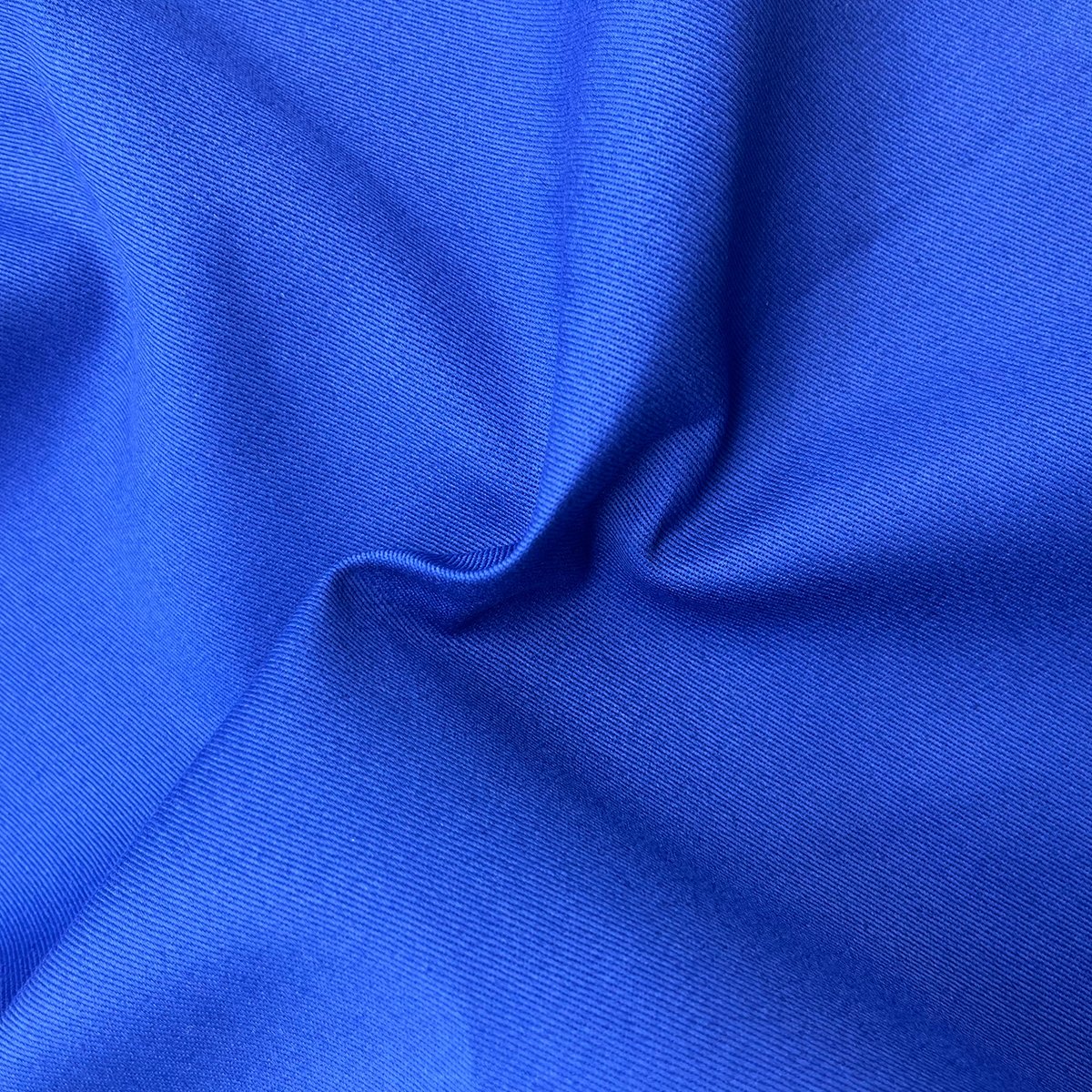
Lightweight elastolefin stretch twill sourcing illustration
REFERENCE 0248-01

Lightweight elastolefin stretch twill

Compare a lightweight polyester/cotton stretch construction for selected uniforms. Confirm shade, recovery and the intended wash process.

Composition
52% polyester / 46% cotton / 2% elastolefin
Weight
155 g/m²
Width
154 cm
Weave
2/1 twill
Discuss this option ↗
Elastolefin twill for laundry development sourcing illustration
REFERENCE 0248-02

Elastolefin twill for laundry development

Consider a medium-weight stretch twill for industrial-laundry uniform projects. Agree the exact wash cycle and article-specific testing.

Composition
65% polyester / 32% cotton / 3% elastolefin
Weight
240 g/m²
Width
143 cm
Weave
2/1 twill
Discuss this option ↗
Heavier polyester/cotton elastolefin twill sourcing illustration
REFERENCE 0248-03

Heavier polyester/cotton elastolefin twill

Compare a heavier stretch twill for a specified workwear garment. Confirm handle, shade and sewing requirements.

Composition
65% polyester / 32% cotton / 3% elastolefin
Weight
280 g/m²
Width
150 cm
Weave
3/1 twill
Discuss this option ↗
Elasterell-p workwear twill sourcing illustration
REFERENCE 0248-04

Elasterell-p workwear twill

Explore a selected polyester/cotton/elasterell-p construction. Match the weight, weave and approved stretch behaviour to the garment.

Composition
47% polyester / 26% cotton / 27% elasterell-p
Weight
250 g/m²
Width
141 cm
Weave
2/1 twill
Discuss this option ↗
Polyester/cotton/spandex twill sourcing illustration
REFERENCE 0248-05

Polyester/cotton/spandex twill

Consider a selected spandex-blend twill for active uniform requirements. Confirm hand feel, recovery and care conditions.

Composition
65% polyester / 32% cotton / 3% spandex
Weight
205 g/m²
Width
151 cm
Weave
2/1 twill
Discuss this option ↗
Nylon/cotton stretch ripstop sourcing illustration
REFERENCE 0248-06

Nylon/cotton stretch ripstop

Discuss a selected stretch ripstop with water- and oil-repellent finish requirements. Confirm the finish and tests for the actual care route.

Composition
50% nylon / 47% cotton / 3% spandex
Weight
200 g/m²
Width
156 cm
Weave
2 × 2 ripstop
Discuss this option ↗
PBT-blend workwear twill sourcing illustration
REFERENCE 0248-07

PBT-blend workwear twill

Explore a selected PBT stretch twill with water, oil and soil-management finishing requests. Confirm the exact finish definition and durability.

Composition
52% polyester / 28% cotton / 20% PBT
Weight
210 g/m²
Width
151 cm
Weave
2/1 twill
Discuss this option ↗
Bamboo-derived blend stretch twill sourcing illustration
REFERENCE 0248-08

Bamboo-derived blend stretch twill

Compare a selected lightweight blend for comfort-oriented workwear. Confirm the precise bamboo-derived fibre declaration and any moisture-management requirement.

Published blend direction
65% polyester / 33% bamboo-derived fibre / 2% spandex
Weight
150 g/m²
Width
143 cm
Weave
2/1 twill
Discuss this option ↗
Cotton/recycled-polyester blend direction sourcing illustration
REFERENCE 0248-09

Cotton/recycled-polyester blend direction

Discuss a selected stretch twill with an organic-cotton and recycled-polyester input brief. Confirm current material declarations and traceability.

Published blend direction
47% organic cotton / 30% polyester / 20% recycled polyester / 3% spandex
Weight
225 g/m²
Width
155 cm
Weave
2/1 twill
Discuss this option ↗
Light elastolefin twill reference sourcing illustration
REFERENCE 0248-10

Light elastolefin twill reference

Compare a selected light stretch twill by usable width, handle and garment fit. Confirm stretch measurement and the required laundry conditions.

Composition
51% polyester / 48% cotton / 1% elastolefin
Weight
160 g/m²
Width
155 cm
Weave
2/1 twill
Discuss this option ↗
Elasterell-p ripstop reference sourcing illustration
REFERENCE 0248-11

Elasterell-p ripstop reference

Discuss a selected stretch ripstop for a specified uniform. Agree handling, tear requirements and the actual wash process.

Composition
43% polyester / 23% cotton / 34% elasterell-p
Weight
210 g/m²
Width
149 cm
Weave
3 × 3 ripstop
Discuss this option ↗
Conductive-fibre stretch twill direction sourcing illustration
REFERENCE 0248-12

Conductive-fibre stretch twill direction

Compare a cotton-rich stretch twill with a conductive-fibre component. Define static-control, UV and repellent-finish requirements with the necessary tests.

Composition
56% cotton / 40% polyester / 3% spandex / 1% antistatic fibre
Weight
265 g/m²
Width
152 cm
Weave
3/1 twill
Discuss this option ↗
All-cotton lightweight twill sourcing illustration
REFERENCE 0248-13

All-cotton lightweight twill

Consider a selected cotton twill for uniform development. Confirm any UV-related or high-temperature-laundry requirement on the actual article.

Composition
100% cotton
Weight
150 g/m²
Width
149 cm
Weave
2/1 twill
Discuss this option ↗
Cotton/conductive-fibre finishing direction sourcing illustration
REFERENCE 0248-14

Cotton/conductive-fibre finishing direction

Discuss selected flame-retardant and water/oil/soil finish requirements on a cotton-rich construction. Define the applicable standards and current reports before material approval.

Composition
98% cotton / 2% antistatic fibre
Weight
255 g/m²
Width
148 cm
Weave
3/1 twill
Discuss this option ↗
Cotton-rich easy-clean twill sourcing illustration
REFERENCE 0248-15

Cotton-rich easy-clean twill

Explore a cotton-rich twill with a conductive-fibre component for selected easy-clean workwear projects. Confirm finish scope and required static-control tests.

Composition
98% cotton / 2% antistatic fibre
Weight
225 g/m²
Width
149 cm
Weave
2/1 twill
Discuss this option ↗
Light stretch ripstop reference sourcing illustration
REFERENCE 0248-16

Light stretch ripstop reference

Compare a lightweight stretch ripstop for the intended garment. Confirm the required water-repellent finish, fit and wash behaviour.

Composition
65% polyester / 32% cotton / 3% spandex
Weight
160 g/m²
Width
147 cm
Weave
4 × 4 ripstop
Discuss this option ↗
Organic-cotton input stretch-twill request sourcing illustration
REFERENCE 0248-17

Organic-cotton input stretch-twill request

Discuss the listed organic-cotton input direction and the required evidence for the intended order. Confirm the blend, finish and sample approval.

Published blend direction
65% polyester / 32% organic cotton / 3% spandex
Weight
270 g/m²
Width
153 cm
Weave
3/1 twill
Discuss this option ↗
Comfort-oriented plain stretch weave sourcing illustration
REFERENCE 0248-18

Comfort-oriented plain stretch weave

Compare a selected plain-weave stretch construction for professional uniforms. Hygiene or moisture-management finishes require their own specification and tests.

Composition
65% polyester / 32% cotton / 3% spandex
Weight
190 g/m²
Width
150 cm
Weave
Plain
Discuss this option ↗
Cotton-rich bamboo-derived blend twill sourcing illustration
REFERENCE 0248-19

Cotton-rich bamboo-derived blend twill

Consider a selected blended twill with a conductive-fibre component. Confirm the legal fibre declaration, comfort requirements and static-control evidence.

Published blend direction
43% cotton / 40% polyester / 15% bamboo-derived fibre / 2% antistatic fibre
Weight
240 g/m²
Width
151 cm
Weave
3/1 twill
Discuss this option ↗
Nylon/cotton repellent-finish ripstop sourcing illustration
REFERENCE 0248-20

Nylon/cotton repellent-finish ripstop

Discuss selected water, oil and soil-management finishes on a nylon/cotton ripstop. Confirm the exact finishing route and tests for the intended outdoor or uniform use.

Composition
57% nylon / 43% cotton
Weight
195 g/m²
Width
155 cm
Weave
2 × 2 ripstop
Discuss this option ↗
Cotton-rich conductive twill sourcing illustration
REFERENCE 0248-21

Cotton-rich conductive twill

Compare a cotton-rich construction for a specified static-control workwear project. Agree resistance measurements, conditioning and laundering before acceptance.

Composition
78% cotton / 20% polyester / 2% antistatic fibre
Weight
255 g/m²
Width
153 cm
Weave
3/1 twill
Discuss this option ↗
Cotton/polyester easy-clean twill sourcing illustration
REFERENCE 0248-22

Cotton/polyester easy-clean twill

Consider a selected blended twill for uniform development with a water/oil/soil-management finish brief. Confirm care and finish performance on the approved material.

Composition
60% cotton / 40% polyester
Weight
225 g/m²
Width
149 cm
Weave
2/1 twill
Discuss this option ↗
Polyester/cotton chemical-exposure development sourcing illustration
REFERENCE 0248-23

Polyester/cotton chemical-exposure development

Discuss a selected polyester/cotton construction against a defined acid or alkali exposure brief. Confirm chemical identity, conditions, test method and current evidence.

Composition
65% polyester / 35% cotton
Weight
240 g/m²
Width
151 cm
Weave
2/1 twill
Discuss this option ↗
Polyester/viscose stretch twill sourcing illustration
REFERENCE 0248-24

Polyester/viscose stretch twill

Compare a selected viscose-containing stretch twill for lightweight workwear. Confirm drape, shade, recovery and care requirements.

Composition
64% polyester / 34% viscose / 2% spandex
Weight
170 g/m²
Width
151 cm
Weave
2/1 twill
Discuss this option ↗
Stretch twill for chlorine-laundry development sourcing illustration
REFERENCE 0248-25

Stretch twill for chlorine-laundry development

Discuss a selected blend for uniforms with chlorine-laundry and hygiene-finish requirements. Agree actual chemicals, concentrations, cycles and test results.

Composition
53% cotton / 45% polyester / 2% spandex
Weight
170 g/m²
Width
149 cm
Weave
2/1 twill
Discuss this option ↗
Polyester/cotton uniform twill sourcing illustration
REFERENCE 0248-26

Polyester/cotton uniform twill

Compare a selected twill for professional-uniform projects. Confirm the required hygiene finish and chlorine-laundry compatibility for the actual article.

Composition
65% polyester / 35% cotton
Weight
245 g/m²
Width
150 cm
Weave
2/2 twill
Discuss this option ↗
Cotton/polyester uniform ripstop sourcing illustration
REFERENCE 0248-27

Cotton/polyester uniform ripstop

Explore a selected ripstop construction for the required uniform appearance and handle. Any antibacterial requirement needs agreed testing and current evidence.

Composition
60% cotton / 40% polyester
Weight
260 g/m²
Width
153 cm
Weave
3 × 3 ripstop
Discuss this option ↗
Outdoor print-fabric range sourcing illustration
REFERENCE 0248-28

Outdoor print-fabric range

Discuss selected outdoor and camouflage-print constructions with authorised artwork, fibre composition and coating or finishing requirements.

Published base-weight range
80–350 g/m² before coating or FR treatment
Published maximum width
65 inches
Process direction
Selected vat-printing and rotary-screen directions
Discuss this option ↗

Numeric references belong to the specific listed constructions. Functional names describe development directions; required results, durability and protective-apparel suitability depend on current article-specific testing. Printed artwork and specialised fibre or finish claims require the necessary authorisation and documentation.

What matters for this category

A better brief.
A clearer comparison.

Focus the sourcing conversation on the features, materials and production details that make a difference to your product range.

01

Connect the garment with the fabric

Start with the intended uniform, wash routine and working conditions. Compare cotton-rich, blended, stretch and ripstop constructions using concrete fabric specifications.

02

Coordinate appearance and function

Review shade, print, handle, stretch and selected finishes together. Clarify whether soil management means release or resistance and define the exact performance and care requirements.

03

Approve by sample and evidence

Use an approved swatch and an agreed specification to connect development with bulk acceptance. Request reports for the actual blend and finish rather than assuming that a category claim covers every article.

Branding, configuration & packaging

Make the product
fit your programme.

Bring artwork, reference samples and a target cost. The available process, minimum quantity, sample charges and development scope are reviewed for the chosen option.

01

Fibre, weave, colour and print

Provide the target blend, weight, width, weave, stretch requirement and shade standard. For prints, provide authorised artwork, repeat size and colour references for a development proposal.

02

Finish and laundry development

State the required repellent, static-control, moisture-management, flame, hygiene or other function, with the actual test method and care route. Confirm the feasibility and compatibility of combined finishes on the selected construction.

03

Samples, roll packing and logistics

Request lab dips, print samples or a fabric approval sample as appropriate. Discuss roll length, strong paper-core support, protective poly-bag wrapping, roll identification and transport needs; current charges, minimum orders and delivery schedules are quoted for the selected article.

Quality & product evidence

Turn requirements
into checks.

Agree which product characteristics need testing and how the approved sample relates to the bulk order.

01

Construction and appearance checks

Agree composition, weave, weight and width tolerances, shade consistency, dimensional change and fabric-defect criteria. Keep the approved sample and bulk inspection requirements aligned.

02

Care and functional validation

Specify wash chemistry, drying conditions, number of cycles and required retained results. Request relevant resistance, colourfastness, pilling, stretch recovery or finish tests for the selected fabric.

03

Protective and chemical documentation

Where the end use involves a hazard, require current test reports for the exact material and relevant standard. Confirm restricted-substance, fibre-content, organic/recycled traceability and finish-chemistry requirements before claims are made.

Test capability is a starting point for the inspection plan. Request the method, applicable model and results needed for your order.

Documents matched to the order

Ask for evidence
that fits the product.

Send the intended application, destination and required standards with the fabric brief so the quotation can cover testing, traceability and shipment documents.

State the sales market, intended users and required files in your first enquiry. Current validity and scope are checked for the selected supplier and product; a category description does not certify every item.

Share your document requirements ↗
Approved article specification
Request the blend declaration, weave, weight, usable width, shade or print reference, finishing route and agreed tolerances with the approval-sample record.
Current test and traceability evidence
Request the reports and certificates needed for the actual article, claim and order. Check scope, tested construction, dates, laundering conditions and transaction requirements for recycled or organic inputs.
Roll packing and shipment information
Confirm roll lengths or weights, batch identification, packing list, invoice description and destination-specific documents. Add required handling or freight conditions to the confirmed order.
Built around how you sell

Different buyers.
Different specifications.

Your sales channel changes the assortment, packaging and quality priorities. Tell us the intended use as well as the product name.

01

Daily, rental and service uniforms

Compare fabrics for manufacturing, maintenance, logistics, catering, hospitality, security and rental-uniform projects using the required appearance, movement and laundry brief.

02

Electronics, energy and healthcare apparel

Discuss specified static-control, flame-performance, hygiene or laundry requirements for the material. Appropriate use depends on the selected article, supporting evidence and finished-garment requirements.

03

Outdoor apparel and equipment textiles

Explore selected printed, nylon/polyester, nylon-cotton, stretch, coated or laminated constructions for outdoor clothing, bags, tents and covers with authorised artwork and defined weather requirements.

From first brief to a defined order

One contact.
A practical next step.

Samples, commercial terms and responsibilities are agreed for the project. Use the same product and packing specification when comparing quotations.

01

Share the requirement

Product, reference image, quantity, sales market and timing.

02

Compare suitable options

Review configuration, materials, sample scope and relevant documents.

03

Approve the specification

Agree artwork, packaging, sample, testing and inspection criteria.

04

Confirm the order plan

Set price, payment, production, delivery and defect remedies in writing.

Buyer questions

Before you send
your first enquiry.

Practical answers about this sourcing direction, customization and the reference options. Your agreed specification and written quotation determine the actual order.

Which base fabrics can I compare?

Selected cotton, polyester-cotton, polyester-viscose, nylon-cotton, polyester and nylon directions are covered, with stretch, twill, plain and ripstop constructions. Send the actual blend, weight, width and garment or equipment use.

Can you develop a custom colour, print or weave?

Provide a physical swatch or specification, shade standard and authorised artwork where needed. A development proposal can address the blend, construction, appearance and selected finish, followed by sample approval.

Can I combine stretch and industrial laundering?

Selected constructions are available for development. Specify the real wash chemistry, temperature, drying route and retained stretch requirements; confirm the actual article and supporting tests before approval.

Does water repellency mean waterproof fabric?

Repellency, hydrostatic resistance and a waterproof coated or laminated structure are different requirements. State the exact desired result and test method so the material and finish can be selected accordingly.

Can I request antistatic, flame or hygiene finishes?

Yes, provide the required function, applicable standard, care conditions and acceptance result. The selected construction needs current supporting tests; the material category alone does not establish protective or medical compliance.

Are recycled-polyester or organic-cotton directions available?

Selected blend directions can be discussed. Define the percentage and required current scope and transaction traceability documents before making recycled or organic-content claims for the order.

What sample, minimum-order and lead-time terms apply?

Terms depend on the selected article, blend, colour or print, finish, quantity and approvals. Request a current quotation including development samples, roll packing and destination-specific delivery conditions.

What information helps produce a useful quotation?

Send the application, reference swatch, blend, weave, weight, usable width, colour or artwork, stretch and finish requirements, test standards, care route, quantity per colour and destination.

Who handles my enquiry?

Factory Sourcing Hub handles this enquiry as an independent sourcing and trading service. The product route, supplier suitability, sample scope and order responsibilities are agreed for the actual project.

How do I get a price and order minimum?

Send the product reference, quantities per variation, customization and packaging. Prices, minimums, sample charges and delivery dates are confirmed in a current quotation; the page is not a live inventory or price feed.

Can I discuss samples and inspection before ordering?

Yes. State whether you need a reference sample, a customized sample or development work. Agree the sample cost and shipping, approval specification, inspection plan and remedy for non-conforming goods before the bulk order.

What should I attach to my email?

Reference images, drawings, logo artwork and a product list are useful. Include quantities, the intended users and sales market, packaging, required documents and timing. After submitting the form, email attachments to kunhuow@gmail.com with your enquiry reference.

Tell us what you are planning

Your next order
starts with a brief.

A reference picture or a short description is enough to begin. Add the details you already know; the optional fields help make the follow-up more useful.

  • End use, sample, exact blend, weave, weight and usable width
  • Colour/artwork authorisation, stretch and selected finishing requirements
  • Test standards, laundry route and documentation or traceability requirements
  • Quantity per colour/design, sample approval, roll packing and destination
kunhuow@gmail.com

Download the enquiry checklist ↓

Independent sourcing and trading service. Supplier choice, service costs and order conditions are discussed for your project.

Discuss your requirements.

Product selection, customization, samples and quotation enquiries.

Add product, quantity or customization details (optional)

Submit your enquiry directly. We use your details to respond to your sourcing request. For attachments, email kunhuow@gmail.com with your enquiry reference. Enquiry data use.

Information basis: published product information reviewed . Reference details support a sourcing discussion. Current supply, samples and product-specific documents are confirmed for the selected item.

Have a product in mind?
Share your sourcing brief.
Send an enquiry ↗